
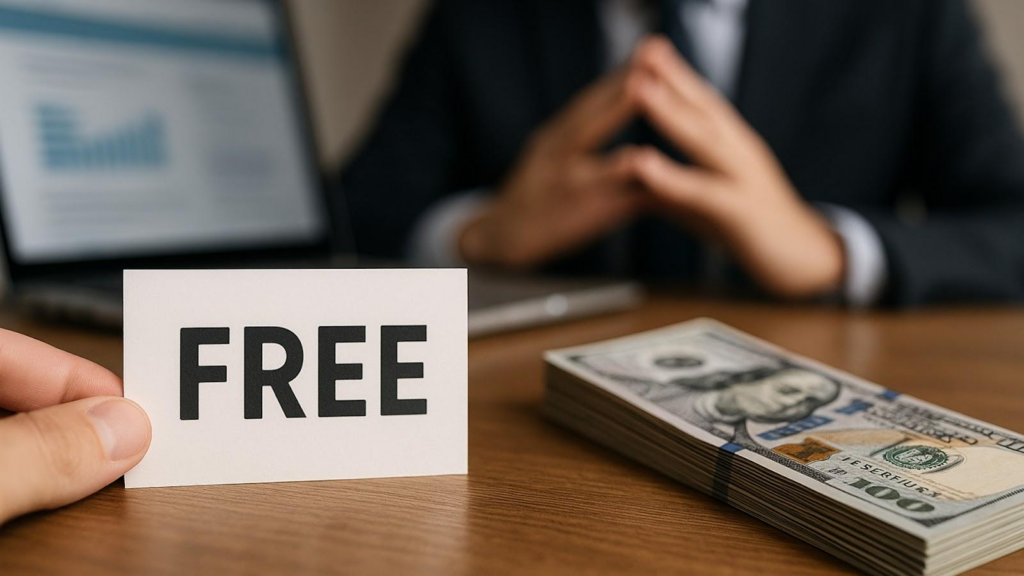
In the digital age, “free” has become one of the most successful business strategies. Customers can use the services for free, yet firms can still make money from them on a large scale.
The economics of SaaS platforms and sweepstakes casinos are less about being generous and more about innovative ways to make money.
Core Monetization Models Behind Free Services
Giving free access makes things easier. It gets the most people to see it, makes it go viral, and creates the network effects that make a platform valuable.
It also gives businesses information about how users act that can be used to make adverts more relevant, get insights, or make products better.
Advertising and Sponsorships
Selling attention is still the most common way to get money. Platforms like Google and Meta make much of their money by selling targeted ads, which is possible since they have a lot of users and data. In 2023, Alphabet made more than 78% of its money from Google Ads.
Freemium Conversions
A small free tier draws people in, then premium upgrades add more advanced functionality. Benchmarks indicate how hard yet useful these changes are. Just 2.6–2.8% of users go from free to paid, while free-trial (opt-out) models can have conversion rates as high as 48.8%.
In-App Purchases and Virtual Goods
Mobile games and apps make billions of dollars by selling digital goods. What starts as free fun turns into a system of small payments. In 2024, in-app purchases made up more than 48% of all mobile gaming revenue around the world.
Affiliate and Referral Fees
Websites that look like they don’t sell anything often make money by sending consumers to partner services. Commission on clicks, sign-ups, or purchases turns free content into money in a roundabout way.
Data and Market Insights
User activity generates a shadow currency: behavioral data. While most major platforms claim not to “sell” raw user data, aggregated insights underpin precision advertising worth billions.
The Progressive Sweepstakes Example
The progressive sweepstakes industry is a great example of how free-to-play works due to its dual-currency system:
Gold Coins are tokens that you can use to play games. You can get cash rewards with Sweeps Coins, which you can get for free through login bonuses, promotions, or when you buy Gold Coins.
This free-entry mechanic attracts a wide audience. Customers flock to platforms because they can “play for free” while retaining the chance to win real rewards.
But the revenue engine is not the free Sweeps Coins. It’s the upsell. For readers curious about how progressive sweepstakes operate, you can explore more insights here.
Monetization flows through:
- Coin bundle sales: Players pay for Gold Coins, often to access more gameplay or speed up progress.
- Breakage: Some free coins and bonuses remain unredeemed, effectively becoming pure profit.
- Cross-promotions and affiliates: Partnerships with other gaming services or brands generate secondary income.
- User retention loops: Daily login rewards and bonus drops keep users engaged long enough to eventually purchase.
By 2025, this industry is expected to make US$14.3 billion in gross sales. A 60–70% CAGR from 2020 to 2024 shows how effective “free” is at getting new customers when combined with micro-transaction methods.
The Trade-offs of Free
The free-to-play funnel carries real risks. The ceilings for conversion are high. Freemium benchmarks reveal that freemium conversion rates fall somewhere between 2 and 5%. This means that organizations need to support millions of non-paying users to make money in the long run.
The large number of free users makes things more expensive. Infrastructure, bandwidth, and customer service costs go up even if a user doesn’t pay.
In highly regulated fields like progressive sweepstakes, the dangers are considerably higher. Operators must strictly follow the law to avoid fines or shutdowns when they don’t follow the rules.
Finally, the value equation is tricky. If the free offer is too generous, users never feel the need to pay. If it is too strict, turnover rises before monetization ever happens.
Best Practices for Turning Free Into Revenue
- Optimize the conversion funnel: With freemium averages under 3%, analytics must pinpoint friction and push upgrades.
- Balance generosity with scarcity: Freebies attract users, but paid features must feel meaningfully better.
- Diversify revenue streams: Ads, affiliate, subscriptions, and purchases provide resilience.
- Stay compliant: Particularly in sweepstakes and gaming, regulation is tightening worldwide.
- Leverage data responsibly: Insights should improve user experience, not undermine trust.
Conclusion
There is no such thing as free. It’s a way to run a business. Companies turn free access into long-term income through adverts, subscriptions, or virtual coin bundles.
Progressive sweepstakes show how powerful the idea is. They get a lot of people to play for free, and then they make money from a small number of them through sales, bonuses, and partnerships.




