
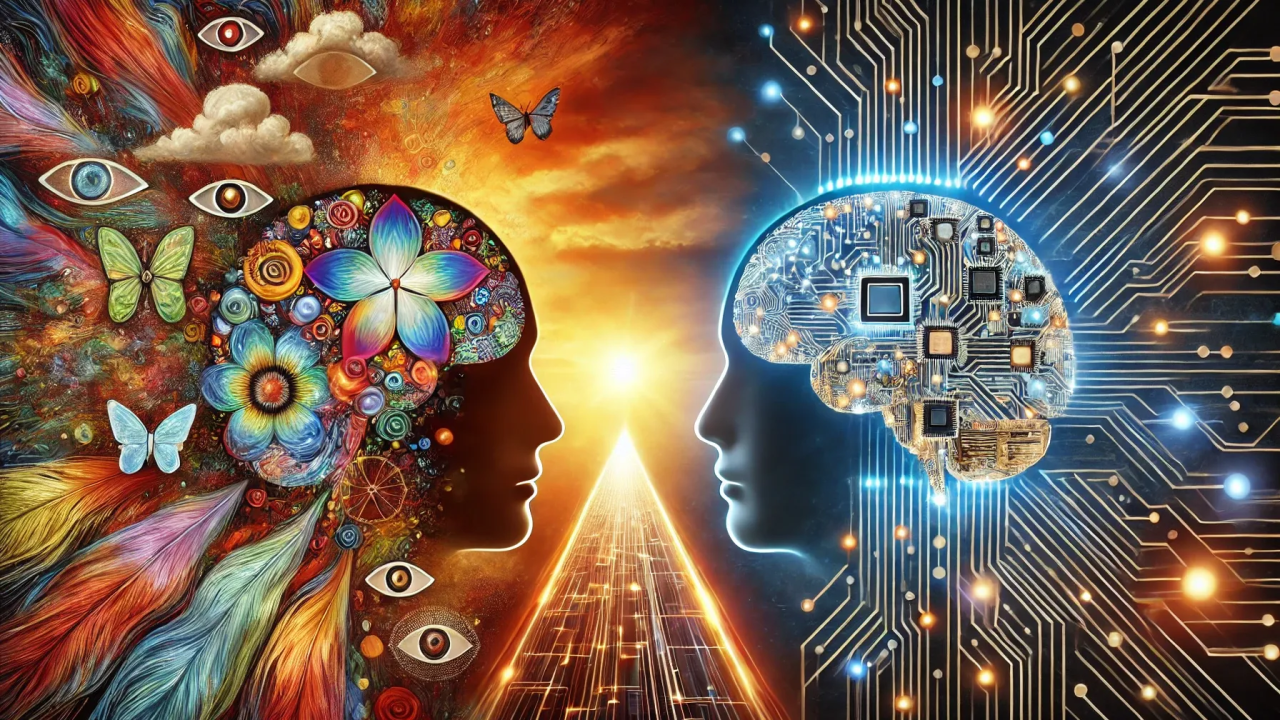
Let’s say your AI assistant greets you with a soothing voice, notices your tone, offers you words of comfort—and it feels nice.
But does it feel anything? Welcome to the realm of artificial empathy, a term that raises eyebrows and ethical red flags in equal measure.
It’s easy to confuse a polished script with understanding, and even easier to anthropomorphize a machine that mimics a hug with 1s and 0s. But can emotion be coded? Or are we simply painting human faces on silicon minds that don’t actually have one?
According to a 2023 report by McKinsey, 38% of companies using AI are integrating some form of emotional recognition technology into their customer service platforms.
But here’s the twist—emotional recognition ≠ emotional understanding. Detection does not mean comprehension.
The Illusion of Feeling: What AI Can Do
AI is getting better—dangerously better—at simulating emotional intelligence. It can track facial muscle movements, analyze speech inflections, measure pupil dilation, and even monitor social media posts to determine mood.
These systems use machine learning algorithms that are fed immense datasets labeled with emotional categories: sadness, anger, joy, frustration, surprise, fear.
But are those labels universal? Hardly. Emotions are messy, cultural, subjective, and wildly dependent on context. In Japan, smiling may mask discomfort.
In Sweden, silence might mean contentment. Algorithms aren’t built to interpret nuance—they’re built to generalize it. And therein lies the problem.
Despite all the buzz—emotional AI, empathic tech, sentiment-aware interfaces—we’re still coding approximations. Data is king, and the more AI knows about us, the better it can understand. But there are privacy concerns.
To protect your online identity and data, it’s worth using digital tools like VeePN for Mac, iPhone, and other devices. It prevents online activity from being tracked and prevents data leaks.
Algorithms and Emotions: Friends or Fakers?
Imagine this: a chatbot designed to help people cope with anxiety. You tell it about your overwhelming day. It replies with: “I understand how hard that must be for you.” It even pauses for two seconds before responding—because a human might. The punctuation, the timing, the tone—flawless.
But ask yourself: Is that empathy, or is it code trained to echo empathy-shaped patterns?
There’s a term for this: empathy simulation. Machines don’t understand. They predict. Given inputs X, Y, and Z, the system delivers Response A—because statistically, that’s what users expect in that context. Empathy becomes a formula. A computation. Not a felt experience.
So, when you break down in front of your AI therapist, remember: it’s not weeping with you. It’s just winning the Turing Test.
Consciousness and the Great Mirage
Now, let’s tiptoe into deep waters—AI consciousness. If AI someday “understands” us, wouldn’t it need awareness? Sentience? The capacity to reflect on its own experience?
Short answer: we’re nowhere near that.
Despite grand headlines and techno-utopian dreams, today’s AI doesn’t possess subjective experience. It doesn’t know it exists. It doesn’t know you exist. It isn’t aware of your sorrow or joy—it parses patterns. It’s excellent at pretending, and terrifyingly efficient at imitating, but it feels nothing.
Researchers at MIT’s Media Lab suggest that “empathy in machines is always going to be artificial unless true consciousness emerges”—a proposition that’s both controversial and speculative.
Without self-awareness, machines can only offer simulated care. And for many, that’s good enough. But the philosophical implications? Tremendous.
The Ethics of Feeling: Should We Teach AI Empathy?
Assuming we can one day build machines that mimic us flawlessly—should we?
Here’s where machine learning ethics steps into the room with a furrowed brow. If AI simulates empathy too well, it could be used manipulatively.
Think customer service bots that “understand your frustration” but are engineered to defuse anger without solving anything. Or worse: virtual therapists that provide emotional support but never report suicidal ideation.
Emotional AI can deepen connection—but also manufacture it. And that’s dangerous.
A 2022 Pew Research study revealed that 53% of Americans are uncomfortable with machines making emotionally significant decisions.
The concern? Trust. Manipulation. Authenticity. If AI becomes emotionally persuasive without accountability, we risk entering a future where feelings are tools, not truths.
Human-AI Interaction: A New Kind of Relationship
Now, some nuance. Not all is bleak. In fact, human-AI interaction is evolving in ways that, while imperfect, can be helpful.
Companion bots for elderly individuals combat loneliness. AI counselors offer 24/7 access in places without mental health resources. Adaptive learning platforms read student frustration and adjust content accordingly.
These tools don’t understand us in the way a human friend might—but they can support us, respond to our cues, and learn our preferences. Think of them not as mirrors, but magnifiers. Amplifiers of human intention, rather than sources of true empathy.
And maybe, just maybe, that’s enough for some purposes.
Empathy Without Emotion: Can It Still Help?
There’s a compelling counterargument in favor of artificial empathy: effectiveness without consciousness. If a machine can detect your emotional state and respond in a way that helps—does it matter if it feels nothing?
Think triage at a hospital. If an emotionally responsive AI nurse keeps a patient calm, assists the real staff, and helps streamline treatment—does its lack of inner life diminish its value? Or consider education. A math tutor bot senses frustration, slows down, offers encouragement. It doesn’t care, but it adapts. Isn’t that what a good teacher does?
Perhaps function trumps feeling—in specific contexts.
The Future: Empathy as Interface, Not Identity
The future of AI empathy might not lie in trying to make machines feel, but in designing them to interact with our emotions responsibly. That means transparency. Boundaries. Regulation. No pretending to be conscious. No deceiving users about what the machine “feels.”
Instead, we can aim for emotionally intelligent systems that enhance human life, without impersonating human souls.
Machines don’t have to feel what we feel to be useful. But we must never forget: they are not us. The moment we blur that line is the moment empathy becomes a brand—not a bond.
Final Glitch in the Matrix
To ask if machines can understand us is to misunderstand understanding itself. We are creatures of emotion, memory, contradiction. Algorithms, no matter how advanced, deal in averages—not paradoxes. They simulate the shape of our inner worlds but cannot enter them.
Until consciousness sparks behind the screen—and it may never—machines will only act like they understand. And we, desperate for connection, might just believe them.
But belief isn’t proof. And empathy without pain? That’s just good programming.




