
From Atari’s Pong in the 1970s to neural network-powered game engines in 2026, online gaming has traveled an extraordinary distance in barely five decades. Today, the industry isn’t just growing, it’s accelerating.
According to Statista, mobile gaming alone accounts for 57% of worldwide video gaming revenue, with 2 billion players on mobile devices globally. The entire sector is projected to hit $300 billion by 2028 and potentially $665 billion by 2030.
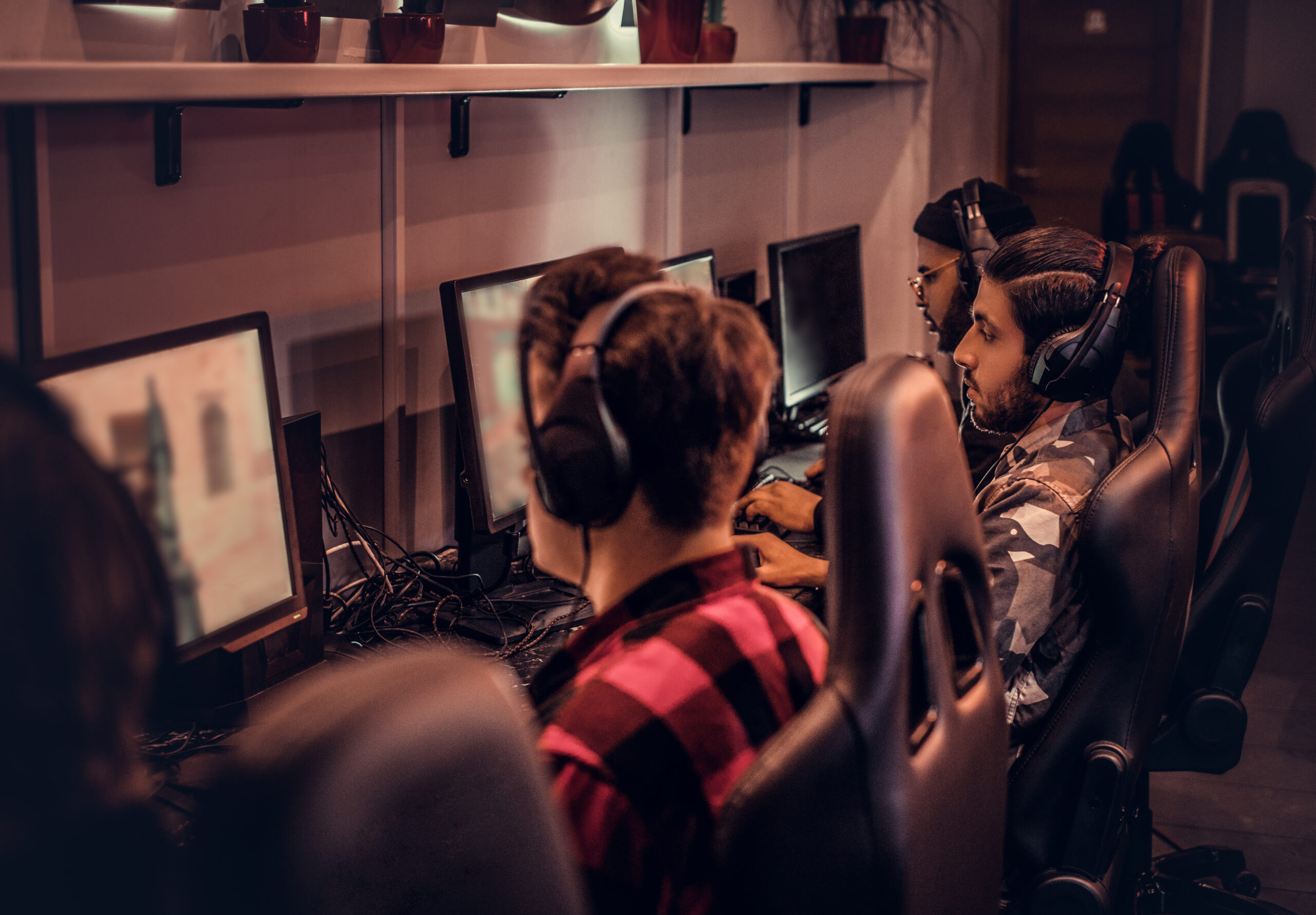
Those numbers aren’t background noise. They signal a fundamental shift in how technology is reshaping every layer of the player experience.
For anyone interested in how sports betting markets are similarly shaped by data optimization, the dynamics behind Sportwetten Österreich legal offer a fascinating parallel in how algorithmic thinking reshapes traditional competitive spaces.
How AI is rewriting the rules of game development?
The numbers speak for themselves. A 2024 survey by a16z found that 74% of game studios already use AI, with 40% reporting productivity gains exceeding 20%.
A Google Cloud report, conducted in partnership with The Harris Poll and drawing from 615 professionals across AAA studios and indie pioneers in the US, South Korea, Finland, Norway, and Sweden, confirmed that 90% of industry professionals view generative AI as genuinely transformative. That’s not hype. That’s consensus.
Google’s GameNGen is one of the clearest proofs. This neural network-based game engine simulates complex environments like DOOM in real time using a diffusion model, running at 20 FPS on a single Tensor Processing Unit with just four sampling steps.
Meanwhile, UNBOUNDED, developed by Google and UNC Chapel Hill researchers, removes traditional gaming constraints entirely.
It generates game mechanics and narratives dynamically, achieves response times of approximately 1 second per interaction, and delivers language model performance comparable to GPT-4 at a speed improvement of 5 to 10 times. That changes what “real-time storytelling” actually means.
Beyond experimental systems, AI tools are already embedded in mainstream pipelines. Tools like Unity Muse, Epic’s MetaHuman, and Ubisoft’s Ghostwriter are collapsing development timelines by enabling rapid prototyping and smarter narrative creation.
Microsoft’s generative AI model Muse, trained on Xbox gameplay data, can produce game scenes that traditionally demanded human programming and animation.
For indie developers who already reshaped the industry through platforms like itch.io, think RimWorld, Stardew Valley, and Fall Guys, these tools open doors that were previously locked by budget.
The esports world is moving in the same direction. Team Liquid implemented an AI coach that analyzes thousands of League of Legends match datasets, focusing on pattern recognition, performance forecasting, and skill assessment.
Their partnership with SAP is set to expand this into talent scouting and player health management. For context, the League of Legends World Championship final reached 44 million concurrent viewers, the stakes for competitive optimization couldn’t be higher.
One word of caution worth raising: when every studio optimizes around the same metrics, games risk becoming formulaic.
AI should serve creativity, not replace it. The studios that will lead the next decade are those using machine intelligence to amplify human unpredictability, not iron it out.
Cloud gaming, VR, and the expanding player base
Smart TVs already reach more than 1.5 billion homes worldwide, dwarfing the 200 million-plus console base. That gap matters enormously. Cloud gaming services allow players to stream games directly from data centers, skipping hardware downloads and costly installations entirely.
Providers like Steam and Battle.net have built subscription models around this premise, storing save data in the cloud so players switch devices without friction. For regions where console penetration remains minimal, this isn’t a luxury feature. It’s the entry point.
Mobile’s dominance is structural, not accidental. During COVID-19 lockdowns, mobile gaming surged precisely because accessibility required zero additional hardware. The mobile game user population in the US and Canada grew 12% since 2019, according to Statista.
Hyper-casual titles like Candy Crush and Wordle pulled in demographics that had never considered themselves gamers, including players over 50, where 13% of both men and women now engage regularly, per Gamify.

VR is shedding its niche reputation fast. More affordable headsets are hitting the market, and the library of quality titles is expanding beyond novelty. Top experiences like Beat Saber, Superhot VR, and Skyrim VR prove the format can deliver both depth and entertainment.
Medical schools already use high-quality VR applications for simulated surgical training, the same immersive logic applies to gaming.
AR pushed this even further with Pokémon Go, which layered digital creatures onto real-world environments and brought millions of new players into the ecosystem.
The next frontier involves technologies that are still maturing but impossible to ignore:
- Brain-Computer Interfaces (BCIs), enabling input through neural signals, still in early research but advancing toward practical accessibility tools
- Blockchain-based asset ownership, allowing players genuine control over in-game items and currencies across platforms
- Persistent metaverse environments, interconnected virtual worlds where players socialize, create, and play across multiple platforms simultaneously
- Photogrammetry combined with AI, recreating real-world environments with exceptional realism while cutting production time significantly
Graphics tell the same story of relentless progression: from 8-bit systems capped at 256 colors to 32-bit rendering supporting 16,777,215 colors, and id Software’s 1996 Quake engine marking the beginning of true 3D gaming.
Each hardware leap didn’t just improve visuals. It unlocked entirely new genres and player behaviors. BCIs and photogrammetry-powered environments represent the next such leap, and the studios preparing now will be the ones defining what online gaming feels like in 2030.




