A slot looks like a little theater. The symbols are sophisticated and legible. They include an ancient coin, an ornate dragon, or a scarab.
The background has movement. There are clouds moving and a waterfall. A torch flares and then dies. The symbols shuffle and a higher-paying symbol lands before the reels settle.
For a split second it glistens. The slot is made to look alive. Reels merely spin, but a slot is engineered to look like so much more. People playing a slot don’t see all of the thought that goes into the design, but it is there.
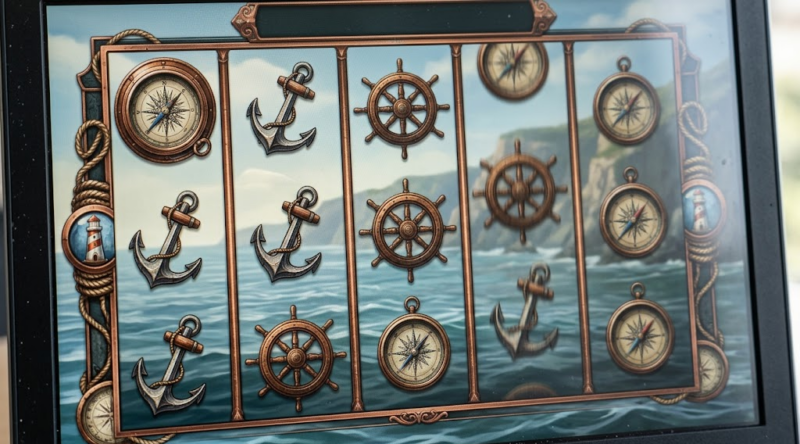
When players search through online slots, they see game thumbnails. Within seconds players make judgments about whether they want to play that game or not. One of the first things players look for is whether the game is visually appealing.
A common trend across online casinos is that the most visually striking games capture a scene in just a single thumbnail. Good art direction is especially hard to achieve within the confines of a video slot game because studios have to commit to specific art styles and visual language at the production stage.
This is long before the game is released. There are tons of options across numerous studios available to browse at Betinia Ontario Slots.
From there, players can quickly gauge the differences between studios and what each is committing to in the art department. Just looking through the art styles becomes interesting once you notice the differences in animation and loading speed.
The Art of a Reel
Great slot design starts with great symbol design. Each symbol needs to be easily recognizable at smaller sizes, relate to the theme of the slot, and be distinctive enough to reward a player’s attention when it creates a winning combination.
Many designers achieve this by using a blend of artwork and 3D rendering. Symbols and the reels themselves are created 2-dimensionally, generally using rigid edges and lines and high contrasting colors. The game world is built and rendered in three dimensions, with the two-dimensional symbols, frames, and reels placed within it.
The overall effect creates a 3-dimensional slot game with a great deal of depth and atmosphere, while in reality the game is running something lighter underneath.
Each artist works within defined limits for each title, and needs to create a large quantity of original and unique artwork for each game.
A slot game may require the artwork for 9 to 12 base symbols, each with many different states, as well as artwork for various interfaces, bonus features, and other backgrounds and screens. Before a single animation is played, a game is powered by a significant body of artwork that must cohere as a sum of its parts.
The Importance of Visual Design in Creating Atmosphere in Slots
Every element in slot design carries a particular meaning. Visual design in slots typically focuses on creating a sequence that leads the player through a small arc of tension and release.
Background artwork carries a lot of this design work. In a slot design, background artwork may feature layers that include a small detail in the foreground, land and architecture in the middle, and a sky in the background. In a traditional film, the foreground of an image is designed to move faster than the background.
This effect gives an illusion of depth in a 2D image. Using this technique in slots gives the background of a slot design a sense of depth and movement rather than a flat, static image.
The art and sound in a slot should work cohesively, and the colors of a game also need to tie in with the themes and symbols of the game. A cohesive design creates a unified, singular environment rather than a discordant design of separate elements.
The Hierarchy of Motion
There is a definite order to the motion in slot games. The higher the value of the symbol, the more detailed the animation. The animation may show the symbol sparkling or pulsing, and if the symbol wins, it may create a winning animation by launching a particle effect, perhaps a falling coin. Low-value symbols rarely show any animation.
It may seem that animating the symbols in this way is excessive, but it actually plays an important role. The goal of these animations is to differentiate winning high-value symbol landings from low-value landings.
These micro-animations also give players an opportunity to experience the quality of the artwork. For the animations to truly create a premium experience, the particles in a winning animation have to fade at the right speed, or the pulsing animation has to be truly weighted, instead of appearing to pulse at a set interval.
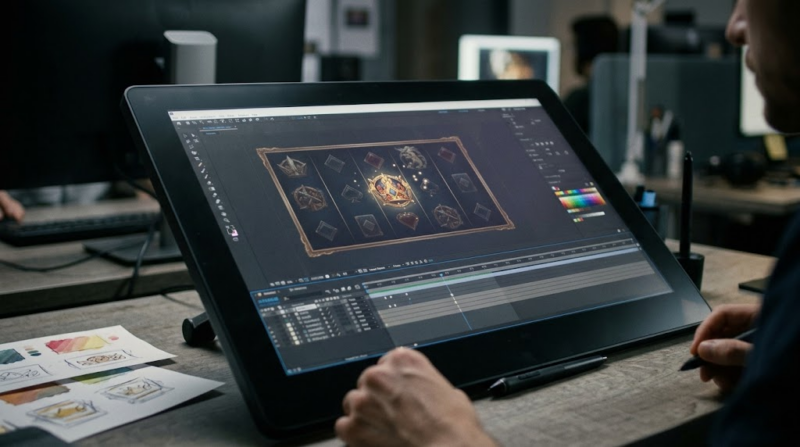
Preparing Images to be Loaded Quickly
Making slot artwork look good and getting it to load quickly are two different challenges. To hit both goals, developers need to be creative in closing the gap between visual fidelity and file size. Before the game even starts, developers use several tricks to close this gap.
One of the quickest ways to get a file smaller is to choose a different format. The majority of slot artwork is delivered as WebP files, a format developed by Google.
A lossless WebP image takes up about 26% less space compared to a PNG, and a lossy WebP image can take up 25-34% less space compared to a JPEG, and still look the same. In WebGL, using sprite sheets can improve render time by 40% and reduce draw calls by 60-80% compared to not using them.
Bundling multiple images together as a sprite sheet means the game engine has to make fewer external requests. A good example of when to use a sprite sheet is when a game has a symbol with multiple states.
Instead of the game making multiple requests to the server for each state, the engine can read the sprite sheet and display the state the engine needs to display.
There are better ways to manage what gets loaded first. Rather than loading the entire game all at once, developers decide what elements comprise the game’s opening screen and load the rest in the background.
Higher-level details, bonus-round animations, and other features can load while the player spins the reels. This ensures assets are loaded and available to be used when they are needed.
Achieving Fluid Animations
Speed and efficiency in loading assets are different from how smoothly a game runs once it is loaded. A game can take a substantial amount of engineering effort just to animate smoothly at 60 frames per second on a mid-range phone.
While running the game, many different animations, transitions and effects can be played in the background. The game has to plan for all of these to happen at the same time.
There are many tools that help achieve the engineering goals described. Spine is a tool that helps in animation and helps generate the motion between key frames. Because of this, multiple movements for the same character can be created using the same base artwork.
Motion curves are an important part of animations. An animation with reels that decelerate evenly looks extremely mechanical. On the other hand, an animation with reels that decelerate with a small ease-out looks natural. Ease-out is the deceleration that occurs when an object comes to rest.
Motion curves help create smooth transitions, such as pulling back reels and having an overlay slide in with a change in the animation.
Other layers of the animation also help. Pixi.js is a lightweight library that allows developers to incorporate nice lighting and other effects in an animation. It’s used extensively in HTML5 slot games, as it has very little impact on load times.
Small Screen, Big Picture
Ultimately most of the work is done to optimize for small screens. The dominance of small screens also redefined the structure of art used in slot games. Previously artwork was designed to suit large screens first and then scaled down. Now, art is created for small screens and scaled up for larger displays.
While it may appear restrictive, it enhances the final product. Something as small as a thumbnail needs to convey meaning and be made up of only the most necessary components.
It cannot be cluttered with needless detail that may look nice on a computer but won’t scale well to smaller resolutions. Simpler components also lead to a cleaner and sharper image. Artists are forced to produce work this way.
There are also changes to the art based on the nature of touch. One particular example is an animation that plays when a button is pressed.
These animations have to occur in near real time with respect to the touch so as not to give the impression that the touch is registering and then the animation plays later. When animations respond to touch, it stands to reason that other UI elements will also adhere to the same restrictions. Buttons and other HUD elements are often large. They can also serve as design elements.
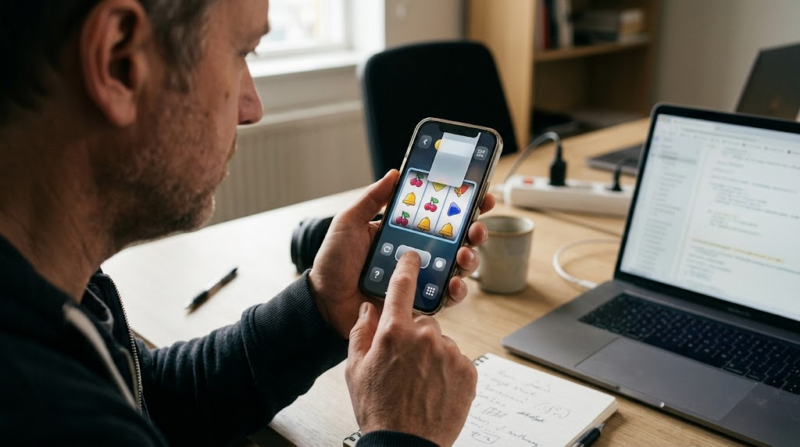
With all of these considerations in mind, it can be understood that everything in the game is primarily designed and constructed to work on a phone held in one hand while the other holds a cup of coffee, for example. All elements are meant to load and process as quickly as possible to give the player the smoothest experience and ensure the least amount of delay.
Why the Balance Is Worth It?
As already mentioned, visuals can’t be neglected. A game can be beautiful, but if it takes ten seconds to load, players will give up before even spinning the reels. Likewise, a game can load quickly and still have bland art that loses the player’s interest.
Techniques that boost loading speeds also positively impact performance, since efficient asset formats require less work for the GPU to process. Generally speaking, the better organized a game’s assets are, the better the performance will be.
From the player’s perspective, the impact of design work is largely invisible, which is the intended outcome. A well designed slot makes the game feel fast, thanks to good asset organization and well-designed assets. Well designed slots convey a sense of weight and impact when a large symbol lands.