Key Highlights
- Why edge AI performance is increasingly limited by physical infrastructure, not models
- How containerised data centres change system-level design decisions
- The trade-offs AI engineers face around power, cooling, latency, and autonomy
- What deployable container infrastructure enables that cloud-only architectures cannot
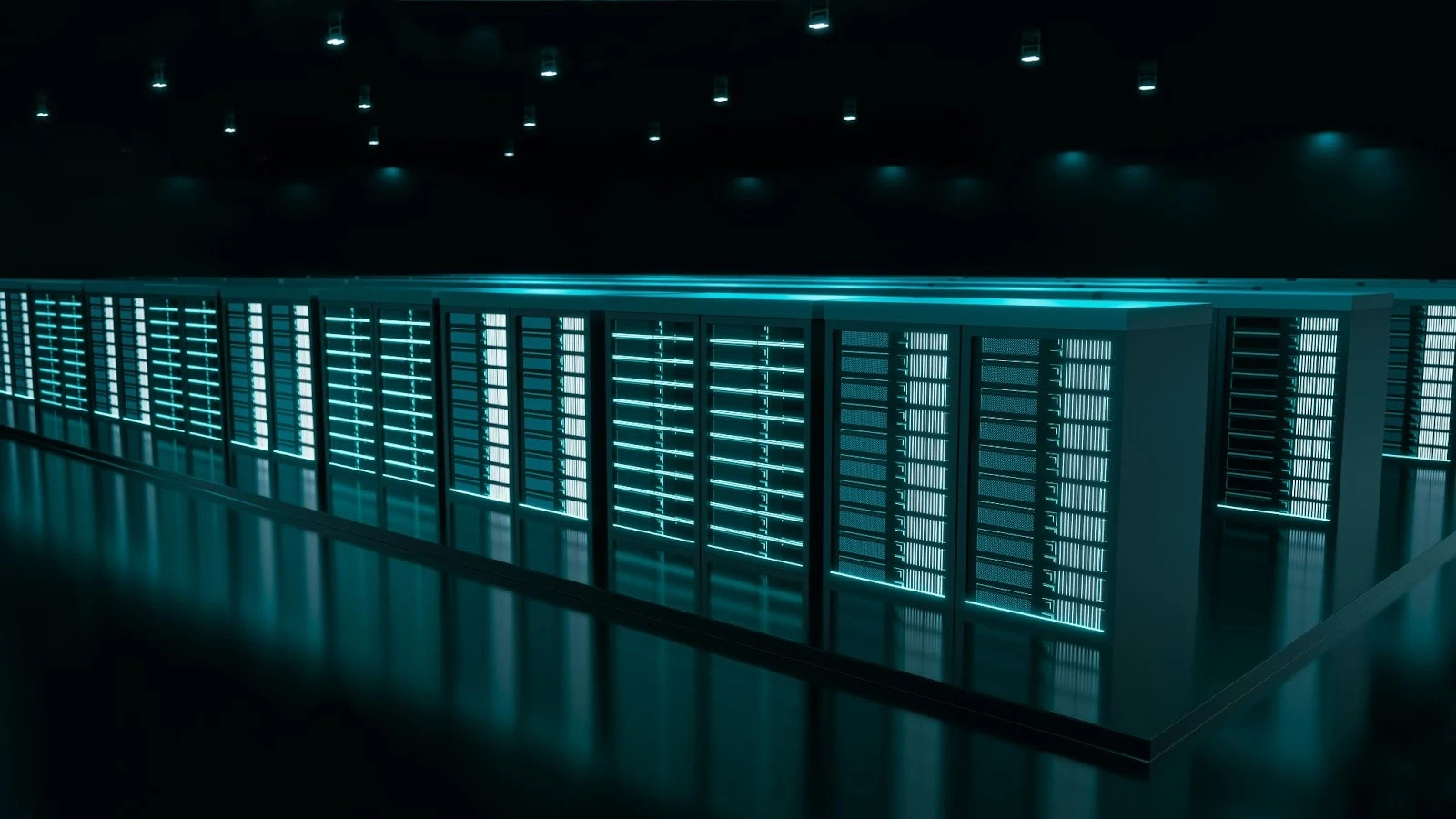
Edge AI is often discussed in terms of models, latency, and deployment frameworks, but in practice it is a systems problem. Decisions about where inference runs, how data moves, and what happens when connectivity fails are shaped as much by physical infrastructure as by software architecture.
As AI systems move out of controlled data centre environments and into industrial, remote, or temporary locations, infrastructure constraints increasingly define what is feasible.
Deployable container infrastructure, particularly containerised data centres, has emerged as a practical response to these constraints.
Rather than treating infrastructure as a fixed background layer, these systems make compute, storage, networking, power, and cooling portable and repeatable.
For edge AI, this changes how systems are designed, deployed, and operated, introducing new trade-offs that are best understood at a system level rather than a component level.
Why edge AI challenges cloud-centric infrastructure models?
Cloud platforms excel at elastic compute, large-scale training, and global availability, but many edge AI workloads expose their limitations. Inference tasks tied to real-world processes are often latency-sensitive.
Even small delays can undermine system usefulness in applications such as safety monitoring, industrial control, or real-time optimisation.
Bandwidth is another constraint. Edge environments frequently generate high-volume data streams from cameras, sensors, and machines. Transmitting raw data to centralised cloud infrastructure is costly, inefficient, and sometimes infeasible.
In these contexts, pushing compute closer to the data source becomes an architectural necessity rather than an optimisation.
Reliability further complicates cloud-centric approaches. Many edge deployments operate in environments with intermittent or degraded connectivity.
Designing AI systems that assume constant access to cloud services introduces fragility. These pressures collectively push system architects toward distributed designs where local processing plays a central role.
Containerised data centres as a physical abstraction layer
Containerised data centres provide a standardised physical abstraction for deploying compute at the edge.
Using deployable shipping container units as enclosures, these systems integrate servers, networking, power distribution, cooling, and environmental controls into a transportable unit.
It is important to distinguish this from software containerisation. While software containers abstract applications from operating systems, containerised data centres abstract physical infrastructure from location.
They allow compute capability to be treated as a modular asset that can be deployed, relocated, and reused without rebuilding facilities.
For edge AI, this abstraction simplifies deployment in environments that lack traditional data centre infrastructure.
At the same time, it introduces bounded resource envelopes that must be explicitly accounted for in system design.
System-level design implications for edge AI workloads
Deployable container infrastructure influences architectural decisions across the entire AI system. Compute placement becomes a first-order concern.
Engineers must decide which tasks run locally, which are offloaded, and how responsibilities shift under varying network conditions.
Hardware selection is similarly shaped by infrastructure constraints. GPUs, accelerators, and CPUs must be chosen with awareness of power budgets, cooling capacity, and physical density limits. These constraints often favour inference-optimised hardware and encourage careful workload partitioning.
Network topology also changes. Rather than assuming high-bandwidth, low-latency links to central systems, edge AI architectures often rely on hierarchical designs, with local processing feeding summarised or filtered data upstream.
Fault tolerance strategies must account for the possibility that containerised nodes operate autonomously for extended periods.
Power, thermal, and environmental constraints in deployable systems
Physical constraints play a defining role in deployable edge AI systems. Containerised environments impose limits on available power, thermal dissipation, and environmental tolerance. These factors directly affect achievable performance and system stability.
High-density AI hardware generates significant heat, making cooling design critical. Containerised data centres address this through integrated thermal management, but capacity is finite.
Engineers may need to balance peak performance against sustained operation, particularly in hot or dusty environments.
Power availability can be equally constraining. Edge deployments may rely on generators, limited grid connections, or hybrid energy sources.
This encourages efficiency-oriented system design, including model compression, batching strategies, and scheduling approaches that align compute demand with power availability.
Autonomy, resilience, and disconnected operation
One of the most significant system-level implications of deployable container infrastructure is the ability to support autonomous operation.
By hosting compute resources on-site, AI systems can continue functioning independently of external connectivity.
This shifts architectural assumptions. Rather than treating disconnection as an exceptional failure mode, systems are designed to operate locally by default, synchronising with central services opportunistically.
Decision-making authority moves closer to the edge, enabling faster response and reducing reliance on remote control loops.
From a resilience perspective, this decentralisation reduces single points of failure. Edge nodes can degrade gracefully, prioritising critical functions when resources are constrained.
Containerised infrastructure provides the physical foundation for this autonomy by ensuring that compute capability is available where and when it is needed.
Security, trust boundaries, and data governance at the edge
Deployable container infrastructure also reshapes security and governance considerations. Processing data locally reduces the need to transmit raw data across networks, lowering exposure and simplifying compliance with data residency requirements.
Physical deployment introduces new trust boundaries. Containers can be secured, isolated, and audited as discrete units, aligning physical and logical security models.
At the same time, distributed deployment increases the number of nodes that must be managed, monitored, and updated securely.
For edge AI systems handling sensitive or safety-critical data, these considerations influence architectural choices around encryption, authentication, and system isolation. Infrastructure is no longer a neutral backdrop but an active participant in the security model.
Scaling, redeployment, and lifecycle management
Deployable container infrastructure supports a different scaling model from traditional data centres. Instead of vertical scaling within a fixed facility, capacity can be increased by adding additional container units. This horizontal scaling aligns well with distributed edge AI architectures.
Redeployment is another key advantage. As operational sites change, containerised infrastructure can be relocated rather than decommissioned. This decouples infrastructure lifecycle from site lifecycle, allowing AI capability to move with operations.
However, this also complicates lifecycle management. Software updates, model versioning, and hardware refresh cycles must be coordinated across physically distributed units.
System designers must consider how infrastructure mobility interacts with long-term maintenance and evolution.
Implications for future edge AI research and system design
The rise of deployable container infrastructure highlights the need for closer integration between AI research and systems engineering.
Many research assumptions around unlimited power, cooling, and connectivity do not hold in edge environments.
Future work in edge AI increasingly involves co-design across models, hardware, and infrastructure. Resource-aware algorithms, adaptive inference strategies, and distributed learning approaches are shaped by the realities of deployable systems.
From a research perspective, containerised infrastructure provides a concrete platform for exploring these questions.
It exposes constraints that are often abstracted away, encouraging designs that are robust, efficient, and grounded in operational reality.
Conclusion
Containerised data centres are more than a deployment convenience. They represent a shift in how infrastructure is conceived and used in edge AI systems.
By making computing portable, bounded, and repeatable, deployable container infrastructure brings physical constraints into direct conversation with algorithmic design.
For edge AI practitioners, this reinforces a core insight: system performance and reliability emerge from the interaction between models, software, hardware, and infrastructure.
As AI continues to move closer to the environments it observes and controls, understanding these interactions becomes essential.
Deployable container infrastructure provides both the challenge and the opportunity to design edge AI systems that are not only intelligent, but operationally viable in the real world.