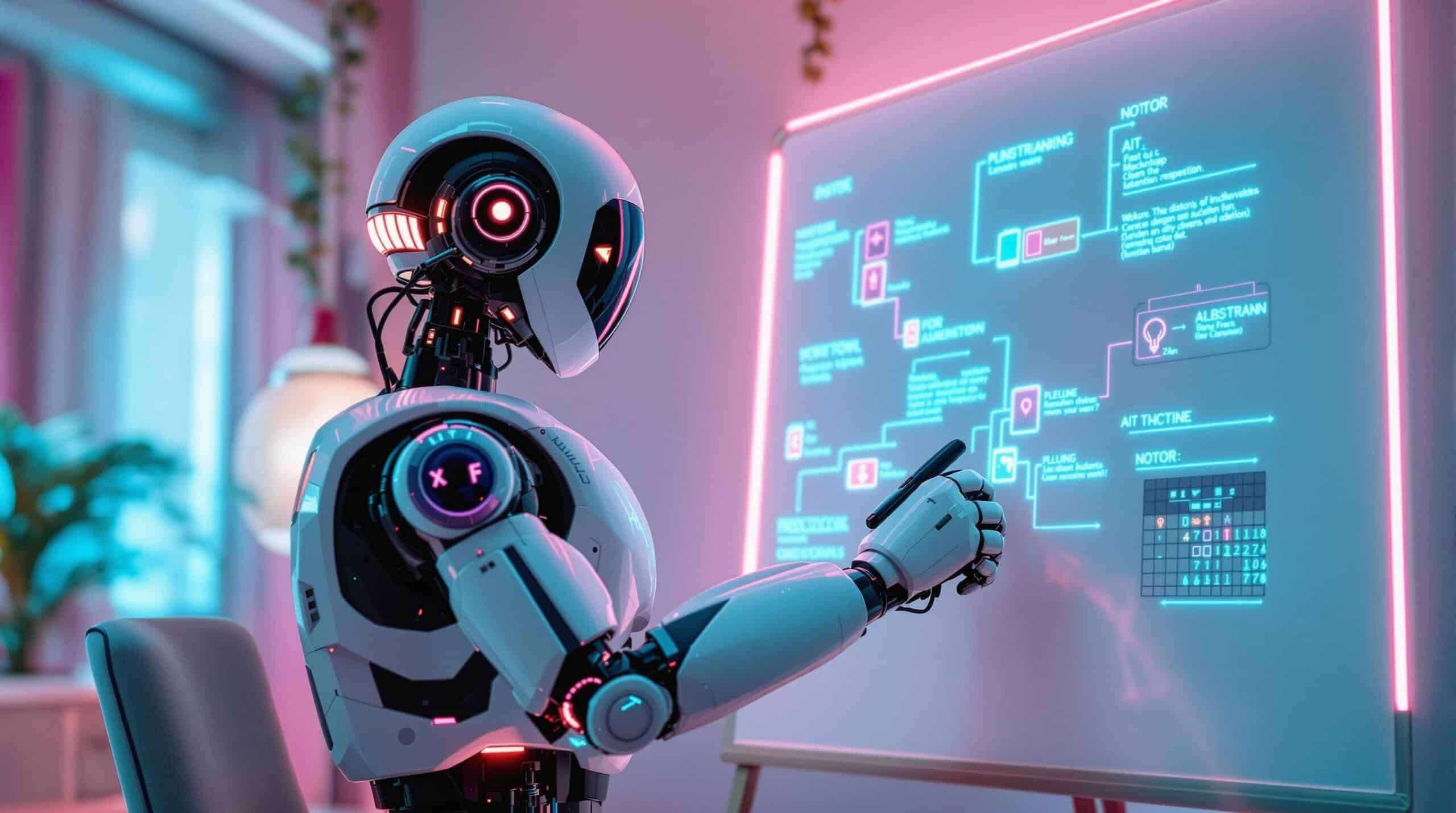
The video game industry runs on artificial intelligence now. What used to be simple enemy behavior has turned into something far bigger.
AI generates worlds, writes music, and tests games before any real person plays them. We’re past the point of asking if AI helps make games. The real question is just how deep it goes.

AI Builds Worlds and Changes How Players Interact
Games today use AI to create environments that shift and respond to what players do. Procedural generation makes massive terrains, dungeons, and entire cities that would take years for designers to build on their own.
No Man’s Sky created billions of planets this way. The tech doesn’t just randomize things anymore. It understands what players want and builds around that.
Characters act differently now, too. NPCs make decisions that feel less robotic and more human. The systems watch what you do and change how enemies fight, how companions talk, and how crowds move. Other parts of entertainment picked up on this.
Digital card games and 99Bitcoins recommended crypto casinos use similar tech to adjust interfaces and difficulty based on how people actually play.
Voice work has changed, too. AI generates thousands of lines that sound natural without actors ever entering a booth. Dialogue systems take what players say and build responses that don’t feel like they came from a menu.
Production Moves Faster Now
Teams finish games quicker because AI handles the boring stuff. Artists used to paint every texture by hand. Now systems learn from a few examples and create hundreds of variations.
Testing changed, too. Bots play through levels over and over, thousands of times, and catch problems faster than any human team could.
A 2025 survey from the Game Developers Conference found that 36% of game developers worldwide said their studios or departments already use generative AI tools.
Animation works differently, too. Machine learning fills in the gaps between hand-made movements. Motion capture data gets cleaned up automatically. Physics runs faster because neural networks learned from real-world data.
Humans Still Make the Big Calls
But AI doesn’t replace people. It just does what they tell it to. The vision, the story, the actual gameplay? That’s still human work.
AI can execute ideas and create variations, but it can’t come up with something truly new or make you feel something real. Studios say AI frees up their teams to think about bigger problems instead of tedious tasks.
Research from McKinsey & Company estimates generative AI could deliver between $380 billion and $690 billion in annual value across technology, media, and telecommunications. Media could see $80 billion to $130 billion, while high tech might capture $240 billion to $460 billion.
Where does that money come from? Lower costs, faster production, and the ability to create personalized content at a massive scale. Work that took weeks now takes days. Teams that needed a dozen specialists can get by with half that number.
Studios use AI to try out ideas fast, test different versions, and handle the technical side. The systems give options and do what they’re told. But deciding what actually makes a game good? That’s still on the humans.
The Final Thoughts
AI isn’t a gimmick in game development anymore. It’s part of the foundation. The tech does the heavy technical work, speeds everything up, and lets developers experiment in ways they couldn’t before.
But the decisions that make a game stick with you still come from people who understand what makes games matter.
AI and human creativity work together now, and that relationship will only get stronger. But at its core, game development is still a human job.