A customer makes a successful referral. Another reaches a loyalty milestone. A third completes a promotion. In many businesses, each event still creates a manual task for someone in marketing: check eligibility, choose the reward and send it.
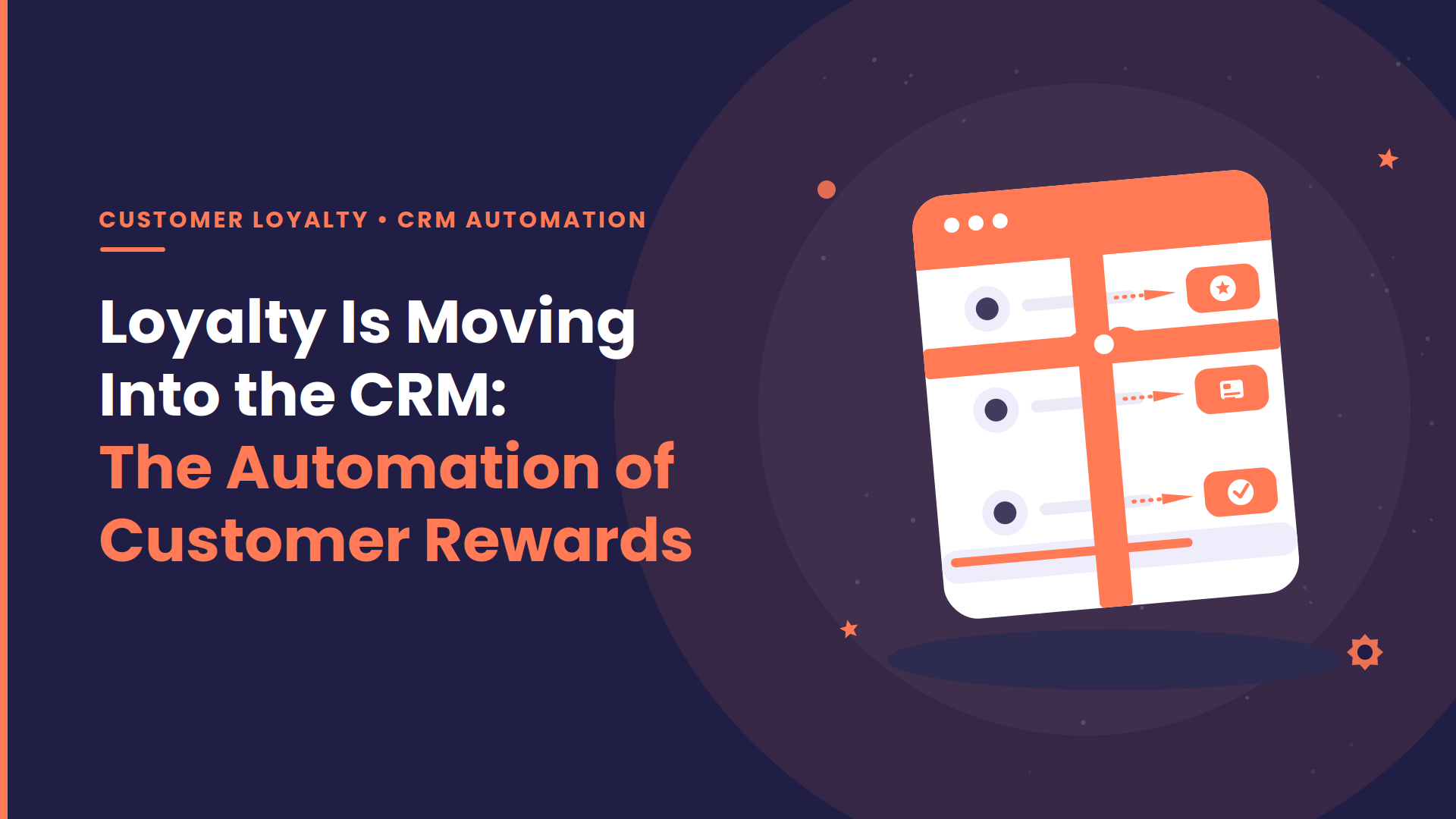
The systems tracking customer actions can now trigger rewards automatically. Instead of managing eligible customers in a separate spreadsheet, businesses can connect reward delivery directly to the customer journey: when a referral converts, a loyalty milestone is reached or a promotion is completed, personalized branded gift cards can be sent automatically.
This moves loyalty rewards from campaign spreadsheets into the same data-driven workflows that power automated emails, sales alerts and lifecycle messages.
Why are rewards moving into the CRM?
The CRM already holds the data that determines who has earned a reward, including purchase history, lifecycle stage, referrals and renewal timing. As CRMs increasingly use customer data to drive long-term, loyalty-focused growth, reward delivery can become part of the same workflow.
Timing matters too. Manually processing rewards can delay delivery, weakening the link between the customer’s action and the reward. A referral gift sent soon after a new customer converts reinforces that connection; the same gift arriving weeks later as part of a manual batch process is likely to have less impact.
How do you automate a customer loyalty program?
You automate a customer loyalty program by connecting a qualifying customer action to a reward delivery system. A CRM, referral platform or marketing automation tool records the action, checks the customer meets the rules and triggers the reward automatically. Giftogram supports automated customer rewards through its API, CRM integrations and Zapier workflows.
When a defined customer event occurs, Giftogram can automatically send a branded digital gift card, with recipients able to choose from available gift card options. This removes manual reward processing while keeping the reward timely and connected to the customer action.
| Customer event | Eligibility rule | Automation trigger | Reward |
| Referral converts | Referred customer makes a qualifying purchase | Conversion confirmed | $25 gift card |
| Customer reaches loyalty milestone | Customer reaches a defined spend or purchase threshold | Milestone reached | Digital reward |
| Customer renews | Customer renews their subscription or contract | Renewal recorded | Thank-you reward |
| Customer completes a survey | Eligible customer completes the survey | Survey submitted | Digital reward |
| Customer makes a qualifying purchase | Purchase meets campaign criteria | Purchase recorded | Promotional reward |
What marketing incentive software integrates with CRM systems?
The right marketing incentive software should connect to the systems that already track customer activity and reliably trigger, deliver and record rewards. Look for native integrations with your CRM and marketing tools, an API for custom workflows, and low-code options such as Zapier for simpler integrations.
Reporting is important too. Automation saves little time if marketing or finance teams still have to manually reconstruct which customers were rewarded, when and why. The software should provide a clear record of reward activity alongside the customer data that triggered it.
Giftogram connects with existing business systems through its API and Zapier. A qualifying CRM event, such as a referral conversion or customer milestone, can trigger a branded digital reward without a separate manual send.
The best survey incentive software fits into the existing customer journey rather than requiring a business to rebuild its CRM or marketing workflows around the rewards provider.
Why should businesses automate marketing incentive rewards?
Marketing incentive automation becomes more valuable as reward volume and campaign complexity increase. It reduces manual work while ensuring the same qualifying customer action triggers a consistent response across campaigns, segments and teams. That consistency can support retention at scale.
Bain research popularized the finding that a 5% increase in customer retention can raise profits by 25% to 95%. While automation does not create retention on its own, reliably connecting the behavior a business wants to encourage with the reward that follows makes incentive programs easier to run consistently.
The business still decides what deserves a reward, how much it should be worth and who qualifies. With Giftogram connected to the marketing stack, repeatable steps such as checking eligibility, sending the reward and logging it can happen automatically rather than sitting on someone’s task list.
Does automating loyalty make it less personal?
No. Automated rewards can still feel personal when businesses customize the branding, messaging and reward choice behind each send, rather than giving every recipient the same generic experience.
A message explaining who is sending the reward and why makes the intent clear, and letting the recipient choose removes the guesswork of picking a retailer for someone else.
That choice also tends to work harder: the Incentive Research Foundation finds that non-cash, choice-based rewards can outperform cash-equivalent programs.
Giftogram automates the delivery without automating away the personal part: recipients still see the company’s branding, still get a message explaining the reward and still choose their own gift card, so they know what they did, why it mattered and who is recognizing it.
From loyalty program to loyalty infrastructure
Loyalty is becoming less of a standalone campaign and more of an ongoing part of the customer journey. As businesses move towards always-on customer relationships through subscriptions and recurring commerce, rewards can become another automated interaction within that journey rather than a separate marketing task.
The technology can handle the mechanics: identifying the qualifying event, checking eligibility, sending the reward and recording what happened.
Which behaviors are worth rewarding, when a customer has genuinely earned recognition and what that reward should mean to them are decisions no CRM makes on its own.
Frequently asked questions
How do gift card referral programs increase customer loyalty?
Gift card referral programs increase customer loyalty by rewarding a referral the moment it happens, so the recognition reinforces the customer’s decision to stay engaged rather than feeling like an isolated gesture. That immediate, personal recognition is what retains customers: Giftogram delivers it automatically through CRM and referral-platform triggers, with branding, a message and a choice of card.
How can businesses automate referral incentives?
Businesses automate referral incentives by defining the exact trigger event, such as a completed purchase rather than just an email signup, then letting the CRM or referral system check eligibility and issue the reward once that event fires. Giftogram can run this through API, CRM or Zapier-based workflows, sending a branded reward with recipient choice across available gift card options.
Why automate marketing incentive rewards?
Marketing incentive rewards are worth automating because it keeps delivery consistent as volume grows, so the same qualifying event produces the same response every time instead of depending on someone to process it. The business still decides what to reward and how much; Giftogram handles the delivery, with company branding and recipient choice across available gift card options.