Have you ever thought about how learning tools keep evolving over time? A classroom once meant paper sheets, chalkboards, and long talks. Later, heavy personal computers entered schools and changed daily routines. Tablets and digital boards then replaced older tools in most lessons.
Now, a fresh stage appears with smart knowledge systems. These tools use artificial intelligence and large data collections.
They help learners find answers quicker and understand topics in clearer ways. Education no longer depends on fixed places or strict schedules. This article explores how these systems function today.
What smart knowledge platforms mean in education?
Digital study systems now combine several helpful tools in one place. They include AI solvers, note organizers, and task assistants. Public use of artificial intelligence grew rapidly after 2022. The release of ChatGPT marked a key moment for wider adoption.
AI tools now help with math tasks, text summaries, and idea explanations. They analyze patterns in answers and suggest better study paths. This creates support that fits each learner’s pace and level.
Older learning systems mainly store materials and follow fixed lessons. Standard online courses give content without much interaction.
Modern systems go further and adapt based on user behavior. They mix data, content, and progress tracking in real time. The main idea stays simple. These tools act like assistants during study sessions.
Benefits of these systems:
- Learning paths that match personal progress
- Quick access explanations
- Continuous feedback during tasks
- Advanced time control with automated help
- Support across different subjects in one space
Limitations and concerns:
- Risk of relying too much on automated answers
- Possible errors in AI-generated responses
- Questions around data privacy
Why is everyone talking about smart learning?
Education now moves at a faster pace than before. Courses demand steady output in shorter time frames. A large group of learners balance study with part-time jobs. This creates pressure that older systems cannot fully support.
In 2025, about 53% of U.S. college learners took at least one online class, and 26% took fully online courses in 2022. That means more than half of those in higher education use web‑based learning at some point in their studies.
In addition, surveys find that around 43% of college users say digital learning technologies helped them complete homework, and 8% say these tools improved their performance. What does this mean for us? Education is constantly moving toward modern technologies.
An overview of popular learning platforms
Current academic systems expect constant performance and fast results. Learners stay up late to keep up with assignments and exams. This level of demand definitely exceeds normal human limits over time.
Smart learning focuses on delegating and use of online help tools. It also includes using digital tools to handle routine tasks. As a result: reduced pressure and saved time to understand the topic in more detail.
Edubrain.ai

Students nowadays know where to find support even without a professor’s hand. The homework helper at edubrain.ai offers a handful of useful tools. It includes an AI solver that processes tasks from text or images.
A learner can upload a problem and receive step-based solutions. Another feature example is AI Quiz Generator – just input the task and train your memory with quizzes on topic.
This website serves as an AI learning assistant for any subject, from literature to mathematics. A person working on algebra may use a logarithm calculator. It speeds up calculations and shows how formulas connect.
Someone writing texts may rely on AI feedback tools to improve structure or a citation generator to fit in academic standards.
Pros:
- Wide set of tools in one place for different subjects
- Step-by-step solutions
- Image-based problem input saves time
Cons:
- May require payment
Quizlet
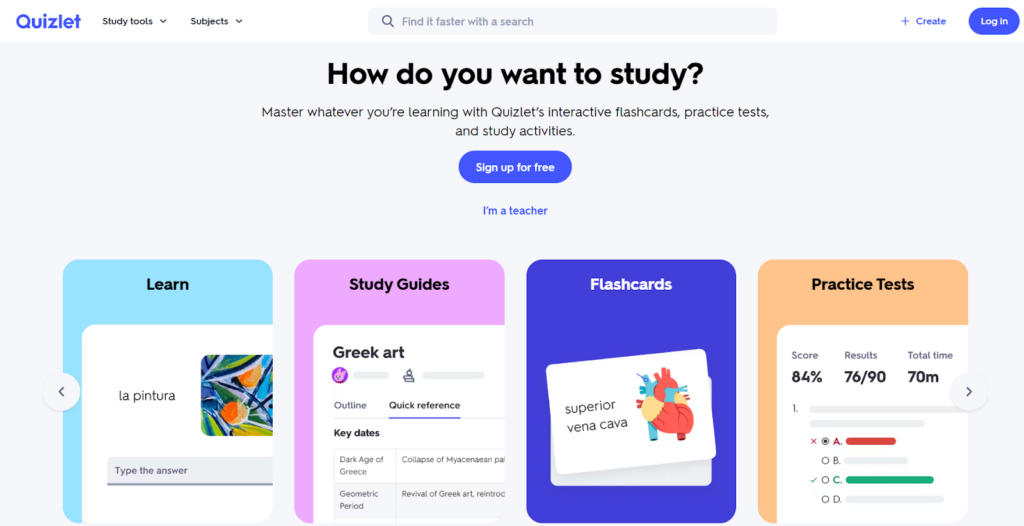
Exam time creates chaos without structure. Quizlet brings order through flashcards and short tests. Its library holds millions of study sets built for college topics. The system changes questions based on answers.
Wrong responses return in a new form, so gaps become visible fast. This method helps fix weak spots without long review sessions. It fits subjects that rely on memory, such as biology terms or legal definitions.
Pros:
- Library with ready-made materials
- Smart repetition strengthens memory
Cons:
- Quality varies across study sets
- Limited depth for complex subjects
Grammarly
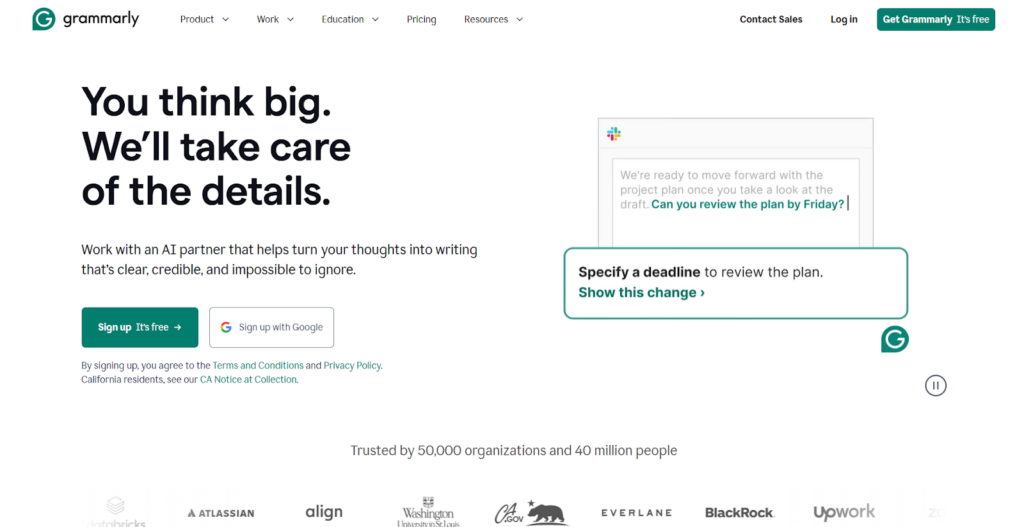
Writing tasks take time and focus. Grammarly checks grammar, spelling, and tone in real time. It uses AI to suggest clearer wording and better structure.
A user pastes text and receives instant corrections. The system highlights weak phrases and suggests stronger options.
Premium tools add citation support and style improvements. This reduces time spent on editing and polishing.
Pros:
- Fast corrections during writing
- Helps improve clarity and grammar
Cons:
- Advanced tools require payment
- Suggestions may sound too neutral
Wolfram Alpha

Complex equations slow down progress. Wolfram Alpha solves problems and explains each step. It covers algebra, calculus, and statistics with high precision.
A user enters a function and receives a full breakdown. Graphs appear alongside results, which helps connect theory with visuals. This tool suits both quick checks and deeper analysis.
Pros:
- Solutions for technical subjects
- Visual graphs
- Handles advanced calculations
Cons:
- Interface feels complex at first
- Full features require payment
Coursera
Long-term study needs structure and clear direction. Coursera provides full courses from universities and global companies.
Each course includes lectures, assignments, and final tests. Certificates confirm completion and add value to a resume. This format fits those who want deeper knowledge, not just quick answers.
Pros:
- Access to university-level education
- Certificates recognized in job markets
- Wide selection of subjects
Cons:
- Paid courses can cost a lot
- No instant help during tasks
Photomath
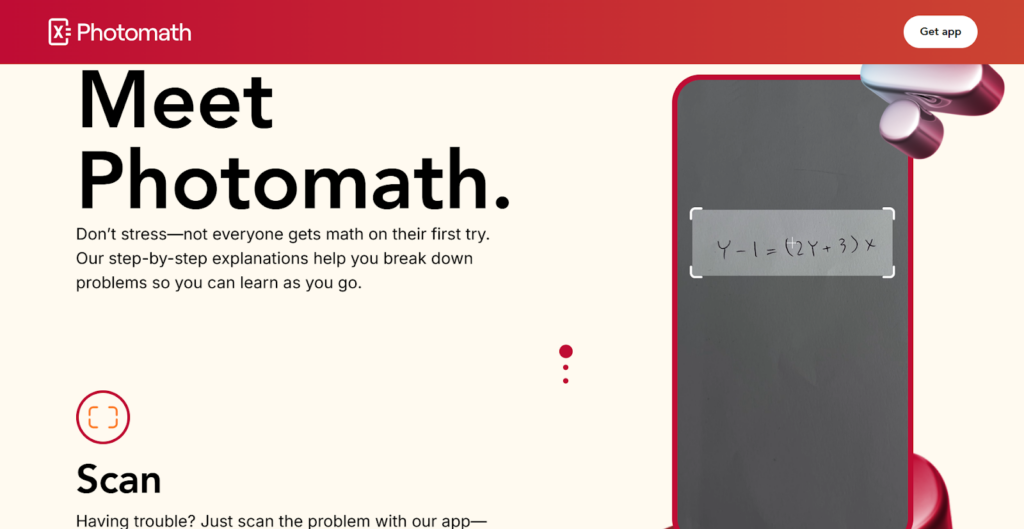
This app scans equations through a phone camera and shows solutions. The system explains each step clearly. It breaks complex tasks into smaller parts, which helps with understanding. This tool works best for algebra, arithmetic, and basic calculus.
Pros:
- Fast scanning and instant results
- Easy mobile use
Cons:
- Can reduce independent thinking
Notion
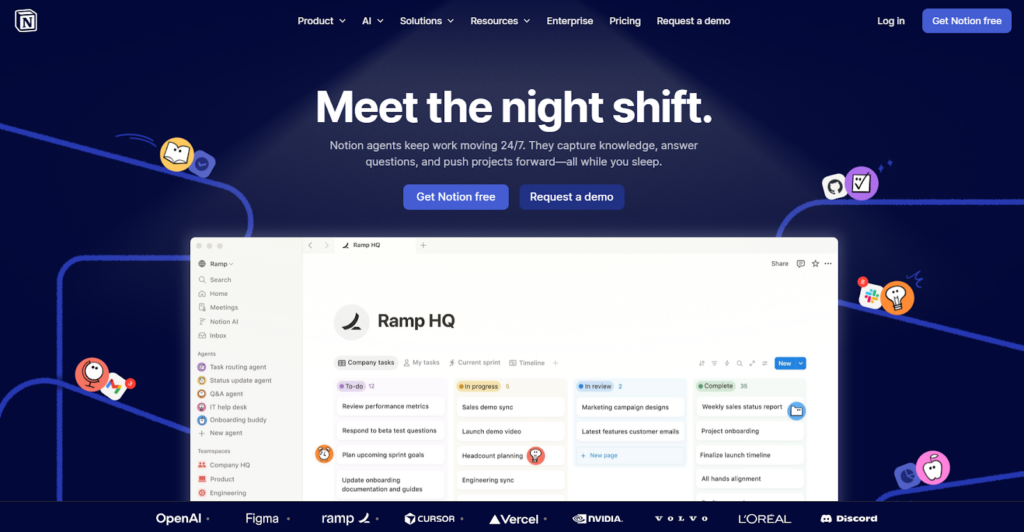
Study life needs structure, not chaos. Notion combines notes, task lists, and databases in one space. College learners use it to track assignments and manage schedules.
A user creates pages for each subject and links related content. Templates help organize deadlines and tasks. Shared pages support group work without confusion. This turns scattered notes into one clear system.
Pros:
- Flexible space for planning and notes
- Supports teamwork and sharing
Cons:
- Setup takes time at the start
What all smart education platforms have in common?
Systems like this follow a shared idea.
- support
- automation
- adaptive feedback
Their goal is to assist learning without removing effort. So what is similar between the most smart learning platforms?
Online help that adjusts to each student
These systems track how users respond to tasks over time. When we talk about complex educational platforms online, they adjust difficulty based on the answers. This is how personalized learning works.
- A quiz becomes harder after several responses. It becomes simpler when repeated mistakes appear.
- This method keeps learners within a useful challenge range. It avoids boredom and overload during study sessions!
- AI solvers also can break problems into pieces. They explain each stage instead of giving only final results.
Real-time feedback 24/7
Digital study tools remain active at any hour of the day. A learner can check answers late at night or early morning. No more delays linked to teacher schedules or library visits.
- Feedback appears right after task completion. Dashboards show progress, weak points, and completed topics. Reports help both learners and instructors track development clearly.
- This constant response cycle improves efficiency during study time. It reduces waiting and supports quick correction of mistakes.
Cloud access and device flexibility
Modern study tools rely on cloud systems for storage and access. Users open their work on phones, laptops, or tablets. This creates smooth transitions between devices during the day.
- Shared tools like Google documents and spreadsheets support teamwork. Groups edit the same file without location limits. This flexibility fits busy routines with short study sessions.
How smart platforms change the role of teachers?
Educators now act more like guides than content sources. When colleges use online systems, instructors gain access to detailed reports. These reports show progress, gaps, and student engagement levels.
This transformation affects daily work in several ways:
- Teachers focus more on guidance instead of repeating lectures
- Data helps identify learners who need extra support
- Automated grading reduces time spent on routine tasks
- Digital tools answer basic questions before class sessions
- Lessons can be planned based on real performance data
Automation removes repetitive work like checking quizzes or homework. This creates more time for discussion and deeper explanation.
- As a result, professors focus on complex topics and critical thinking. Their role becomes more strategic and less routine.
How smart knowledge works in practice?
Different types of systems support learning in daily life. Some manage courses, while others focus on solving tasks. There are also tools that teach short skills in small parts. Each type fits a specific need in modern education.
Learning management systems (LMS)
Course organization tools help manage materials and communication. They store assignments, grades, and updates in one place. Colleges use them in both online and hybrid formats.
Instructors upload materials and track submissions easily. Learners check schedules, submit tasks, and receive feedback. Built-in communication tools support discussions and updates.
Examples of LMS tools:
- Moodle
- Canvas
- Blackboard
Adaptive education platforms
These systems adjust content based on user performance. They analyze answers and modify tasks in real time. This method supports both advanced and struggling learners.
A strong learner receives more complex material sooner. A learner facing challenges gets simpler explanations and more practice. This creates a balanced path for different skill levels.
Examples of adaptive tools:
- Knewton
- DreamBox
- Smart Sparrow
Skill-based and microlearning tools
Short lessons focus on one skill or topic at a time. Each unit targets a specific concept or task. This format fits busy schedules well.
Users learn in small sessions without long commitments. It also helps with quick revision before exams or tasks.
Examples of microlearning tools:
- Duolingo
- Khan Academy
What lies ahead?
Recent market research shows the global education technology sector was worth about $269 billion in 2026. It is expected to grow even larger in the next few years.
Around 68% of universities and colleges now use digital tools to support teaching and learning. These numbers show how digital systems are becoming normal in higher learning today.
- Future systems will likely offer deeper personalization. They may track behavior patterns in more detail and adjust content faster. Data will guide decisions in both teaching and learning processes.
However, current AI tools still show clear limits. They can produce incorrect answers or unclear explanations. Most AI systems respond slowly when handling complex tasks. These issues show that human oversight still matters.
- At the same time, new models improve each year. Updates bring more accuracy and faster responses. Institutions will continue to combine human teaching with digital systems.
Final thoughts
Education keeps evolving, yet its purpose stays the same over the decades. Tools may change, but learning still needs effort and curiosity.
Smart systems provide support rather than replacement. They help people manage time and understand ideas more clearly.
As Nelson Mandela said, “Education is the most powerful weapon which you can use to change the world.” This idea fits today’s college life and impacts young minds.