It’s Monday, 8:40am, and three of my account leads are already deep in tabs, pulling competitor movement across their roster before the first calls of the week.
Who’s bidding on our clients’ terms, who suddenly showed up in an AI answer. That weekly ritual is why the best competitor analysis tools earn their place on our stack: they turn scattered snooping into something a client can act on.
Here’s the short version: for most teams, SE Ranking is the strongest pick, because it reads a competitor’s organic, paid, and AI-answer presence in one place – so an account lead isn’t stitching three logins together per client.
If all you need is the single deepest backlink index, a specialist goes further on that one axis. For the full picture across a roster, it’s our default. Here’s how it and seven others compare.
What we looked for?
Here’s the thing – a tool only helps if it survives a real retainer roster. We weighted four things:
- One place for organic, paid, and AI-answer visibility – fewer logins per account.
- Gap analysis (keyword and backlink) you can turn into a client action.
- Client-ready reporting you can hand over without an hour of cleanup.
- Pricing that scales across many projects without per-seat pain.
We run competitor research across our own client roster; this is how these tools actually hold up.
What competitor analysis has to cover in 2026?
If you’re still only tracking blue links, you’re watching half the board. Gartner found AI Overviews lead 31% of consumers to consider *more* product options, versus just 7% who consider fewer (Gartner) – so brands that never ranked can still get named in an answer.
A modern seo competitor analysis tool has to read AI visibility beside organic and paid, or you’re briefing clients on an incomplete map.
The shortlist, side by side
| Rank | Tool | Best for | Data scope | AI visibility | Starting price |
| 1 | SE Ranking | Rosters needing SEO + PPC + AI in one | Organic + paid + AI | 5 engines | 129/mo |
| 2 | Ahrefs | Deepest backlink/link-gap work | Organic + some paid | Brand Radar | $129/mo |
| 3 | Semrush | Widest keyword + ad database | Organic + paid + AI | Yes | 139/mo |
| 4 | Similarweb | Whole-market traffic sizing | Market/traffic + AI | AI traffic | $125/mo* |
| 5 | SpyFu | Reading a rival’s paid/ad history | Organic + paid | No | 39/mo |
| 6 | Serpstat | Keyword/backlink gap on a lean plan | Organic + paid | Team+ | $50/mo* |
| 7 | Moz Pro | Domain Authority benchmarking | Organic | Yes | 49/mo |
*Similarweb self-service entry; higher tiers quote-based. *Serpstat entry on annual billing.
1. SE Ranking
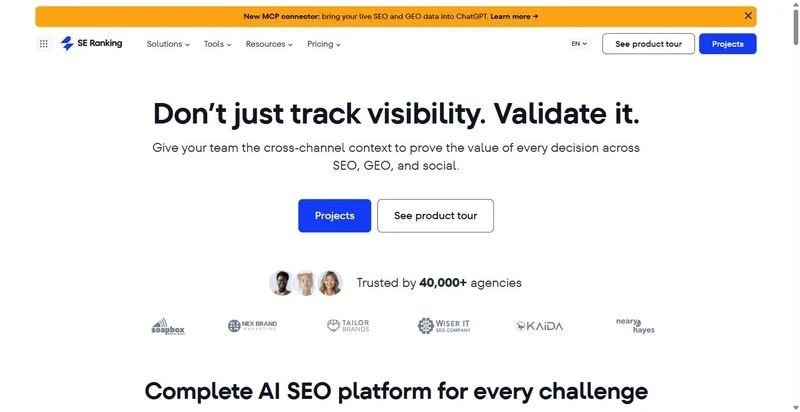
An SEO and AI-search visibility platform that profiles any domain’s organic, paid, and AI-answer presence from one entry point.
Best for: agencies running competitor research across a client roster who want SEO, PPC, and AI visibility in one login.
Standout: Its competitor traffic research profiles any domain with no project setup, spanning Google plus five AI engines – AI Overviews, AI Mode, ChatGPT, Gemini, Perplexity – with mention and citation frequency, position in AI brand lists, and side-by-side benchmarking beside keyword and backlink gaps.
Pros:
- Profile any competitor without setting up a project first
- Compare organic, paid, and AI-answer visibility in one login
- Hand clients white-label reports through the Agency Pack add-on
Cons:
- AI-search benchmarking is newer, so some data depth is still filling in
- The full roster picture sits on a higher-tier plan
Pricing: Core 129/mo(103.20 annual), Growth $279/mo; 14-day free trial. Agency Pack add-on from $69/mo (annual) adds white-label reporting and client seats. API and MCP in every plan.
My take: Here’s the thing – running competitor analysis software across a dozen clients, the win isn’t features, it’s fewer logins and a report you can hand over unedited. If it consolidates two subscriptions across your roster, the math works out fast.
2. Ahrefs
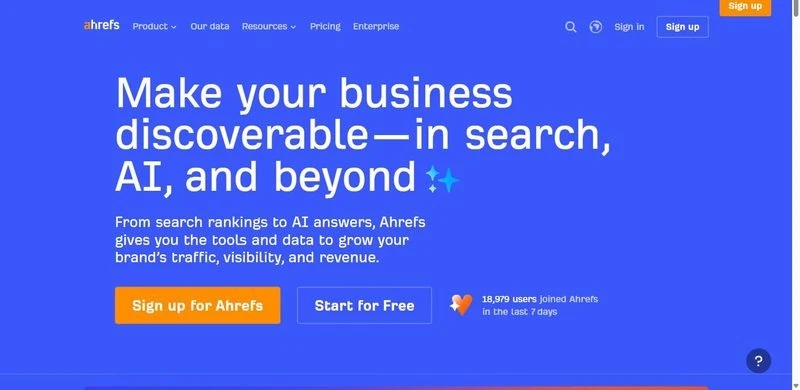
An SEO toolset best known for the largest independent backlink index; competitor work centers on Site Explorer and link gaps.
Best for: teams whose competitor work is backlink- and link-gap-led.
Standout: Site Explorer surfaces a competitor’s organic keywords, top pages, traffic estimates, and paid keywords; Competitive Analysis covers keyword, content, and backlink gaps via Link Intersect. Brand Radar adds AI-search visibility, but the center of gravity stays on links.
Pros:
- Trace competitor backlinks through the largest independent link index
- Map keyword, content, and link gaps in one workflow
Cons:
- API isn’t bundled into standard plans, and usage is credit-metered
- No true free trial, and paid/PPC data runs thinner than dedicated PPC tools
Pricing: From $129/mo (Lite), Standard $249/mo; each plan bundles one seat, with extra seats costing more.
My take: If your competitive edge lives in backlinks, few tools read the link graph like this one. Just know the per-seat pricing and metered API add up as your team grows.
3. Semrush
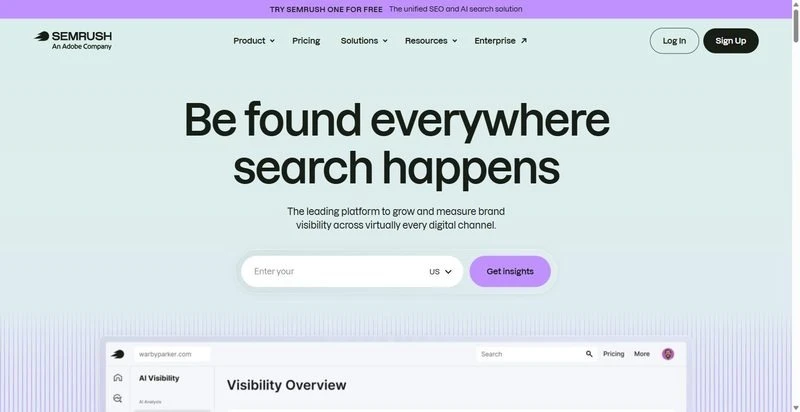
One suite pulling keyword, competitor, backlink, ad, and AI-search data into a single window on a huge keyword database.
Best for: teams wanting the widest keyword and ad database in one suite.
Standout: Domain Overview and Organic Research map a rival’s rankings; Keyword Gap and Backlink Gap surface where they beat you. Advertising Research and PLA data expose their paid keywords and ad copy, and Traffic Analytics widens the view to market share and AI-search visibility.
Pros:
- Maps rival rankings, gaps and backlinks in one connected workflow
- Exposes competitors’ paid keywords, ad copy and PLA history
- Tracks AI-search visibility and prompt mentions alongside classic SEO
Cons:
- Traffic Analytics has historically been a paid add-on, not bundled
- Costs climb quickly once you add seats and lift daily report caps
Pricing: From 139/mo(117.33/mo billed annually); Starter tier $199/mo, with a limited free plan.
My take: If your team lives across SEO, content and PPC, Semrush gives you the broadest single database, and that breadth pays back across a portfolio. Just plan for the add-ons and seats; the sticker rarely reflects your real monthly total.
4. Similarweb
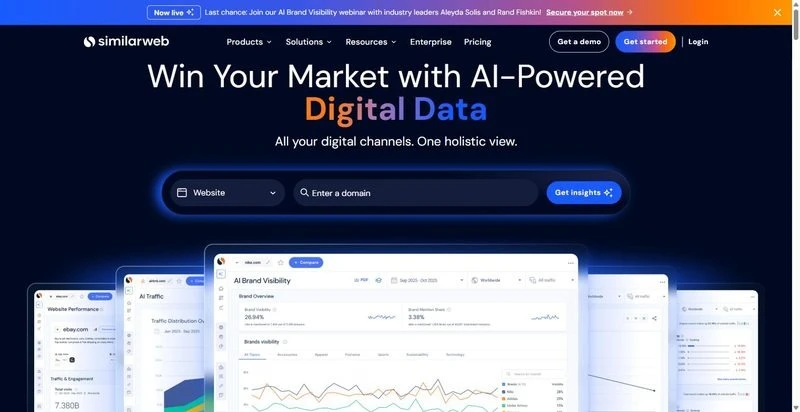
A market-intelligence platform that estimates a rival’s whole-web traffic from panel and clickstream data.
Best for: sizing a rival’s whole-market traffic and audience, not just SEO.
Standout: Instead of stopping at keywords, Similarweb shows total visits, traffic-source mix, audience overlap, and category market share, so you see where a rival’s demand comes from. Its ads intel and Gen-AI suite extend that into paid channels and AI-driven traffic.
Pros:
- Reveals a competitor’s total traffic mix and audience sources
- Benchmarks market share across a whole category, not single keywords
Cons:
- Pricing stays opaque and climbs fast with each add-on suite
- Panel-modeled data slips on smaller domains, and SEO depth is thin
Pricing: Self-service Web Intelligence starts at $125/mo billed annually; Business and higher tiers are quote-based.
My take: Reach for Similarweb when the question is bigger than search – how much total traffic a rival commands and where their audience overlaps yours. For SEO and backlink depth, pair it with a dedicated tool, and expect quotes that climb with every suite.
5. SpyFu
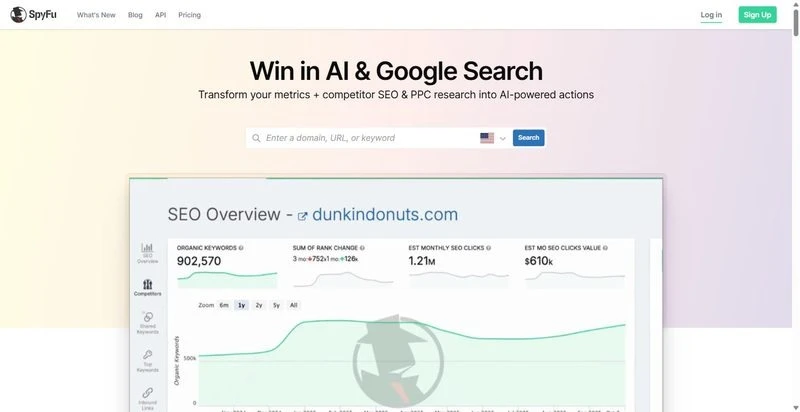
A competitive-research tool built to read a rival’s paid and organic keywords, with deep ad-copy history.
Best for: reading a rival’s paid-search playbook and ad history.
Standout: SpyFu pulls a competitor’s organic keywords and estimated traffic with their AdWords buys, then layers on years of ad-copy history so you see which messages they kept running. Kombat compares keyword overlap across up to three domains.
Pros:
- Tracks a rival’s ad-copy history across more than a decade
- Compares paid and organic keyword overlap across three domains
Cons:
- Data runs strongest for the US and thins out internationally
- Traffic estimates and backlink index trail pricier tools; interface feels dated
Pricing: Basic starts at 39/mo(33/mo billed annually); Professional at $79/mo adds API access, unlimited exports and 10+ years of history.
My take: When your priority is decoding how a competitor spends on paid search, SpyFu’s ad-history depth earns its place. Treat its traffic and backlink numbers as directional, and lean on richer tools when international data matters.
6. Serpstat
An all-in-one SEO platform pairing keyword research, rank tracking, and site audit with organic and paid competitor analysis.
Best for: Lean in-house teams wanting keyword and backlink gap work without signing a long contract.
Standout: It covers organic and paid keyword rankings, keyword and domain gap, backlink analysis with a backlink gap, and traffic estimates. Team plans add an AI Overview Brand Opportunities report, showing where a rival surfaces in AI answers you’re not.
Pros:
- Compare organic and paid gaps side by side
- Track backlink gaps against several rivals at once
- Access AI-answer opportunity data on Team plans
Cons:
- Entry plan omits API, batch analysis, and AI tools
- Databases run smaller than the largest vendors
Pricing: From $50/mo (Individual, annual); Team $100/mo adds API and AI tools.
My take: For a mid-market team that lives in keyword and backlink gaps, this covers the recurring work without an oversized commitment. Budget for Team if you need API, batch runs, or the AI report.
7. Moz Pro
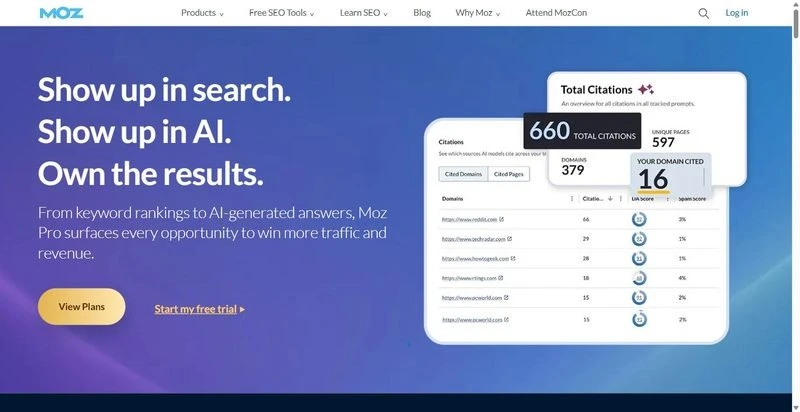
A long-established platform built around Domain Authority and Page Authority, now with AI-search visibility tools.
Best for: Teams that benchmark on Domain Authority and want AI-citation tracking sitting beside it.
Standout: Domain Overview and Competitive Research handle keyword-gap analysis; Link Explorer covers backlinks and link gaps. AI Visibility dashboards track prompts and citations across GPT, Gemini, and Google AI Mode, so you show a client where they’re quoted in AI answers, not only where they rank.
Pros:
- Benchmark rivals on familiar DA and PA scores
- Track AI citations across major answer engines
- Run link-gap analysis inside Link Explorer
Cons:
- DA and PA are Moz estimates, not Google metrics
- Metered queries and minimal PPC data
Pricing: Starter $49/mo, Standard 99/mo(79 annual), Medium $179/mo.
My take: If your reporting already speaks Domain Authority, keeping that language while adding AI-citation tracking is a clean fit. Just set expectations that DA is Moz’s model, not Google’s, and look elsewhere for paid research.
8. SparkToro
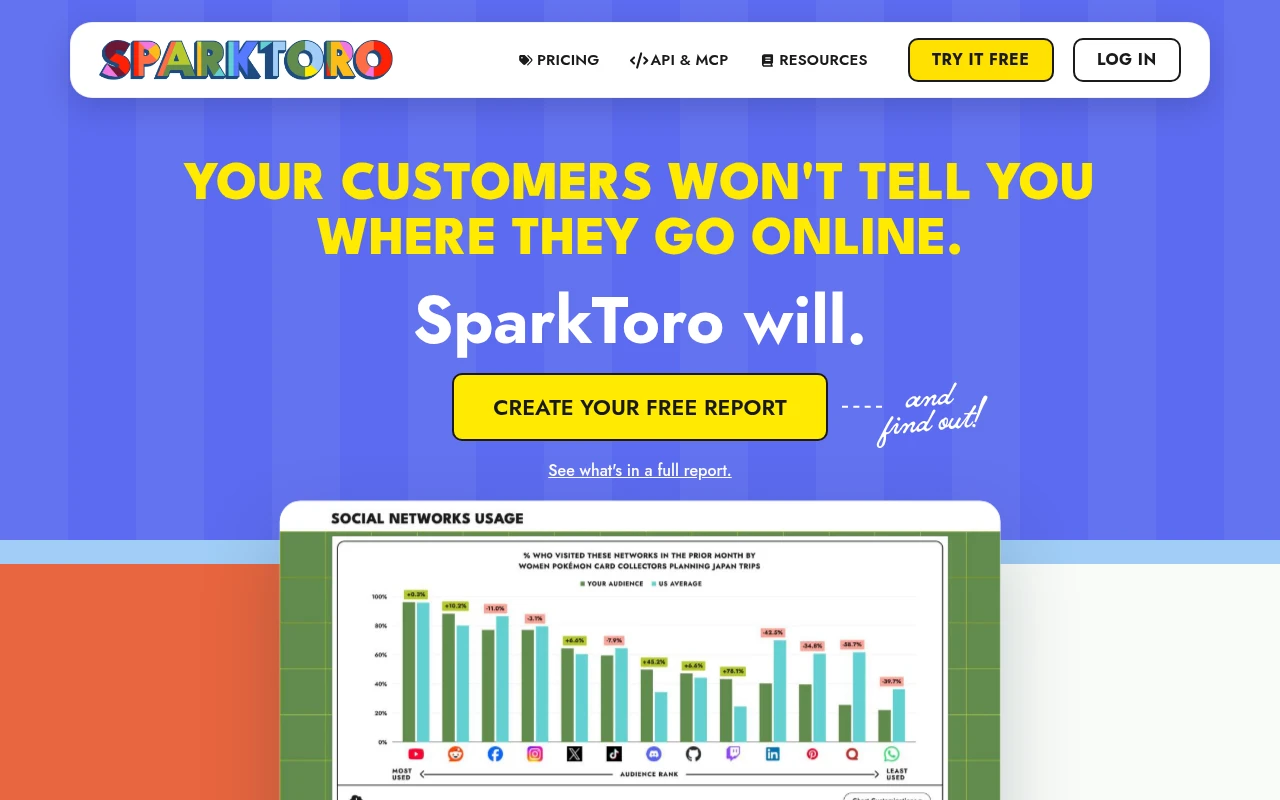
An audience-intelligence tool that reveals what a competitor’s audience reads, watches, follows, and searches – not a rank tracker.
Best for: Audience and PR-targeting intel that complements, rather than replaces, your SEO suite.
Standout: Research the sites, social accounts, podcasts, and publications an audience actually engages with, then map competitor and audience overlap for outreach. It’s the intel that makes link-building and digital-PR pitches land with the right publications.
Pros:
- Surface the publications a rival’s audience trusts
- Map audience overlap for sharper PR targeting
Cons:
- No rankings, backlinks, traffic, or site audit
- Report volume capped on every plan
Pricing: Free plan (3 previews/mo); Personal from $50/mo; Business $150/mo.
My take: This earns its seat as a specialist, not a suite. When a retainer includes digital PR or link outreach, knowing where the audience spends time makes your pitches sharper. For rankings and gap data, lean on your core platform.
The verdict for a client roster
For most agency rosters, SE Ranking is the pick among the best tools for competitor analysis, because it covers organic, paid, and AI research in one login – with reporting you can hand a client without reformatting. Across a dozen retainers, fewer logins means fewer errors and more hours on strategy than tab-switching.
The alternates map to jobs: Ahrefs when the work is backlink-led, SpyFu for a rival’s paid and ad history, SparkToro when the retainer turns on audience or PR intel.
Skip if: you need keyword and backlink gap data – skip audience-only tools like SparkToro as your core; and skip a second PPC-only tool when your suite already covers ads.
FAQs
How many competitor analysis tools does an agency actually need?
Usually one all-in-one platform for the recurring 80%, plus maybe one specialist for a job your suite doesn’t cover. Every extra login is another place for data to drift across a roster.
Which competitor analysis metrics should you report to clients?
Report share-of-voice and visibility trend, the keyword and backlink gaps you’re closing, and whether the client shows up in AI answers. Skip vanity metrics that don’t tie to pipeline. Clients pay for movement they can feel.
Can one platform handle competitor analysis across a whole client portfolio?
For most rosters, yes – as long as it covers organic, paid, and AI research in one place, like SE Ranking, which keeps reporting consistent across retainers. Very large or specialized portfolios may add a single specialist, but rarely more.