Cloud storage has emerged as the frontline of contemporary business, with the flexibility, scalability and capability in managing large volumes of data.
Nonetheless, with the growing dependence on digital platforms among organizations, the risk of cyberattacks, data breaches, and unacceptable access has become much greater.
In response to these issues, companies are considering the use of zero trust security, where it is assumed that no user or system can be trusted, whether it is an insider or outsider to the organization’s network.

The promise of zero trust security in cloud storage is likely to define the future of the security of digital assets of companies. Relinquishing the old-fashioned perimeter-based protection and adopting constant verification, a business will become more capable of protecting valuable data.
This model will change the benchmarks of cloud security, as it will develop, and provide new opportunities to organizations to handle their data in a responsible way.
The Shift From Perimeter Security To Zero Trust
Previously, companies tended to use perimeter-based defenses whereby users and devices within the network were automatically trusted.
This strategy created vital vulnerabilities, particularly when companies moved to remote workplace arrangements, cloud computing, and third-party integrations. After an attacker had breached the perimeter, he or she usually had much access to sensitive systems.
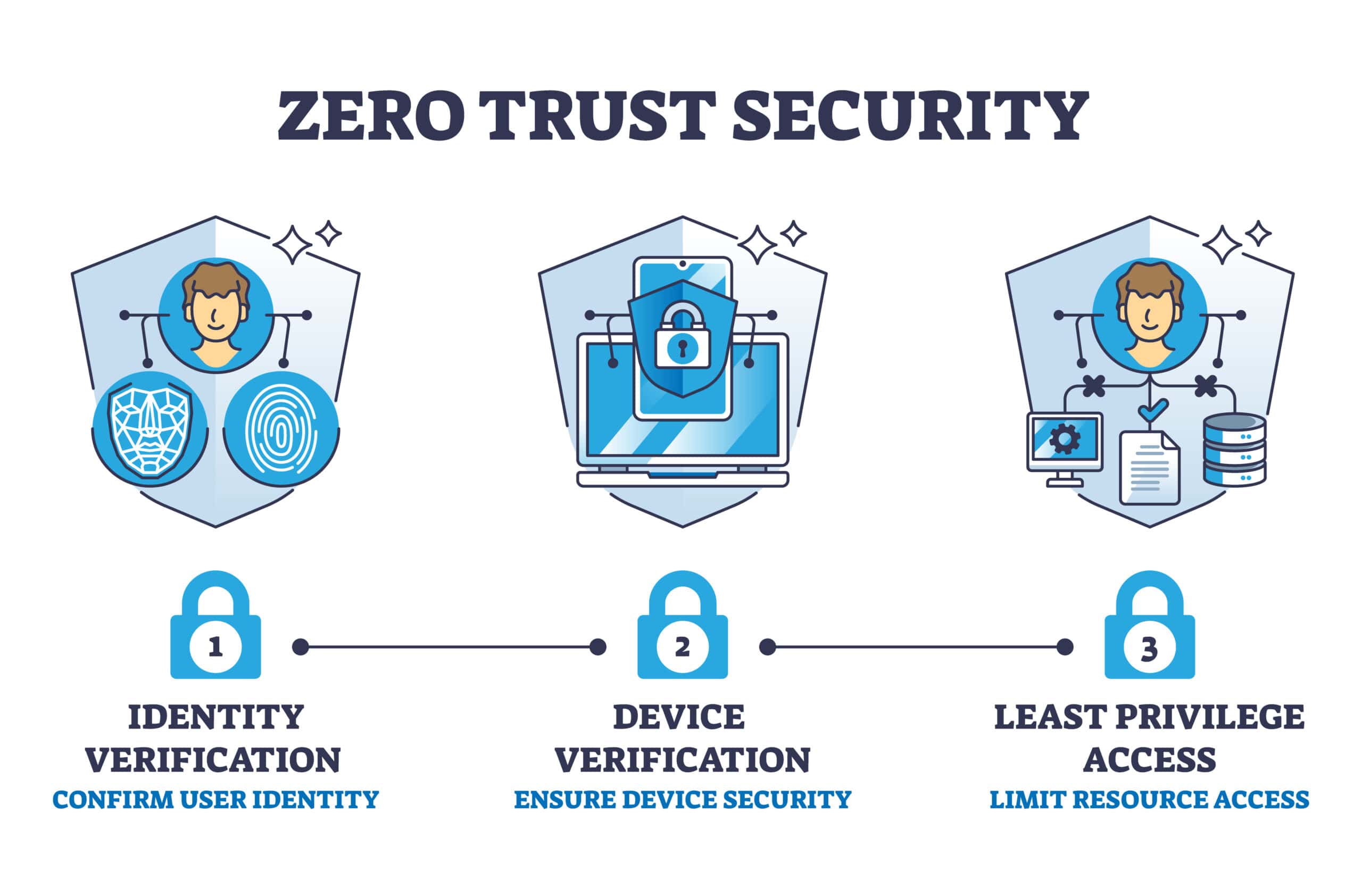
Zero trust transforms this old paradigm because verification is necessary at every level. It does not presume that safety is going to be found within the network anymore. Instead, all users, devices and applications should be continually authenticated and authorized.
This will guarantee that in the event of a breach to one point of entry, attackers cannot easily relocate through the system.
The Role Of Continuous Verification
Zero trust security is based on continuous verification. This is carried out by continuously watching user behavior, health of the devices, and access requests.
Instead of a single log-in, systems measure risk levels during the session to make sure that the suspicious activity is identified at an early stage.
In the case of cloud storage, this is an indicator that files, applications, and databases are accessed only by users that pass security checks regularly. It will minimise the chances of illegal access, despite the possibility of stealing login information.
Constant checks are also beneficial to companies that have remote teams as it imposes security without limiting output.
Protecting Sensitive Business Data
Companies keep a lot of sensitive information in the cloud including their financial records and customer intelligence. This data may become an excellent target of the cybercriminals without adequate security.
Zero trust also keeps the sensitive files secure by implementing the principle of least privileges, which means that the users have access only to the necessary files.
With increased pressure on industries to comply with existing regulations, zero trust can also be adopted in cloud storage to enable organizations to show compliance.
Restricting access and implementing powerful authentication methods can help companies to minimize data leakage risks and keep clients and other stakeholders in trust.
Addressing The Risks Of Free Cloud Storage
Free cloud storage services could be convenient, but they are frequently limited when it comes to the number of security features.
Small businesses and personalities can use these services without knowing that they will not include the same protection as those provided by enterprise-level solutions. This would put important files at risk.
It is possible that the zero trust model may affect the way even free storage providers tackle security in the future. These platforms will provide a higher level of protection to users by adding multi-factor authentication, device monitoring and encryption.
Companies that are looking to use free cloud storage should take all risks into consideration and see whether it would be prudent to add more layers to zero trust security.
Integration Of Artificial Intelligence
The scope of artificial intelligence is likely to be huge in the development of zero trust security. AI based systems are able to scan user behavior, identify abnormal access behaviour and automatically block suspicious behaviour. The ability enables companies to fortify their defences and respond more quickly to any future threat.
In the case of cloud storage, AI integration will offer the advantage of monitoring large data volumes at all times and eliminate the need to supervise it manually.
This increases efficiency and does not compromise security, which makes zero trust more feasible and practical to organizations regardless of their size.
Preparing Businesses For The Future
Zero trust as the new security in the cloud environment is not a fad that should be taken briefly but a long-term requirement.
Cyber threats are becoming more sophisticated, and conventional forms of trust are not already effective to prevent valuable information.
Any organization investing in zero trust nowadays will prepare better against the security threats tomorrow.
Going to zero trust involves changes in the culture and technology of companies. Business firms should train their employees about the importance of security awareness, install sophisticated authentication systems, and adopt monitoring tools on all platforms.
Through such investments, they are confident that cloud storage will be a healthy and secure base of growth.
Conclusion
The future of the zero-trust security in cloud storage is a significant change in the approaches of organizations to digital protection.
Getting rid of presumptions of trust and adopting the concept of constant checks will enable businesses to greatly mitigate risks and help sustain the efficiency of operations.
This model will be further enhanced by the inclusion of artificial intelligence, compliance to regulations, and enhanced security to users of free cloud storage.
Zero trust is becoming the norm of secure and accountable data management as businesses proceed to live in an increasingly digitalized world.
The ones, which can adjust promptly will not only save their property but also gain more trust among their customers and partners in the future years.