
The future of cross-border payments hinges not on the number of payment methods available, but on revolutionising the money movement for financial clarity and control.
For a long time, the industry believed that growth stemmed from expansion, which involved features such as more payment options, supporting additional currencies, and entering new markets. This unlocked global commerce and helped businesses scale across borders faster than ever before.
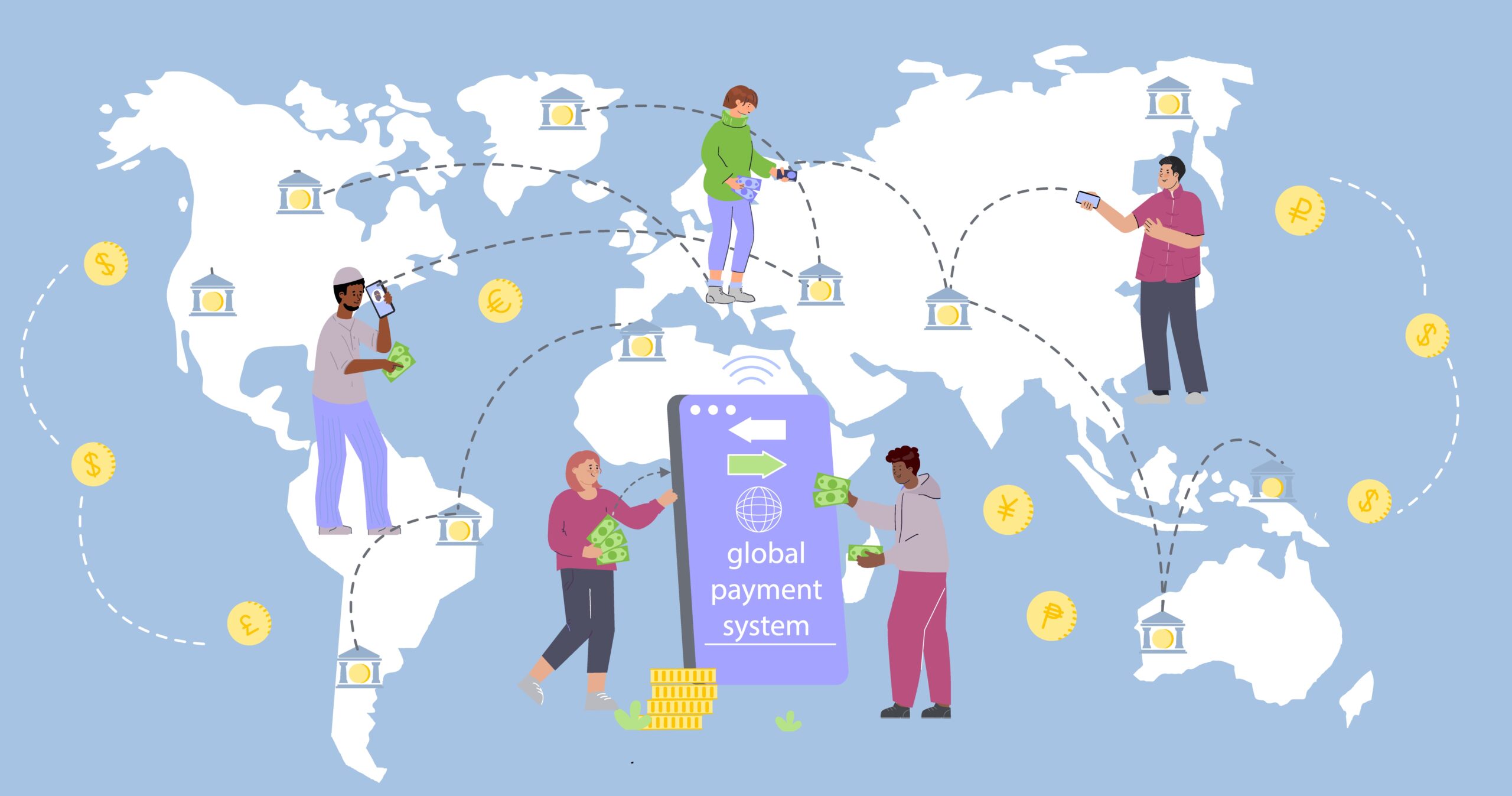
Today, cross border payments of more than $200 trillion are made each year, but many finance teams are still struggling to answer in real-time a simple question: “How much cash do we actually have and where is it?” That gap between transaction success and financial clarity marks the beginning of the next era.
The latest industry forecasts indicate that alone, cross-border payment revenues will exceed $320 billion by 2030, driven by the momentum of B2B flows and platform-based business models.
Meanwhile, most international businesses express that they lack real-time access to cross-border cash flows, creating a level of complexity that exceeds the capabilities of many financial control mechanisms.
The real battleground is no longer the checkout page. It is everything that happens after the payment is made.
Payments Are No Longer a Checkout Problem
For years, payments were seen as a front-end optimization challenge. When the customers paid easily, it was considered an achievement. The standard playbook focused on adding local methods, reducing friction, and increasing conversion.
Each successful transaction involves a series of complex activities: settlement across borders, currency conversion, fund allocation, reconciliation and reporting.
In many organisations, these steps are not integrated with each other. Payments are processed in one system, settlements appear in another, and reconciliation occurs somewhere else—often manually.
This results in operational challenges:
- Finance teams find difficulty having real-time visibility of funds globally
- Treasury teams find it difficult to forecast the liquidity.
- The reconciliation process slows down the reporting process.
Reconciliation and exception handling are activities that typically consume a lot of time in finance teams, mainly due to the fragmented payment and settlement processes in place. Likewise, lots of firms have to deal with settlement issues directly related to missing payment data.
This explains why even rapidly growing companies experience working-capital inefficiencies, as funds are often misallocated or not visible across regions.
This is why the industry is shifting from an acceptance-first mindset to a settlement-first mindset.
The key question is no longer: “Did the payment go through?”
It is: “What happened to the money after it went through?”
In the next three to five years, the winners will be those who can answer that question instantly, with clarity and control.
The World Is Becoming Multi-Rail—Whether We Like It or Not
There was a time when the industry quietly hoped for convergence—a single, dominant system aimed to simplify global payments.
That is not happening.
In fact, the ecosystem is becoming more diverse. Card networks continue to dominate global commerce. Real-time bank transfer systems are experiencing rapid growth in domestic markets.
Local payment methods remain essential in regions where cards have never fully gained traction. Meanwhile, digital rails are introducing new models of speed and programmability.
Each rail solves a different problem. None of them solves every problem.
The scale of this transition is significant. Real-time payment systems alone are expected to process over 575 billion transactions globally by 2028, accounting for nearly 27 percent of all electronic payments.
Meanwhile, alternative payment methods already represent over 55 percent of global e-commerce transactions, underscoring the fact that no single rail can dominate the ecosystem.
Meanwhile, the cost constraints are increasing the acceptance of multi-rail systems. Costs of cross-border transactions can significantly vary depending on the rail used, making intelligent routing not just a technical advantage, but also a margin-optimisation strategy.
The solution is orchestration, not simplification. Businesses are now integrating multiple rails for acceptance and settlement. Building redundancy reduces reliance on a single system. The objective is not to eliminate complexity, but to make it manageable.
A unified control layer is a system that sits above all payment rails and defines:
- Where funds are received.
- How they are routed internally based on cost, location, or risk.
- Where they are settled and stored.
- How they are reported and reconciled.
This is where structured account frameworks, including dedicated or virtual account structures, can become an important part of the control layer.
The benefits are not just operational—they are strategic:
- Faster and more automated reconciliation.
- Clear fund ownership, reducing accounting ambiguity.
- Regulatory alignment, especially for safeguarding and client-fund segregation.
- Real-time visibility into balances across entities and geographies.
- The ability to route funds to specific accounts based on liquidity requirements.
- The ability to trigger payouts or internal transfers automatically.
- The ability to enforce rules such as holding periods or risk-based routing.
The adoption of virtual IBANs and named accounts is accelerating among fintech companies and global platforms. Some providers report that implementing structured account frameworks can substantially reduce reconciliation effort while also improving settlement transparency.
In regulated industries such as marketplaces and financial services, the use of segregated IBAN structures is also becoming a compliance expectation, particularly in regions that enforce stricter safeguarding and client-fund protection rules.
In essence, IBANs and named business accounts turn the unified control layer into something tangible: a system in which every unit of money has a defined place, purpose, and path.
Control Is Quietly Replacing Speed as the Real Value Driver
Faster payments, real-time payments, and instant settlement became the industry’s favourite narrative. However, a quick payment does not necessarily mean that the money received is controlled and tracked in real time. This can also create operational friction. In fact, faster movement without proper structure can amplify complexity rather than reduce it.
This is why the conversation is shifting from speed to control.
Control means knowing exactly where funds are at any given moment. It means being able to define how money should move based on business policies—whether that involves routing high-risk transactions differently, settling in specific currencies, or segregating funds across accounts.
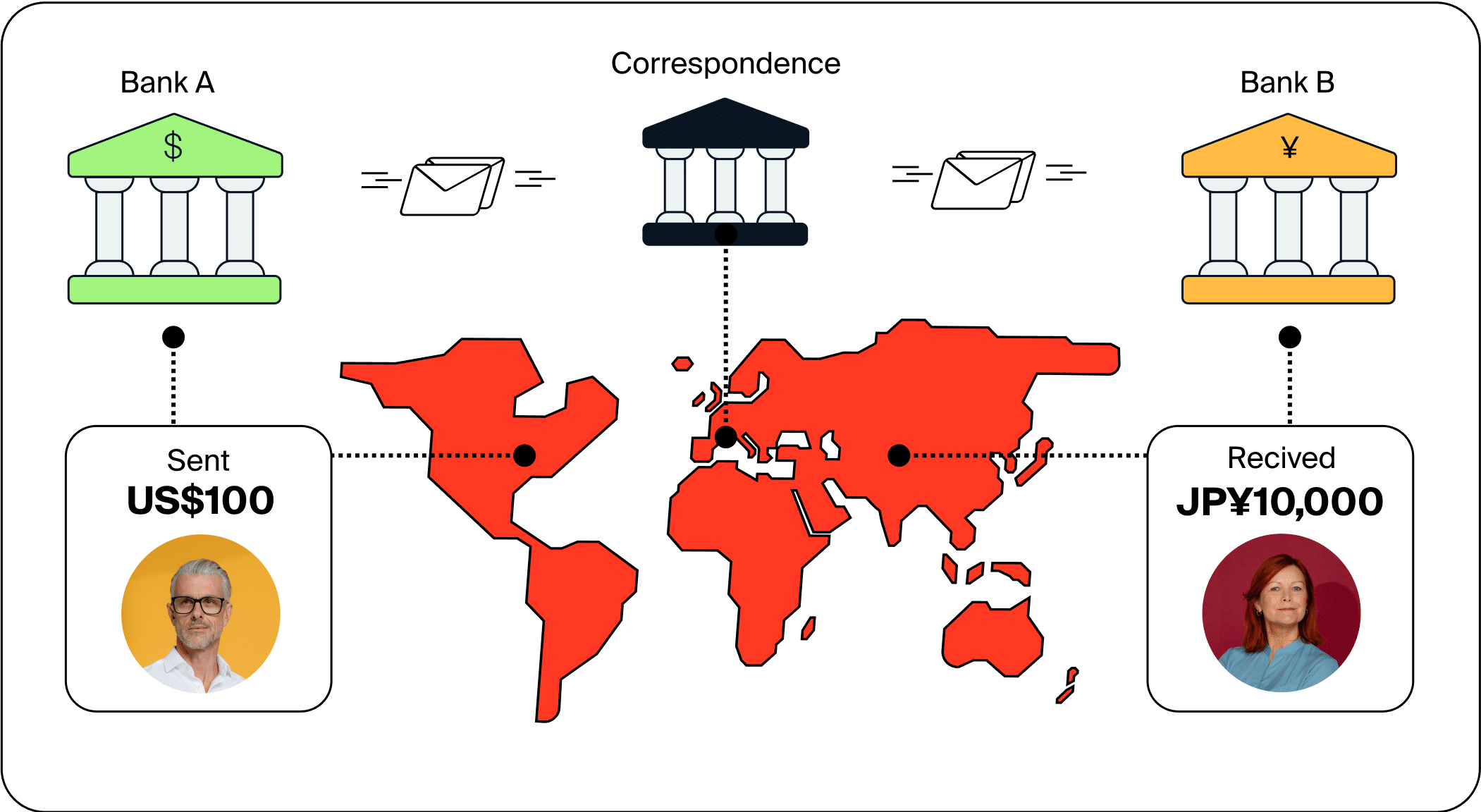
Each account is no longer just a destination. It is a node within a financial system.
This enables:
- Real-time tracking of balances.
- Automated routing of funds between accounts.
- Liquidity management across regions.
- Faster and cleaner financial reporting.
Businesses still spend days closing their books because of fragmented and inconsistent payment data. Inefficiencies in reconciliation and settlement also play an important role in increasing hidden costs.
Although real-time payments are growing rapidly, their adoption has not eliminated operational challenges. According to surveys, more than half of the companies using real-time payment rails continue to rely on batch-based reconciliation processes. This creates an imbalance between the speed of payments and the level of financial control.
Additionally, fraud and compliance risks are increasing. By 2027, the estimated annual loss from global payment fraud is expected to exceed $40 billion, making policy-based controls within payment flows increasingly important.
As regulatory pressures continue to mount across regions, businesses can no longer afford to treat compliance as an afterthought. It must be integrated into the way transactions are processed, routed, and settled.
Preparing for a System That Thinks in Policies, Not Transactions
What does this shift actually require from businesses?
Payments can no longer be managed by a single team. They affect finance, treasury, operations, and compliance all at once. Therefore, payments no longer work in isolation, they must be incorporated into its broader financial framework.
Visibility is now essential. As businesses expand and operate across multiple countries, they require real-time cash-flow management. It is no longer merely helpful—it provides companies with a genuine competitive advantage.
Adaptability is also necessary. Previously, a single payment provider was sufficient. However, in today’s world, there are numerous payment systems, or rails, and relying on a single system is a bit – risky.
Companies are becoming efficient enough to change routes, select alternative providers, and adapt quickly to changing conditions. This shift is already taking place. Businesses are now investing more in systems that consolidate payments, settlements, and financial transactions in a single location.
Moreover, companies that adopt integrated payment and treasury systems report:
- Financial closing processes that are up to 25 percent faster.
- A significant reduction in manual work among finance teams through automation.
The scale of global payments today cannot be managed effectively through manual processes alone. Payment automation helps maintain accuracy, improves consistency, and enables teams to focus on more strategic work rather than repetitive tasks.
Above all, there must be alignment across teams. Payments, finance, and compliance teams should work in partnership, sharing information and objectives to support effective collaboration. Without this alignment, even the best technology may fail to deliver the desired results.
Closing
Cross-border payments are not becoming simpler. Instead, they are becoming more sophisticated.
As global commerce shifts towards always-on, platform-based models, cross-border transactions are expected to increase in volume, speed, and complexity. By 2030, cross-border payment flows will likely exceed $250 trillion. This means that structured, policy-driven money movement will become not just a competitive advantage, but a necessity.
The industry is moving beyond the race to support more payment methods and towards a deeper challenge: managing the flow of money across borders with precision and intent. As systems become more interconnected and volumes continue to rise, complexity is inevitable.
What will differentiate businesses is not their ability to avoid complexity, but how effectively they manage it.
The winners of the future will not be the platforms that support the greatest number of payment methods. They will be those that can orchestrate multiple systems into a coherent, policy-driven framework—one that provides visibility, structure, and confidence in every movement of money.
Ultimately, the future of B2B payments is not about transactions. It is about how intelligently, transparently, and reliably money moves.




