
The last thing you want when deploying an Automated Guided Vehicle (AGV) or an Autonomous Mobile Robot (AMR) in a warehouse, factory, or logistics hub is an AGV motor or AMR drive motor that hesitates, overheats, or fails at the worst possible moment.
What these systems demand is reliability, smooth operation, and sustained torque output—shift after shift, load after load. In this context, a high-quality high-torque Brushless DC (BLDC) motor becomes more than a component; it becomes the core of the entire AGV drive system.
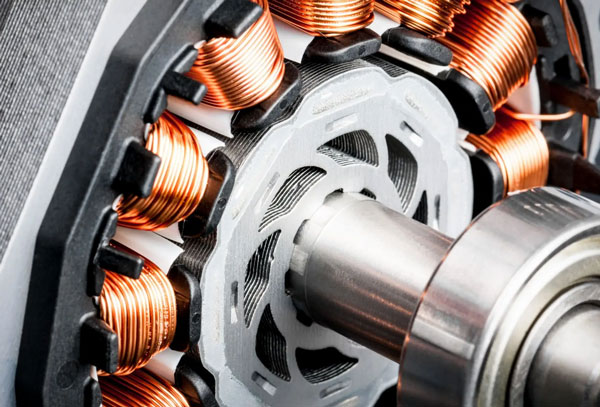
A high-reliability BLDC motor drive enables stable, high-torque performance, and this combination is precisely what modern AGVs and AMRs depend on.
From the initial activation to the final meter before docking and charging, a BLDC-driven drivetrain offers predictable, repeatable motion.
With brushless technology, you are investing not only in performance but also in long service life, reduced maintenance, and high operational uptime—all critical metrics for automated fleets.
Why BLDC Motors Feel Right for AGVs/AMRs?
Imagine an AGV carrying heavy pallets through a warehouse, repeatedly starting, stopping, turning, braking, and reversing direction throughout the workday.
A traditional brushed traction motor often struggles with these duty cycles or suffers accelerated wear. A BLDC motor for AGVs or AMRs, however, is engineered to excel in such demanding environments because:
Strong, consistent torque—especially at low speeds
AGVs and AMRs require smooth, controlled motion, particularly when carrying loads or performing precise docking maneuvers.
BLDC motors provide a flat torque–speed curve, enabling high torque from near-zero RPM to operating speed. This ensures smooth starts, stable movement, and prevents stalls during heavy-load operation.
High efficiency = longer runtime and fewer charging cycles
With efficiencies commonly exceeding 85–90%, BLDC motors waste far less energy than brushed alternatives.
While BLDC motors are not formally classified under IEC 60034-30-1 (which applies primarily to line-operated induction motors), this high efficiency — comparable or better than many IE3/IE4-rated induction motors under their rated conditions — makes them highly suitable for battery-powered AGV/AMR applications.
For battery-powered AGVs and AMRs, this translates into extended runtime, reduced charging frequency, and the ability to support heavier loads without compromising endurance.
Most AGV traction systems operate on 24–48 volt platforms, making a 48V BLDC motor the standard choice for high-torque, energy-efficient AGV drive systems.
Quiet, smooth, low-vibration operation
With no brushes to generate friction or electrical noise, BLDC motors operate with minimal sparking and vibration.
This reduces mechanical wear and contributes to a safer, quieter, human-friendly working environment—especially important in facilities where humans and robots operate side by side.
Long lifespan and reduced maintenance
A properly engineered industrial BLDC motor provides significantly higher Mean Time Between Failures (MTBF) compared to brushed alternatives. This means fewer unexpected failures, fewer maintenance interventions, and better fleet reliability.
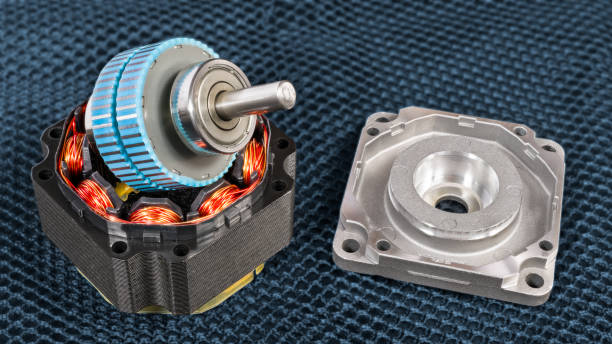
Typical Motion Requirements for AGV/AMR Motors
AGVs and AMRs operate under motion profiles that place unique and continuous demands on their drive motors. Understanding these requirements highlights why high-torque, high-efficiency BLDC motor drives are essential:
Ramp-up torque for starting heavy loads
Vehicles must overcome static friction and inertia when beginning motion under load. This requires strong ramp-up torque to ensure smooth, controlled acceleration without jerking or stalling.
Many AGV traction platforms use a 48V BLDC motor to provide the necessary startup torque while maintaining high electrical efficiency.
Holding torque for inclines or uneven surfaces
Facilities with ramps or sloped transfer areas require motors that can maintain sufficient holding torque to prevent rollback and ensure stable position control.
Low-speed smoothness for precise docking
During pallet pickup, conveyor alignment, or charging-dock approach, AGVs depend on precise low-speed control. BLDC motors excel at delivering smooth torque at near-zero RPM for graceful, accurate docking.
High cycle-count durability for repetitive stop-start motion
AGVs repeat thousands of start–stop cycles per day. Motors must withstand high duty cycles without overheating, degrading, or requiring frequent maintenance. BLDC motors are inherently suited for these continuous workload patterns.
From Features to Business Outcomes: The BLDC Value Proposition
High-torque BLDC motor drives offer technical advantages that directly translate into measurable operational and financial benefits. The table below illustrates how BLDC characteristics map to real AGV/AMR challenges and business value:
| BLDC Motor Characteristic | Operational Challenge It Solves | Business Value Delivered |
| High efficiency (90–92%) | Short runtime, frequent charging cycles | Lower energy costs, longer usable shift hours, reduced charging bottlenecks |
| High reliability (MTBF > 20,000 h) | High downtime cost, unpredictable failures | Higher fleet uptime, improved OEE, reduced maintenance labor and spare-parts demand |
| High power density | Bulky vehicles, limited chassis space | More compact and agile AGV/AMR designs, better aisle maneuverability, higher space utilization |
| Precise low-speed torque control | Docking errors, inconsistent pallet engagement | Reduced collisions and misalignment, improved task accuracy, safer human-robot interaction |
What This Means for AGV/AMR Owners, Designers & Managers?
Selecting a high-torque BLDC motor drive is not simply an engineering preference—it’s a strategic decision affecting long-term operational performance.
Reliability over time = predictable operations
High-reliability BLDC drives reduce unplanned downtime and minimize maintenance windows. When fleet uptime improves, disruptions decrease, and return on investment rises. This directly improves the Overall Equipment Effectiveness (OEE) of automated logistics systems.
Efficiency and battery life = measurable cost savings
More efficient motors mean fewer charging cycles, longer service intervals for batteries, and less wasted electricity. Across a multi-robot fleet, these savings accumulate quickly and significantly lower your total cost of ownership.
Compactness and design flexibility = more versatile AGVs
BLDC motors offer high power density, enabling smaller, lighter drivetrain designs. This empowers designers to build AGVs and AMRs that operate efficiently in tight aisles, dense storage environments, or compact manufacturing layouts.
Smooth, quiet operation = better workplace experience
Predictable motion, low noise, and reduced vibration are not just comfort factors—they improve safety, human-robot collaboration, and operator confidence in automated systems.
Why a Broad-Capability BLDC Motor OEM Matters?
Not all AGV and AMR platforms share the same load characteristics, voltage systems, mechanical footprints, or communication interfaces. Therefore, selecting a supplier with a broad portfolio of industrial BLDC motors, BLDC gearmotors, and motor controllers is essential.
A capable BLDC Motor OEM(Original Equipment Manufacturer) allows you to:
Match the exact torque-speed profile your application requires
Avoid over-engineering or unnecessary mass. Specify the right motor for your duty cycle, whether your AGV requires high starting torque, sustained continuous torque, or precise low-speed control.
Integrate drivetrain components more quickly
Motor-and-controller kits—including gearmotor options—accelerate development and reduce integration risk. This is especially important for teams building new AGV platforms or rapidly scaling fleets.
Customize for special environmental or mechanical requirements
From high-torque applications to compact chassis constraints, customization of shaft configurations, winding parameters, voltage ranges, or control interfaces (e.g., CAN, RS485, EtherCAT) ensures your AGV/AMR performs reliably in its intended environment.
Before choosing a BLDC motor for your AGV/AMR, confirm the following:
The following checklist consolidates the critical technical and supplier-evaluation criteria discussed. Using it transforms the selection process from a subjective comparison to a structured, evidence-based decision.
- Torque-speed curve matches peak & continuous load
- Efficiency curve aligns with battery system
- Encoder & communication bus compatibility
- Thermal profile fits your enclosure
- Supplier supports custom winding / form-factor
- Verified MTBF and duty-cycle test data
These checks form the foundation of a sound AGV motor selection framework.
Final Thought
Choosing a high-torque, high-reliability BLDC motor drive means building more than a robot—you’re building a platform designed for uptime, efficiency, and long-term resilience.
As warehouses and factories move toward higher autonomy, tighter spaces, and round-the-clock operations, the drivetrain becomes a core determinant of whether AGVs and AMRs can deliver consistent, predictable performance.
Looking ahead, BLDC-driven mobility systems will be central to next-generation autonomous logistics, enabling longer missions, smarter energy use, and more compact robot designs.
In a landscape where operational stability increasingly shapes business competitiveness, selecting a dependable BLDC motor drive is not just good engineering—it’s a forward-looking investment in the future of automated operations.




