
Two million apps compete for the same search results. Most of them are invisible — not because they are bad products, but because nobody did the keyword work.
App store optimization covers more ground than most teams expect when they start. Keyword research, metadata structuring, rank tracking, competitor monitoring, and store page conversion — each piece affects the others, and managing them across spreadsheets and disconnected tools means decisions get made slowly and on incomplete data.
What the Workflow Actually Looks Like?
The core cycle is straightforward: identify the queries users are searching for, structure metadata around them, track whether positions improve, and adjust based on the data. The problem is that each step requires data that the next step depends on.
Keyword research without volume data is guesswork. Metadata changes without rank tracking produce no feedback. Competitor analysis without a benchmark produces no direction.
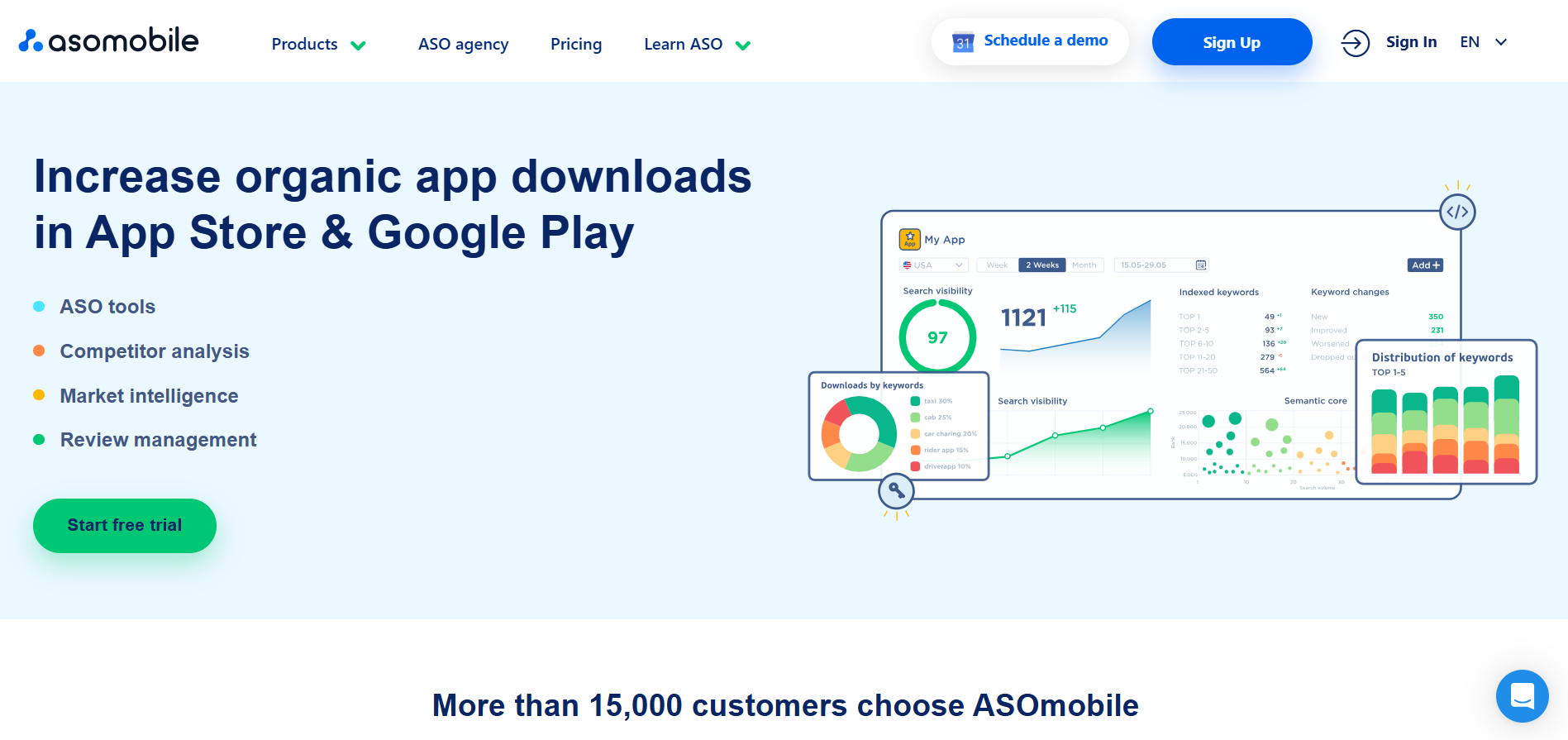
An app store optimization platform that connects these steps removes the manual overhead. Having keyword data, app keyword tracking, competitor signals, and market intelligence in one place means the cycle runs faster, and decisions are grounded in what is actually happening in the store.
For teams managing mobile app growth across the App Store and Google Play, this matters in practice. Localization adds another layer — search behavior in different markets requires separate keyword strategies, not translated titles.
Tracking rankings across markets without a dedicated tool means either limited coverage or significant manual work.
Where Teams Typically Lose Ground?
One of the most common patterns is launching with a metadata setup that made sense at the time and then leaving it alone. The store does not stand still.
Competitors update their listings, algorithm updates shift ranking signals, and seasonal search patterns change, which queries are actually worth targeting. An app that was well-optimized six months ago may be losing organic installs today without the team knowing why.
The other common gap is treating ASO as a launch activity rather than an ongoing one. The apps that achieve consistent organic growth are the ones that run regular keyword audits, monitor position changes after every metadata update, and track what competitors are doing in their category, week over week. That cadence is hard to maintain without a platform that automatically surfaces the right data.
What ASOMobile Covers?
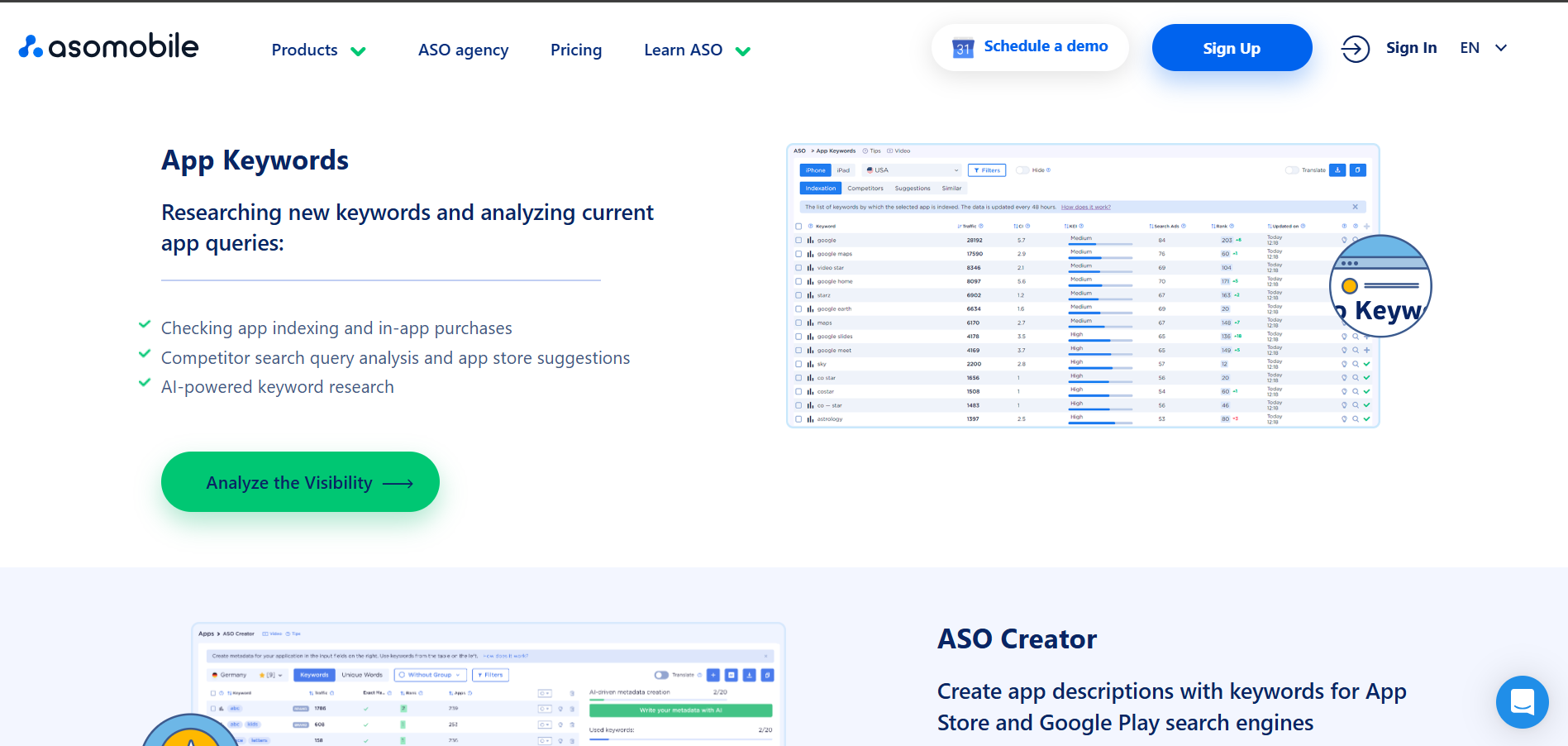
ASOMobile handles the full optimization workflow: keyword research with volume and difficulty data, app keyword tracking, competitor analysis, metadata auditing, review monitoring, and download estimates.
The platform covers both stores in one interface, with localization support for teams expanding into new markets.
For growth teams and ASO specialists, it removes the need to piece together data from multiple sources. For developers without a dedicated ASO function, it provides the data infrastructure to make metadata decisions that would otherwise require a specialist.
The app visibility tool and ranking tracker give a clear picture of where the app stands across its target queries and how that changes over time.
Explore ASOMobile’s tools to see which parts of your current workflow they can support.




