
When it comes to adapting to technological advancement, the entertainment industry is always at the forefront. With the Metaverse now stepping into the trend and trying to expand its influence in the entertainment industry, people will likely see more and bigger changes.
Immersion has always been a big part of the entertainment industry. Innovations in entertainment that focus on immersion have received positive reactions, such as how online casinos came up with live dealer games. VR casinos are now also showing a great potential to take live dealer games’ immersion a step further.

Immersion was the key that brought people’s attention, and the Metaverse is no longer a choice. Entertainment companies and businesses must understand how to harness the Metaverse.
So, how much impact has the Metaverse brought to the entertainment industry? Here’s how the technology has been influencing entertainment and what you can expect from it going forward.
About Metaverse
The Metaverse refers to a collective virtual shared space that merges a persistent virtual world with a virtually enhanced physical reality.
The virtual world leverages the internet and technologies. These include VR (Virtual Reality), AR (Augmented Reality), AI (Artificial Intelligence), and blockchain to run.
Virtual worlds are highly impactful on the entertainment industry as it’s a crucial key to amplifying immersion. It allows users to engage with content in innovative ways, which was deemed too far-fetched in older times.
The Metaverse can be useful for various entertainment sectors, such as music to create virtual concerts, or gaming, which can make the content interactive.
The Metaverse and the Entertainment Industry
There are many changes that have happened in the world that have driven digitalization. The internet had enhanced accessibility, but industries had to adapt to this demand and changes.
The Metaverse is one of the technologies that industries have implemented as they evolve and follow technological advancements.
There have been many real-life cases where entertainment is merging the Metaverse with its products. Here’s how the technology has affected the entertainment industry so far.
Virtual Stages
Back in 2020, Roblox hosted a virtual stage show featuring rapper and singer Lil Nas X. The Roblox concert announcement ended up pulling in about 33 million people. Players inside the game were able to watch and enjoy live music shows across the virtual world.
This was a chance for users to watch their favourite artist in an innovative way. However, this also opened a new path for artists to connect with their fans.
As geographical borders are less influential in spaces like Roblox, the reach is greater than doing a physical concert that’s tied to a time and place.
Lil Nas X and Roblox weren’t the only ones having a virtual stage. In 2021 and 2022, Decentraland organized a four-day metaverse festival. 80 artists were signed to perform on the 3D virtual world controlled by a DAO (Decentralized Autonomous Organization).
The platform started as a way for users to create their unique digital experience and build a community. Yet, it can also be a platform for virtual stages.
Online Gaming
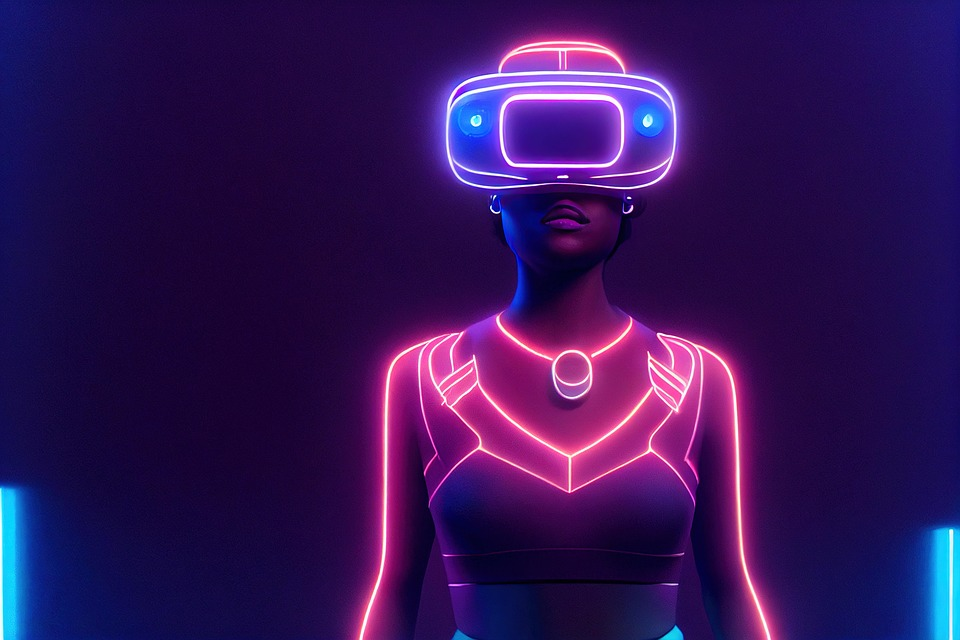
The Metaverse in gaming has existed way before it became a thing. The Sims was one of the first to provide a peek into what the virtual space looked like in 2000. The Second Existence then dug deeper into the virtual environment.
With technologies enhancing visual and audio experience, fans are expecting more and more from the gaming industry. This is why virtual worlds became a hot product among gamers. So far, Roblox and Fortnite are currently taking the mantle as the top two best metaverses in the gaming industry.
In these worlds, gamers won’t just be getting quests and battling. Games leveraging virtual environments provide a way for gamers to create their own world using blockchain technology. Gamers would also be able to own unique assets they can sell, buy, or trade, such as non-fungible tokens (NFTs).
Amusement Parks
A theme park called AstroWorld was dismantled in 2005. In 2022, news came out that the park would return, this time in a virtual theme park format. The park will recreate the map of its physical world and will launch as the first blockchain-based amusement park.
Visitors can purchase a ticket if they’d like to visit AstroWorld, but they must use an AstroWorld token to do so. Once visitors are in, they’ll have access to all the rides available in the virtual world.
Meanwhile, Disney is working on a virtual simulator that lets guests interact with Disney characters while exploring the theme park. After purchasing a ticket, visitors can observe 3D effects and pictures without using AR gadgets.
Universal Studios Hollywood had also been planning to import a Mario Kart-themed ride with the Metaverse added in the experience. Customers would be able to engage with the virtual characters using visor-like glasses with a built-in AR technology.
Film Making
Many movies have taken the Metaverse as their theme. Ready Player One, Black Mirror, and Tron: Legacy are some of them.
Although there hasn’t been a significant Metaverse implementation in filmography, there have been several ground-breaking successes that brought the technology closer to the industry.
ILM (Industrial Light and Magic) is one example that has utilized motion capture to enable the audience to watch movies in a virtual environment.
Animated shorts created in VR have been released, and The Line, as an animated VR experience, was popular before advanced technologies.
Another example that has dug deep is Lustration. The animated series was launched in May 2022 by Meta Quest.
It’s a film that allows viewers to enjoy it through various perspectives outside the main plot. Not only does it increase immersion, but it makes the audience feel like they’re present in the story.




