Across many remote regions, unreliable electricity still defines daily life—shaping how clinics store vaccines, how students learn, how families cook, and how local economies function. But the central issue is shifting.
The question is no longer simply how to deliver electricity for the first time, but how to build systems that communities can operate, maintain, and sustain over the next twenty years.
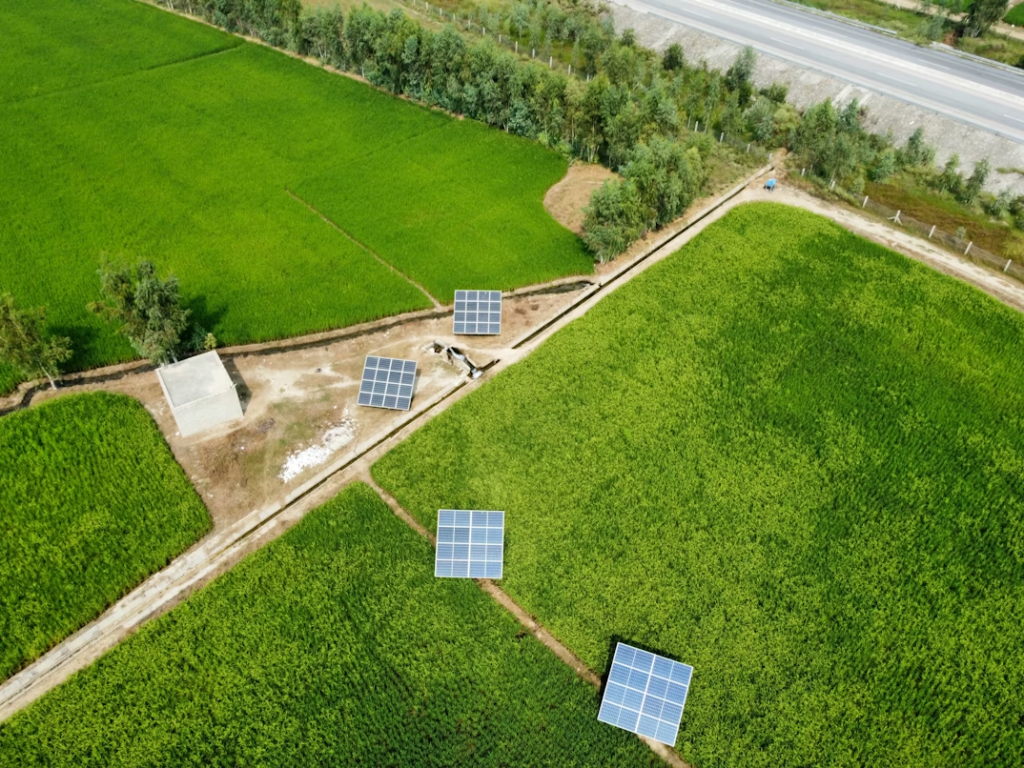
Advances in decentralized renewable technologies are accelerating this transition. Off-grid solar inverters, modern battery storage, and community microgrids have become the backbone of a new, locally managed model of electrification.
Yet hardware alone is not enough. Long-lasting power systems depend equally on community engagement, practical financing, and the capacity to adapt to changing environmental conditions—a blend of technical innovation and community-led resilience.
The Real Challenge of Off-Grid Electrification
The traditional assumption that “lack of electricity” is the primary barrier oversimplifies the real challenge. Many remote communities already have small solar systems from past development programs, yet these installations often fail within a few years (World Bank Off-Grid Solar Market Trends Report).
The real difficulty lies in building systems that can withstand harsh weather, limited technical capacity, and informal financing conditions.
A sustainable off-grid solution must be engineered around technical durability, local maintenance capabilities, predictable financing, and the long-term environmental conditions of the region.
This is a planning question as much as a technological one: how do we build an energy system that remains functional twenty years after installation?
Designing Energy Systems Around Community Needs
Successful off-grid systems begin with an accurate understanding of energy demand. Different communities require different types of power, and assuming a “standard rural load” often leads to mis-sizing and early system failure.
A health outpost requires uninterrupted refrigeration and lighting for emergencies. Agricultural communities may depend heavily on pump motors or milling equipment.
Schools need stable electricity to support digital learning tools. Homes may prioritize lighting and communication devices.
Below is a practical table template that planners can use to identify actual demand before designing a system:
| Energy Use Case | Typical Appliance | Power (W) | Hours/Day | Priority |
| Household lighting | LED lamps, phone charging | 10–40 | 3–6 | Essential |
| Healthcare | Vaccine refrigerator, nebulizer | 100–300 | 24 | Critical |
| Water access | Pump motors | 300–1500 | 1–3 | Critical |
| Education | Computers, projectors | 100–800 | 2–5 | High |
| Communication | Wi-Fi routers, radios | 20–100 | 24 | Essential |
| Local commerce | Grain mills, sewing machines | 300–2000 | varies | Productive |
This needs-first approach ensures that the engineering strategy reflects real priorities rather than assumptions.
Choosing Technology That Survives Harsh Conditions
Remote off-grid systems often fail not because solar power is unreliable, but because the equipment wasn’t chosen for the climate or conditions in which it operates.
High temperatures, dust, irregular loads, and limited maintenance resources all make resilience a primary requirement when selecting off-grid solar inverters, batteries, and solar arrays.
To ensure the system survives long-term use in remote environments, several technical considerations become essential:
Off-grid solar Inverters
- Pure sine wave output for sensitive medical and communication devices
- Strong surge capacity for pumps and refrigeration
- Heat and dust tolerance for harsh climates
- Integrated MPPT controller for higher efficiency
Batteries
- Size storage based on “days of autonomy”
- Prefer long-life LFP batteries over lead-acid
- Plan for predictable replacement cycles
Solar array
- Design based on the worst sunlight month
- Oversize slightly to account for degradation and future load
- Ensure panel placement allows for easy cleaning
By selecting components that match real operating conditions—not ideal ones—communities gain systems that perform reliably and withstand years of environmental stress. Durability is not a premium feature in remote areas; it is a necessity.
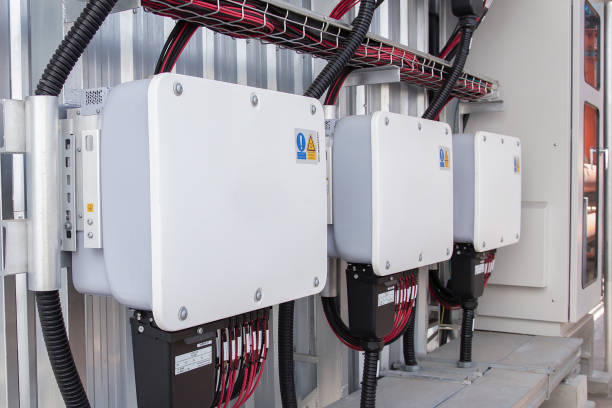
Off-Grid Inverter Categories and Their Appropriate Use
A practical way to differentiate off-grid solar inverters is by reliability, scalability, and tolerance for demanding loads.
The table below keeps the structure simple while highlighting what matters most in remote environments.
| Class | Where It Fits | Cost (USD) | Limitations |
| PWM + Modified Sine Wave | Basic household lighting, phone charging | $80–$150 | Cannot run pumps, fridges, or sensitive equipment; low efficiency |
| Pure Sine Wave, AC charger + basic MPPT | Clinics, schools, shops, comms | $250–$600 | Limited expansion; not ideal for future load growth |
| Parallel-capable off-grid, multi-input | Microgrids, workshops, agricultural pumping | $800–$1500+ | Higher cost; requires more skilled installation |
Pricing is indicative only and will vary by brand, model, and configuration.
Practical guidance for real-world settings
- Any load involving refrigeration, pumping, or medical equipment should begin at the mid-range pure sine wave class—nothing less is dependable.
- Systems that are expected to grow—such as schools, health posts, and village microgrids—benefit from parallel-capable high-end off-grid solar inverters.
- For lighting-only households, entry-level systems serve a purpose, but they should never be interpreted as long-term solutions for essential services.
Common Reasons for Off-Grid System Failures
Across remote deployments, failures tend to follow a predictable pattern. The challenge is rarely the solar hardware itself, but how systems are sized and operated in environments that don’t match the assumptions made during design. Four issues surface repeatedly in the field.
1) Inverters are routinely undersized for real-world starting loads.
Refrigerators and pumps can draw two to three times their rated power at startup, leading to chronic tripping and premature inverter failure. To avoid this, systems generally need 2–3× surge headroom above the highest starting load.
2) Battery banks are sized for ideal weather rather than the cloudy stretches communities actually experience.
Minimal storage works on clear days but quickly collapses after a few overcast ones, pushing batteries into deep discharge cycles. In practice, most long-lived systems include 1.5–2 days of usable autonomy.
3) Solar arrays are designed around annual averages instead of seasonal lows.
When sunlight drops sharply during rainy or winter months, the system undercharges and struggles to recover. Designing around the lowest-sunlight month, with a modest 10–20% oversize, helps maintain stability year-round.
4) Routine maintenance is underestimated, yet it ultimately determines how long a system lasts.
Dust buildup, loose terminals, and weak grounding often go unnoticed until performance declines significantly. Training local operators to perform simple quarterly checks dramatically improves long-term reliability.
Household Systems vs. Microgrids: Which Works Better?
Remote electrification often takes one of two forms: standalone household systems or community-scale microgrids. Each model has advantages, and choosing the right structure depends on household distribution, budget, and shared infrastructure needs.
Household systems are simpler and less expensive but limited in scalability and prone to uneven access to power. Community microgrids, by contrast, distribute costs, support larger loads such as clinics and schools, and centralize maintenance.
They also create a platform for future expansion, allowing communities to add more panels, storage, or backup energy sources as demand increases.
Below is a simplified comparison:
| Feature | Household Systems | Community Microgrids |
| Initial cost | Low per home | Higher upfront |
| Maintenance | Individual responsibility | Trained local operators |
| Scalability | Limited | High |
| Ideal use | Scattered homes | Villages with shared services |
| Energy equity | Uneven | High |
| Financial model | Individual purchase | Community tariffs or cooperatives |
Microgrids offer broader societal benefits, but they require structured governance and predictable revenue to support long-term operation.
From a technical implementation perspective, a robust community microgrid depends on highly reliable, scalable core inverters and an integrated energy management platform—an area where many specialized off-grid energy solution providers, including those focused specifically on community microgrids, concentrate their expertise.
Why Local Skills Are Essential for Sustainable Power?
Technology can fail, but community knowledge lasts. Electrification projects have historically struggled because local users were never trained to maintain the systems. When a breaker tripped or a battery failed prematurely, no one in the community could diagnose the issue.
A sustainable energy system requires at least one or two trained technicians capable of performing basic maintenance and troubleshooting.
Clear documentation, routine inspections, and practical training in inverter functions, battery management, and safety procedures dramatically increase the likelihood that the system will last its intended lifespan.
Financial Models That Keep Energy Systems Running
Electrification projects often fail financially, not technically. Batteries, off-grid solar inverters, and electronic components need replacement after several years, and without a structured financial mechanism, communities cannot afford these cycles.
A sustainable financial model often includes community tariffs, pay-as-you-go structures, donor support for capital costs, and a replacement fund reserved for major components.
Transparent governance and predictable revenue streams ensure that the system does not collapse after the first battery failure.
The Future of Energy Autonomy in Remote Regions
Reliable electricity in remote communities is more than a technical upgrade—it is a foundation for long-term development.
Electrification unlocks digital tools, strengthens healthcare, supports education, and enables small businesses, connecting isolated regions to broader economic networks.
As climate variability intensifies—bringing longer cloudy seasons, dust, and more extreme weather—hybrid renewable systems that blend solar with wind, micro-hydro, or second-life EV storage are becoming essential complements to off-grid inverters and microgrids.
When paired with sustainable financing and community governance, these systems strengthen long-term resilience and help ensure that essential services remain uninterrupted.
Remote regions are no longer waiting for the national grid to arrive. They are building their own energy systems—and in doing so, redefining what resilience and autonomy will look like in the decades ahead.