
Success in the digital asset market is rarely the result of a single fortunate transaction. Professional participants recognize that long-term profitability stems from a measurable and repeatable process rather than sporadic intuition.
Establishing clear metrics allows a trader to distinguish between skill-based growth and the temporary effects of market noise.

Quantifying progress requires a shift in focus from total account balance to execution quality. While a rising portfolio value is the ultimate objective, it can often mask dangerous habits during a bullish trend.
Monitoring specific behavioral and mathematical indicators provides a realistic view of whether a strategy is truly gaining an edge over time.
Fundamental Performance Metrics
Financial data provides the most direct evidence of a strategy’s viability and health. Relying on a single number like the win rate is often misleading because it does not account for the size of individual losses.
A trader can win ninety percent of the time and still lose capital if the remaining ten percent of trades are catastrophic.
The primary mathematical benchmarks used to evaluate trading systems are:
- Win rate compares the number of successful outcomes against the total number of trades executed.
- Risk-to-reward ratio measures the average amount gained on winners versus the amount lost on losers.
- Profit factor is the total gross profit divided by the total gross loss over a specific period.
- Expectancy reveals the average dollar value a participant can expect to earn or lose for every dollar risked.
Quantitative and Qualitative Analysis
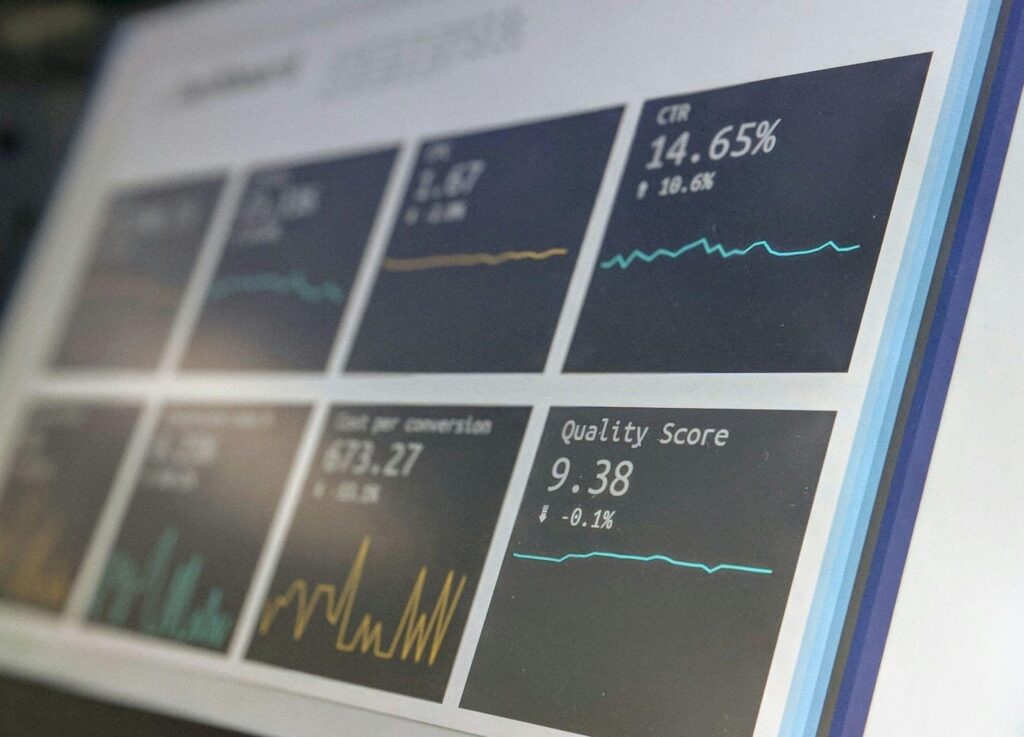
Data collection is the foundation of any serious improvement plan in the financial sector. Maintaining a comprehensive log of every decision ensures that errors are identified before they lead to significant drawdowns.
This record-keeping process transforms a series of random events into a structured dataset for future optimization.
Traders must look beyond the final profit or loss to understand the logic behind their entries:
- Document the technical or fundamental rationale for every position taken.
- Capture screenshots of price charts at the exact moment of entry and exit.
- Note the prevailing market sentiment and volatility levels during the trade duration.
- Record the time of day and the specific trading session to identify peak performance windows.
- Review rule adherence to confirm if the trade followed the established plan.
Strategic Capital Utilization
Many successful investors seek ways to put their idle assets to work while waiting for high-probability trade setups to materialize.
For example, using a CoinEx flexible earn account allows for the accumulation of compound interest on a daily basis with the freedom to withdraw funds at any time.
This approach to asset management ensures that capital is never truly dormant, even during periods of low market activity.
Integrating such passive income tools into a broader financial strategy helps offset the impact of trading fees and minor losses.
It provides a stable foundation that reduces the psychological pressure to force trades when the market is not providing clear signals.
Emotional and Behavioral Tracking
Market participants often overlook the psychological factors that influence their decision-making process. Greed, fear, and frustration are responsible for the majority of deviations from a proven trading plan.
Tracking emotional states during periods of high stress reveals recurring behavioral patterns that might be sabotaging an otherwise profitable system.
Assigning a numerical value to your mental state can provide objective insights into your subjective experience:
- Rate your level of confidence on a scale of one to ten before clicking the trade button.
- Identify physical symptoms of stress, such as tension or an increased heart rate, during a live position.
- Flag instances of “revenge trading” where a loss triggers an impulsive desire to recover funds immediately.
- Monitor levels of boredom or fatigue that may lead to overtrading or late entries.
Systematic Review Cycles
Evaluation of progress should occur at regular intervals rather than after every individual trade. A weekly or monthly review cycle provides the necessary distance to see broad trends that are invisible in the heat of a single session.
This perspective allows a trader to make calm, data-driven adjustments to their risk parameters or entry criteria.
Analyzing a large sample size of trades is the only way to confirm if a positive result is statistically significant.
Improvements in consistency often precede improvements in total profitability as the trader masters the art of disciplined execution. Every refined habit brings the participant closer to a professional level of operation.
Measurable Growth Path
Real improvement is a gradual process of identifying and removing small inefficiencies. Success comes to those who prioritize the integrity of their process over the emotional highs of a winning streak.
Protecting your principal capital while refining your execution remains the most sustainable path to financial independence.
Focusing on these simple methods of tracking ensures that every trade serves as a lesson for the next one.
Consistency in measurement leads to consistency in results, which is the hallmark of a veteran trader. Building a robust feedback loop turns data into a powerful tool for wealth accumulation.




