Attack surface management starts with a difficult question: which internet-facing assets belong to the organization, including the ones its existing inventory misses?
A useful tool should then help explain what is exposed, why it matters, and who can change it. Discovery without attribution creates research work; attribution without a remediation route leaves the exposure in place.
Check Point is worth shortlisting when external asset discovery needs to connect with threat intelligence and wider exposure management. Cortex Xpanse, CyCognito, and Hadrian are relevant comparisons for outside-in discovery and investigation.
Microsoft Defender EASM provides another dedicated external view, while Tenable and Rapid7 connect external assets with broader security operations.
These eight options have different boundaries. Some focus on externally observable assets, while others consolidate information from connected tools. Understanding that distinction is the first step toward a fair comparison.
How the shortlist was assembled?
We compared outside-in discovery, ownership evidence, security assessment, and remediation context. Focused external-discovery approaches appear first, followed by broader external-risk and asset-consolidation options.
CyCognito leads the attribution-centered discussion. Check Point is included where external assets need to connect with threat intelligence and the wider exposure workflow.
Recommendations use official product pages and documentation. No hands-on performance benchmark was conducted. This article was prepared for a Check Point content project; product numbers aid navigation and do not represent independent scores.
Compare discovery and operational context
| Tool | Useful starting point | Boundary to understand |
|---|---|---|
| CyCognito | Asset attribution and active security testing | Ownership evidence and authorized testing scope |
| Hadrian | External discovery and exposure validation | What testing establishes about exploitability |
| Cortex Xpanse | Outside-in discovery with response workflows | What can be discovered and acted on externally |
| Microsoft Defender EASM | External asset inventory and posture dashboards | Discovery configuration and inventory acceptance |
| Check Point Exposure Management | External assets linked to threat intelligence | External Risk Management and wider TEM integration scope |
| UpGuard Breach Risk | External exposure alongside digital risk | Asset findings versus data and brand threats |
| Tenable One Attack Surface Management | External discovery linked to exposure assessment | Required platform components and scan coverage |
| Rapid7 Surface Command | External discovery and consolidated asset context | Connected inventory versus outside-in evidence |
1. CyCognito
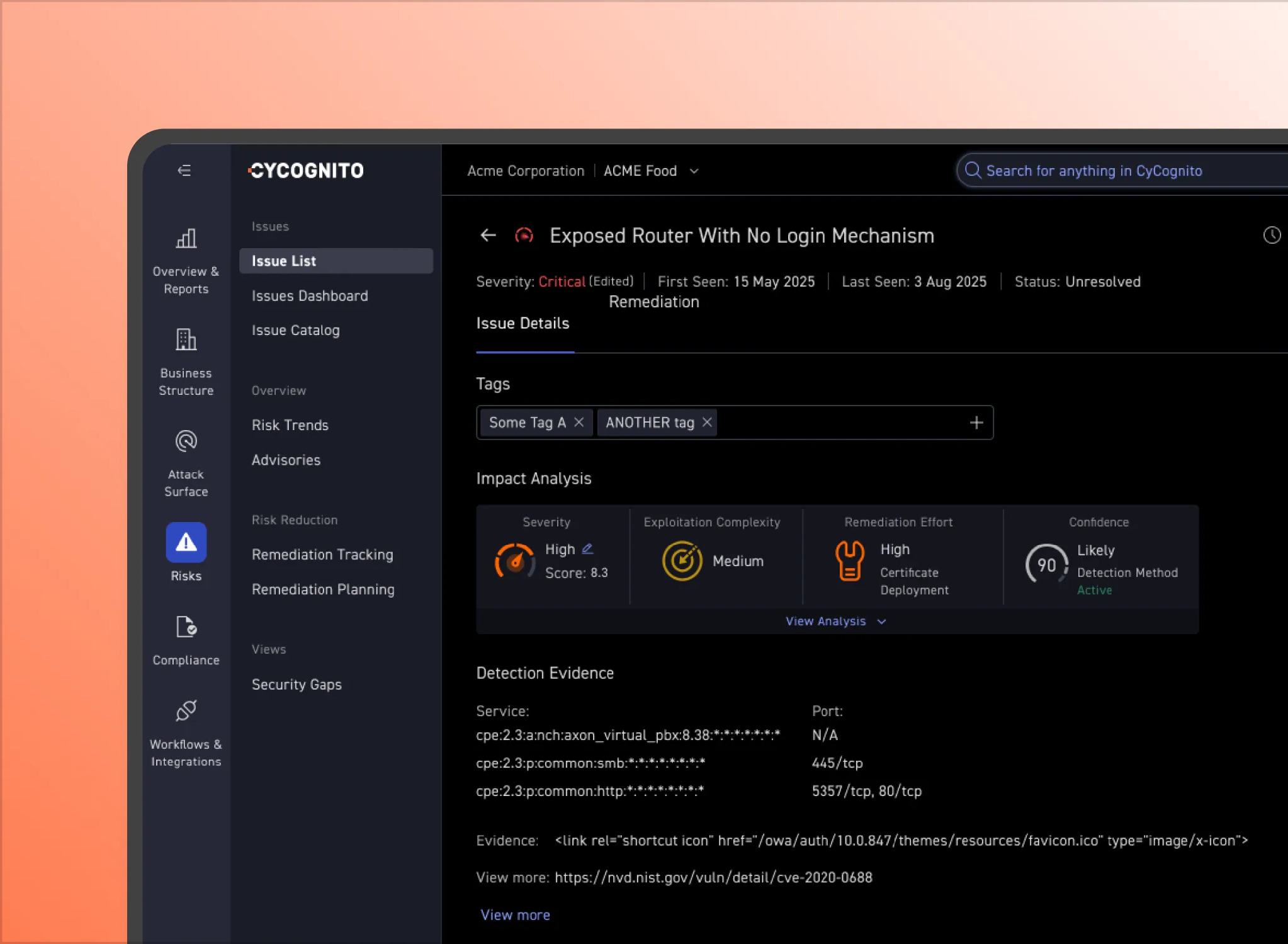
Published product interface. CyCognito’s published external asset and issue investigation view. Source.
CyCognito combines external discovery, business context, active security testing, prioritization, and remediation workflows. Its emphasis on attribution makes it particularly relevant to organizations with subsidiaries, acquisitions, or third-party relationships that complicate asset ownership. Official product information.
That context can reduce the work required to decide who should receive a finding. The useful trial result is an asset the existing inventory missed, supported by an understandable ownership explanation and a meaningful security issue. Examine the scope of active testing and the evidence it produces.
A validated issue is more useful than a suspicious banner alone, but the team still needs to determine the business consequence and authorize any testing against assets it controls.
2. Hadrian
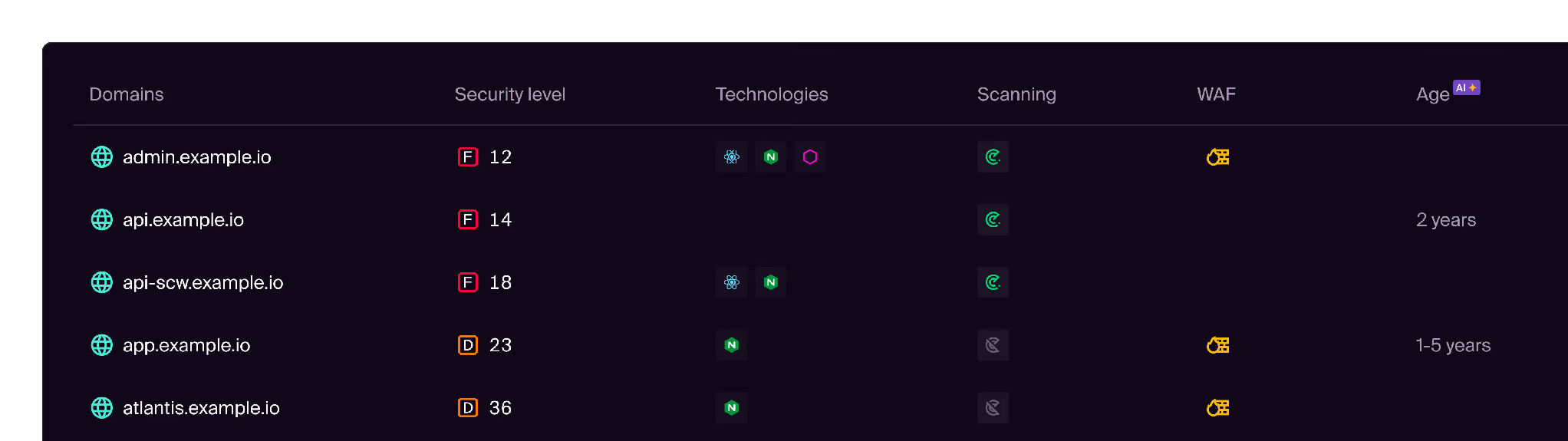
Published product interface. Hadrian’s published domain inventory view. Source.
Hadrian describes continuous external discovery alongside active exposure validation. It is a relevant option when the security team wants to move beyond a list of domains and services toward evidence about which externally visible issues deserve attention. Official product information.
The buying scenario is an organization whose internet-facing estate changes faster than periodic inventory reviews. Follow a discovered asset through contextualization, testing, and remediation ownership.
Keep the meaning of validation precise: a successful technical check may establish a particular weakness without proving every step of a broader attack path. The resulting evidence should be useful to the infrastructure or application owner who has to make the change.
3. Cortex Xpanse
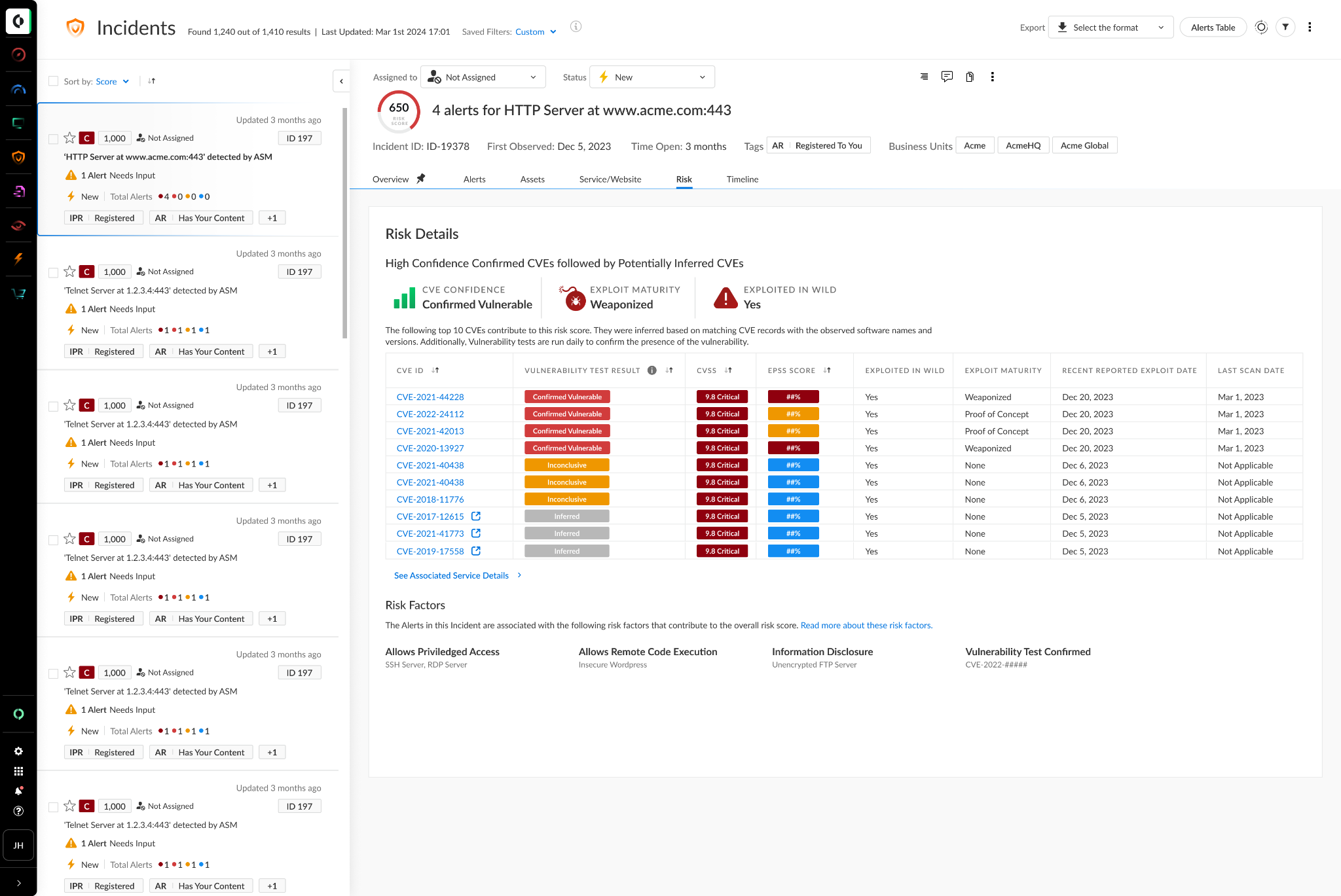
Historical published screenshot. Palo Alto Networks’ 2024 published Cortex incident example shows an ASM finding with vulnerability and exploitation context. This is a historical interface example. Source.
Cortex Xpanse is centered on an outside-in view of the organization’s attack surface. Palo Alto Networks describes active discovery, learning, and response as parts of the product.
This makes it a relevant candidate when a company needs to find internet-facing infrastructure that its internal tools do not reliably identify. Official product information.
The practical value lies in turning an unfamiliar asset into an owned issue. During evaluation, inspect the evidence connecting a discovered service to the organization and the workflow used to resolve it.
The external perspective is useful precisely because it differs from an internal inventory, but it does not replace every authenticated vulnerability assessment. Keep those two sources of evidence connected without treating them as identical.
4. Microsoft Defender EASM
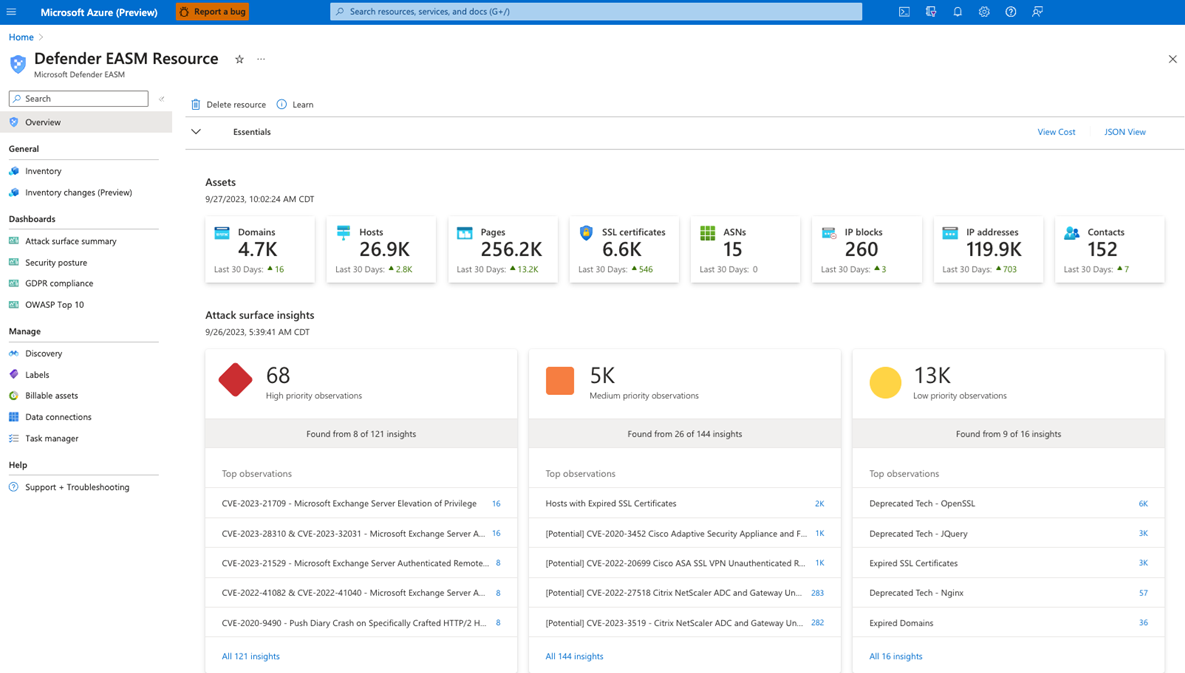
Documentation screenshot. Microsoft Defender EASM’s documented external attack surface dashboard. Source.
Microsoft Defender External Attack Surface Management provides an external inventory and posture view of internet-facing assets. Microsoft’s documentation shows discovery, inventory, and dashboard workflows.
It is worth considering when a team wants a dedicated external perspective within an Azure-managed service context. Official documentation.
The important work is configuring and reviewing the discovered inventory. Inspect why an asset is associated with the organization and how the team handles uncertain or irrelevant matches. The dashboards can make the external estate easier to navigate, but the team still needs an ownership and remediation process.
Assess the service against the required discovery scope and operational workflow rather than assuming it duplicates the internal device view in other Microsoft security products.
5. Check Point Exposure Management
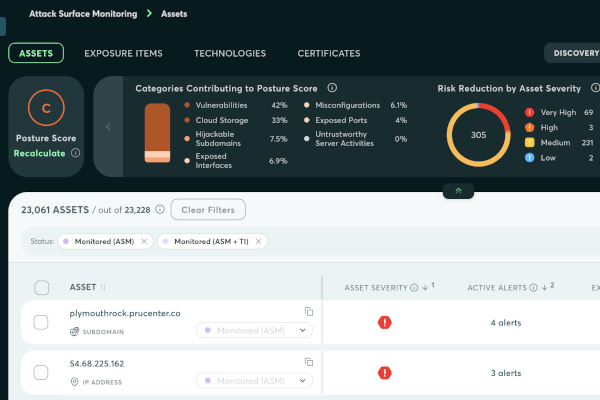
Published product interface. Check Point’s published external asset discovery view. Source.
Check Point’s external risk capabilities combine attack surface discovery with intelligence about threats such as exposed data and brand abuse. That is useful when the same external asset needs to be understood as both a technical exposure and a possible part of an active threat against the organization. Official product information.
The wider exposure management portfolio can connect those findings with prioritization and controls. The integration should be treated as part of the implementation, not as an automatic property of every external alert.
Start with Check Point’s threat intelligence and external exposure capabilities and specify the required External Risk Management and TEM functions. The strongest fit is a team that wants external discovery to feed an established response process.
6. UpGuard Breach Risk
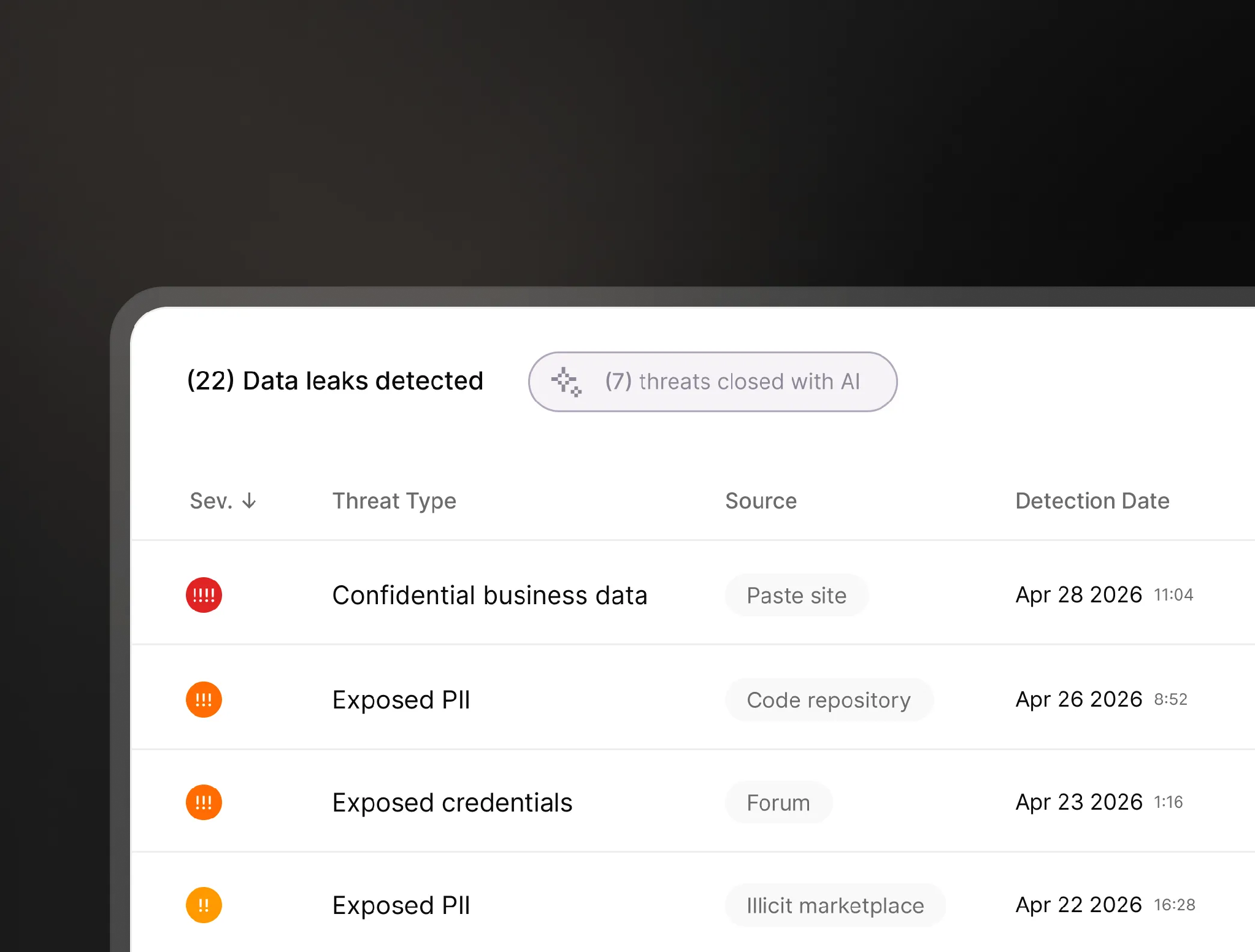
Published product interface. UpGuard’s published data leak investigation view, one part of its broader BreachRisk offering. Source.
UpGuard’s current Breach Risk offering places attack surface concerns alongside data leaks, dark web exposure, and brand threats. It is relevant when the organization wants to investigate several kinds of external risk in one operational context rather than purchase an asset-discovery tool in isolation. Official product information.
The distinction between finding types matters. An exposed service, a leaked credential, and an impersonation page require different owners and actions. Use the trial to inspect the evidence and workflow for each category that matters to your business.
For detailed technical assessment, verify the specific capabilities in scope. A consolidated external risk view should improve investigation and routing, while specialized assessment requirements may still need additional tools.
7. Tenable One Attack Surface Management
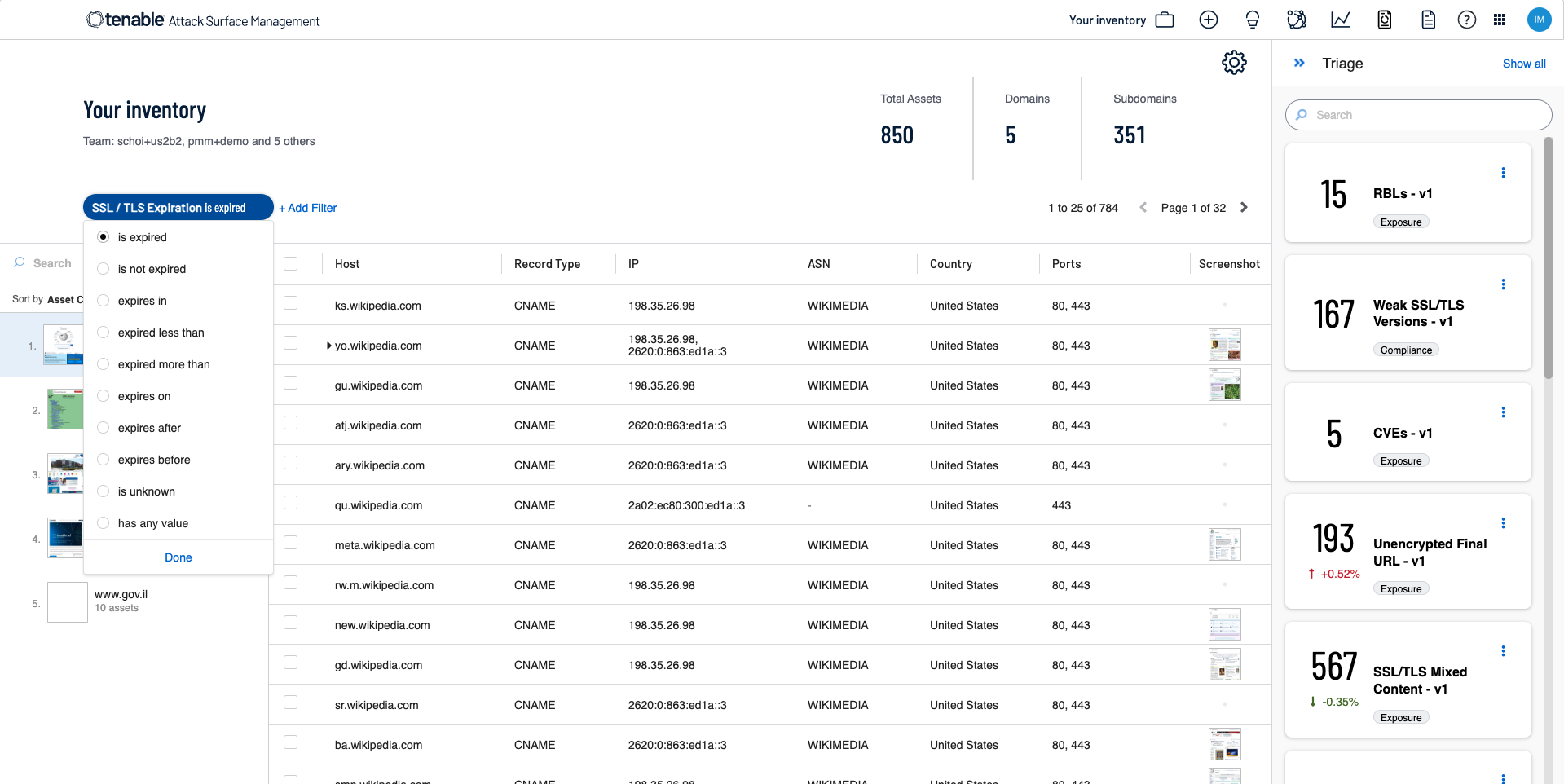
Published product interface. Tenable Attack Surface Management’s published asset detail view. Source.
Tenable One Attack Surface Management documents discovery of internet-connected assets, business context, and the ability to bring external assets into a wider exposure assessment process. This is useful when the organization wants newly discovered infrastructure to become part of an existing vulnerability and exposure workflow. Official product information.
The practical advantage is the connection between an external discovery and subsequent assessment. The implementation must still establish which assets can be scanned and which components provide that function.
Use an unfamiliar discovered asset as the test case: confirm the attribution, assign an owner, and show how the team moves from discovery to a supported assessment. That sequence is more informative than the size of the vendor’s internet dataset.
8. Rapid7 Surface Command
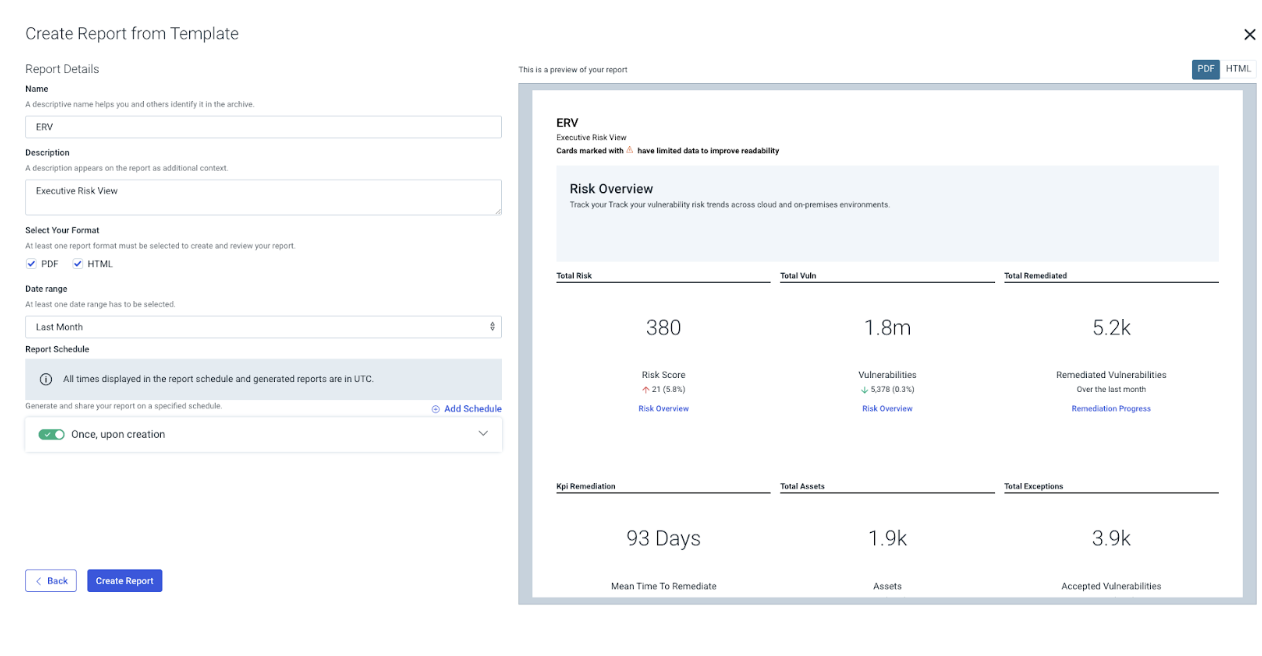
Documentation screenshot. Rapid7’s documented executive risk report creation dialog, illustrating a reporting step in the exposure workflow. Source.
Rapid7’s documentation places Surface Command at the asset-visibility foundation of Exposure Command. The published feature comparison includes external discovery, unified inventory, asset enrichment, graph context, and automation.
That makes it relevant when a team needs to combine outside-in findings with information already held in several security and IT tools. Official documentation.
The central buying question is how well those records come together. Select an asset represented differently in two existing systems and inspect the consolidated result.
Keep discovery and assessment scope separate: Rapid7’s packages add different vulnerability, cloud, and application capabilities above the inventory foundation. The right fit is a team that needs a usable common asset record and knows which additional assessment functions it requires.
Original editorial graphic. Connect external discovery with ownership and verified action.
What an external discovery trial should prove?
Use known assets as a baseline, including domains, cloud-hosted applications, and infrastructure associated with a subsidiary or recent acquisition.
Add a controlled asset the evaluation team knows about but has not included in the initial inventory. This helps distinguish rediscovery of supplied information from useful expansion of the known estate.
Inspect attribution evidence for both correct and questionable matches. Shared hosting, old registrations, and third-party services can complicate ownership.
A product should make the basis of a relationship understandable enough for the organization to accept, reject, or investigate it.
Then test the handoff. The receiving owner should see the affected service, supporting evidence, business context, and required next action.
After a controlled fix, check whether the external view reflects the change and how long that takes. Record the actual observation interval instead of assuming that a claim of continuous monitoring means every field updates instantly.
Discovery is only the first milestone
An external asset may be owned by the organization, operated by a supplier, or simply associated with its brand. Those relationships imply different remediation authority. Preserve them in the workflow rather than assigning every finding to the same infrastructure queue.
Check Point and UpGuard are useful starting points when external assets are part of a broader digital risk program. Cortex Xpanse, CyCognito, Hadrian, and Microsoft Defender EASM belong in focused outside-in comparisons. Tenable and Rapid7 are particularly relevant when the next step is bringing discoveries into an existing assessment and asset-management process.