
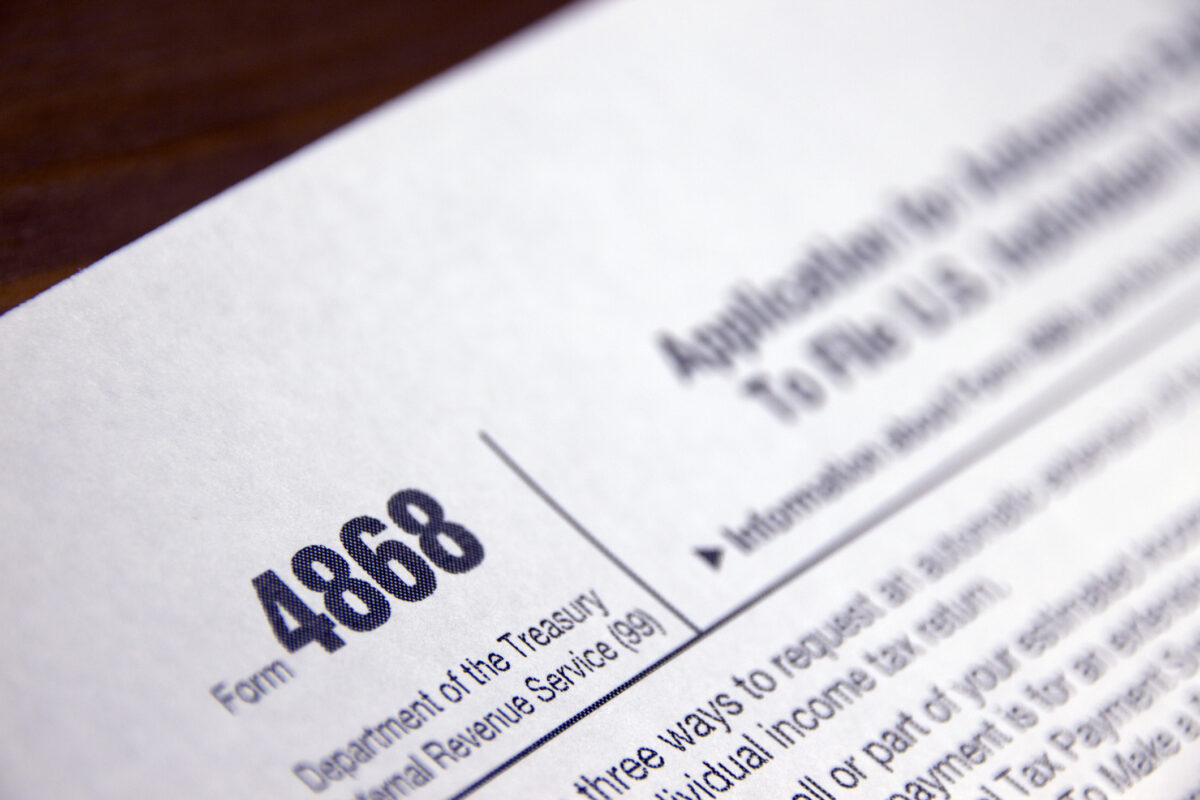
Form 4868 has no late option. The request works only if it reaches the IRS by the original due date, and a copy submitted on April 16 does nothing for the taxpayer who sends it.
There is no grace period, no reduced version of the approval, and no process for explaining why the form arrived when it did. The date closes and the instrument stops existing.
The April 15 Cutoff
An extension is granted automatically, and the automatic part refers to the absence of review. The IRS does not evaluate the reason, ask for documentation, or approve anything in the ordinary sense. That is precisely why the timing rule is absolute. A process with no discretion in it has no discretion to extend.
The form’s instructions contain no provision for late submission, and there is no administrative channel through which a taxpayer can ask for one to be accepted after the fact.
After the due date passes, the taxpayer is in a different position governed by different rules. The return is late. The payment is late. Both conditions began accruing charges on April 16, and nothing filed afterward resets either clock.
The Two Charges After the Due Date
Two separate charges apply, and they are priced very differently. The failure-to-file penalty takes 5% of whatever remains unpaid, charged for each month or part of a month that the return is outstanding. The failure-to-pay penalty is 0.5% on the same base. Each stops at 25% of the unpaid tax.
When both apply in the same month, the larger is reduced by the smaller, so the combined charge is 5% rather than 5.5%. Filing late costs ten times what paying late costs, which means a taxpayer without the money is still far better off sending the return.
A further charge applies once a return is more than 60 days overdue. At that point the penalty has a floor, set at the lesser of a fixed indexed amount or 100% of the tax owed.
For a small balance, that floor can exceed everything the percentage calculation would have produced, so a modest liability left unfiled through the summer can end up penalized at close to its own value.
Filing Late Without an Extension
Searching for how to file a personal tax extension in late April turns up a form that no longer applies. The useful action at that point is the return itself, submitted as quickly as it can be assembled, because the 5% monthly charge stops the moment the return is accepted.
Partial payment reduces both running charges immediately. The penalties are computed on the unpaid balance, so sending half the money halves both rates from that day forward.
Procrastinating taxpayers who hold back until they can settle the whole bill pay the higher rate for the entire waiting period. An installment agreement can be arranged for the remainder, and the failure-to-pay rate is reduced while that agreement is in force.
Situations With a Later Statutory Date
Some taxpayers are not late at all on April 16. A person living and working outside the United States receives an automatic two-month postponement to June 15, granted without any form or request. Members of the armed forces serving in a combat zone receive a longer deferral tied to their service dates.
Americans abroad who have fallen behind across multiple years have a separate route, since the IRS has run programs that waive penalties for filers who come forward and can show the omission was not deliberate.
Federally declared disasters produce the third category. Taxpayers whose address falls inside an area with a FEMA disaster declaration receive a postponed filing and payment date, applied automatically with no application. The lengths vary with the event.
Residents of several southeastern states affected by 2024 hurricanes received an additional two weeks, while victims of the Los Angeles wildfires were given until October 15. Natural disasters are the one circumstance in which a taxpayer gets extra time without ever having asked for it.
Penalty Relief After the Fact
A late filer with an otherwise clean record has a route to full removal of the charges. First-time abatement waives failure-to-file and failure-to-pay penalties for a taxpayer with no penalty assessed in the three years before the year in question. The IRS reviews accounts for this automatically, and a taxpayer who is not picked up can request it directly.
Reasonable cause is the second route and a harder one. It requires a specific explanation tied to circumstances outside the taxpayer’s control, supported by dates and documentation.
Serious illness, a death in the immediate family, and destruction of records are the categories that succeed most often. Ordinary workload and reliance on a preparer who missed the date generally do not qualify on their own.
Neither route touches interest, which continues on the underlying balance until the account is settled in full. That distinction catches people out, because a taxpayer who wins full abatement still receives a bill. Relief applies to the penalty, and the interest was charged on the tax.
Refund Cases and the Three-Year Limit
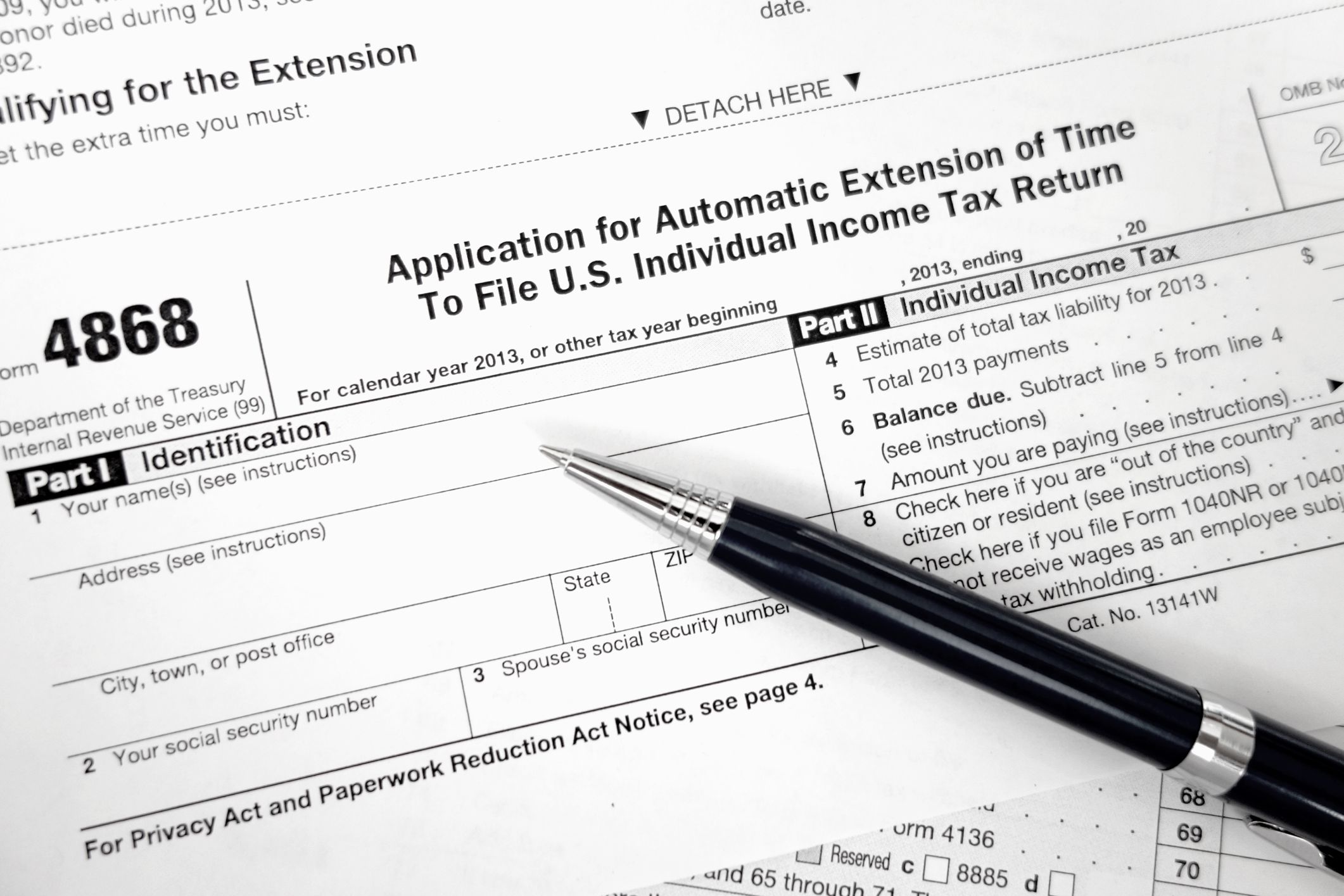
The penalty structure assumes an unpaid balance. Where the taxpayer is owed money instead, the failure-to-file penalty computes to nothing, because 5% of zero is zero. A late return in that situation carries no penalty.
A return still has to be filed within three years of its original due date for the money to be payable, and the refund becomes Treasury property once that window closes.
The totals are substantial. The IRS counted roughly 940,000 unclaimed refunds worth more than $1 billion for a single tax year approaching its deadline.
The Ten-to-One Ratio
A taxpayer who missed April 15 cannot obtain an extension and does not need one. The operative number is the failure-to-file charge at 5% a month, ten times the 0.5% assessed for paying late, capped at 25% of the balance in both cases. Every week the return stays unfiled is priced at the higher of those two rates, and the single action that stops it is sending the return.




