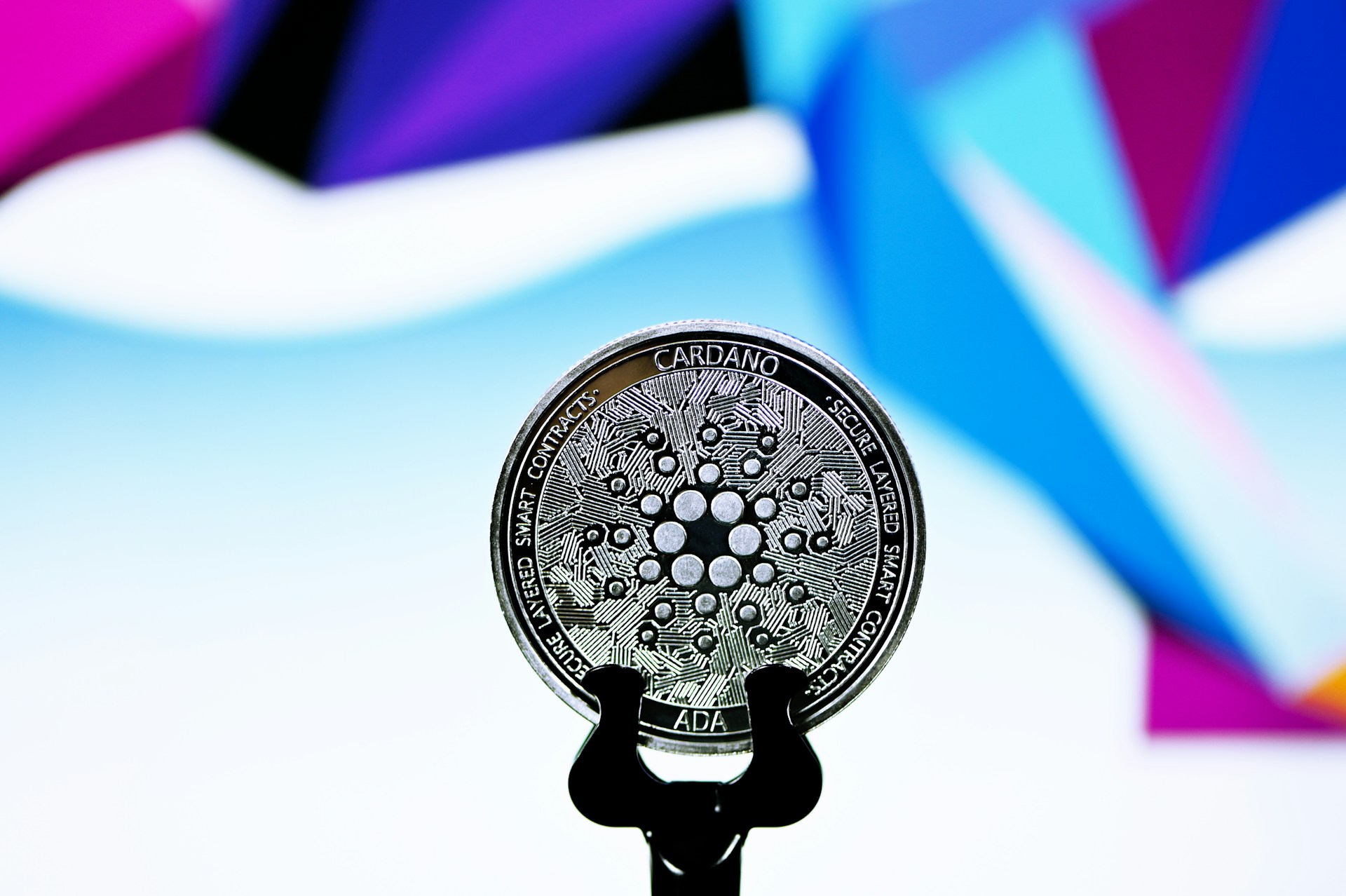
The big and scary quantum threat – you may have encountered this term in SF theories, and wondering what it has to do with crypto if you’ve been around for a while and saw how it became a topic of heated debate on platforms like Binance Square.
The main reason everyone’s talking about it is that the timeline for the “Q-Day” – the day a quantum computer becomes powerful enough to break modern encryption – has been radically shortened due to recent hardware breakthroughs.
And while the crypto world is on tenterhooks, high-profile blockchain participants – like the co-founders of Ethereum, Cardano, and more – are actively engaged in clearing up the phenomenon, exposing risks, solutions, and tradeoffs alike, to name a few matters.
In light of this, Cardano’s co-founder, Charles Hoskinson, confronts a commonly encountered belief that safeguards and counteroffensives are either nonexistent or hard to deploy in time. Instead, the focus is on finding the right time to launch the correct solutions with as few compromises as possible and a reduced risk of disrupting blockchain stability and efficiency.
This is particularly important for blockchains that prioritize scalability, efficiency, and decentralization, like Cardano is. So the point is nowhere near how the network’s native crypto ADA could perform, or how the ADA price prediction might evolve in the future, as some looking to break into crypto may hope.
But about how the underlying, core structures can continue to operate as they do today without being hampered by post-quantum cryptography and protections that could break current cryptography, reduce throughout, cripple performance, and get locked into inefficient designs well before such a supercomputer even becomes a real risk.
Haste could be particularly costly for blockchains
Blockchain devs are consistently assessing protocol updates to mitigate the perils of quantum computing, even though it’s not yet known whether such a computer will become a real danger in years or in decades – some analysts consider the blockchain space to be safe for at least one hundred years.
DARPA’s Quantum Benchmarking Initiative, one of the leading models testing the feasibility of quantum computing, chose 2033 as the best moment to determine if utility-scale quantum computing is actually possible.
Even so, there are suggestions as to how users can be redirected to quantum-proof addresses if actual risk appears, and, in the worst-case scenarios, block payments from legacy wallets. Nevertheless, such action would be preventative, and not reaction-driven.
Blockchains can already integrate quantum-proof standards
The cryptographic solutions necessary to safeguard blockchains from possible, upcoming quantum attacks are already around, according to Cardano’s co-founder, who urges blockchain devs and communities to move beyond them and focus on what deploying them could actually cause when it comes to ongoing chain activity.
Two years ago, the U.S. National Institute of Standards and Technology marked a huge milestone in the international transition to quantum-proof cryptography, releasing three PQC standards that developers can leverage when they see fit. This stack of encryption tools entails:
- FIPS 203 (ML-KEM) – the main standard for encryption for general purposes, based on the CRYSTALS-Kyber algorithm and claiming the recognition of the new “gold standard” for this type of encryption in the quantum world.
- FIPS 204 (ML-DSA) – the key standard for digital signatures, used to keep conversations private, prove user ownership over account and messages, and disclose attempts to tamper with content. Initially, it was known as the CRYSTALS-Dilithium algorithm.
- FIPS 205 (SLH-DSA) – functioning like a backup e-signature, this standard offers a unique lattice construction that would provide a safety net in case other standards fail.
Approved by the NIST, they’re readily implementable. The catch is the time of action.
What quantum risk really means for everyday users?
For most crypto users, the idea of a computer power breaking blockchains can sound unsettling – that’s why understanding that this isn’t a scenario where wallets suddenly break down or funds disappear overnight is essential.
Even if quantum computing were to advance faster than expected, the response from big blockchain networks would almost certainly be coordinated and highly structured, and timely to prevent threats from escalating.
As already mentioned, one initial move could involve encouraging users to move funds to new, quantum-resistant wallet formats, introducing upgraded signature schemes that can coexist with existing ones, or creating safe checkpoints that preserve historical integrity while newer cryptography is introduced.
In plain English, “quantum-safe” doesn’t mean demolishing current systems in haste, but designing migration paths that protect users without forcing disruptive changes before they’re even truly necessary.
This is a reason why the Cardano co-founder stresses the importance of timing so much: acting too early can be just as damaging as acting too late, only in different ways.
Why blockchain upgrades are fundamentally hard?
Blockchains can’t be upgraded like traditional software is, because it’s not a singular system controlled by one entity – it’s a network where developers, validators, apps, wallet providers, and users from all around the world have a say. Changing a blockchain’s cryptographic structure would affect each and every participant at once.
Reversing an upgrade, once a blockchain agrees upon a specific security model, becomes extremely difficult – even impossible – to reverse without destroying compatibility with existing apps or fragmenting the network. That’s why Hoskinson emphasizes the need for caution.
If a blockchain adopts heavy post-quantum cryptography before it’s even needed, it risks seeing performance decrease and data requirements increase, bringing up costs as a consequence – even if the original threat fails to materialize fast enough to wreak havoc.
What signals matter more than headlines?
Instead of reacting to alarming predictions, watching objective indicators that show whether quantum computing is truly getting close to having a real-world impact is the wisest approach to the phenomenon.
Independent benchmarking efforts, like DARPA’s Quantum Benchmarking Initiative, are way more informative compared to speculative timelines since they test if quantum systems can actually deliver useful, scalable results.
For Cardano, projects like Midnight and tools like Mithril allow the teams to explore superior cryptography in controlled environments and understand possible outcomes without committing or forcing premature protocol changes.
Cardano’s co-founder encourages staying grounded: preparing for the future shouldn’t mean sacrificing the present. By prioritizing timing, flexibility, and evidence over fear, the network looks to remain adaptable and secure no matter when the quantum era arrives.