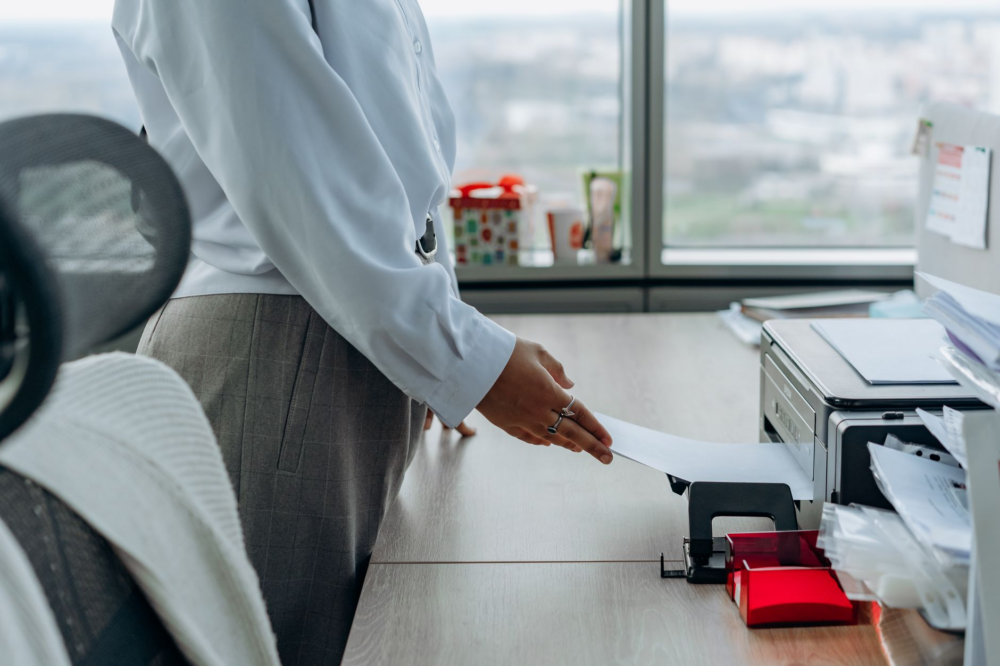
The fax machine immediately brings to mind offices, paper, and a separate device sitting next to the printer. Despite technological advancements, it remains in use by many companies, government offices, and institutions. It turns out that modern technology allows you to send faxes to these devices. How is this possible?
- From fax protocol to cloud software
- Why the fax protocol can survive in a mobile-first world
From fax protocol to cloud software
Traditional faxing requires two devices communicating via a telephone connection and relies on physical hardware. Nowadays, however, software-based solutions are available.
One such option is mFax, an online faxing service available on iPhone, Android, Windows, and web browsers. It allows you to send faxes as PDF files, Word documents, or images, and to receive faxes in PDF format—all without the need for a fax machine or a dedicated telephone line.
Importantly, a digital interface does not mean abandoning the protocol itself. The system still performs the actions characteristic of fax transmission: it dials the recipient’s number, the devices negotiate the communication method, the pages are transmitted, and the receiving device confirms their receipt.
However, instead of using a physical fax machine, you can prepare the document on a computer or phone and send it to the application. The underlying communication mechanism remains the same, but it is handled in a modern, digital way.
Why the fax protocol can survive in a mobile-first world?
Modern document workflows rely heavily on digital formats. Documents can be prepared in an application and sent without the need for prior printing.
Mobile devices can play a role in this process by allowing users to utilize the device’s camera to convert a document into PDF format and send it via fax. A physical document enters the digital workflow at the point of its ingestion into the system.
Cloud computing and mobile devices enable users to work from any device, even when the recipient has access only to a traditional one. This demonstrates that technologies need not completely replace traditional solutions but can instead be compatible with them.
The future of this technology aligns perfectly with the needs of today’s business users. Business communication can be based on the traditional fax protocol while simultaneously leveraging both conventional capabilities and innovative digital solutions, such as cloud technology and mobile software.
This is proof that the entire fax protocol, which is tried and tested, is permeating the digital world and thus connecting generations and companies with different levels of technological advancement.