
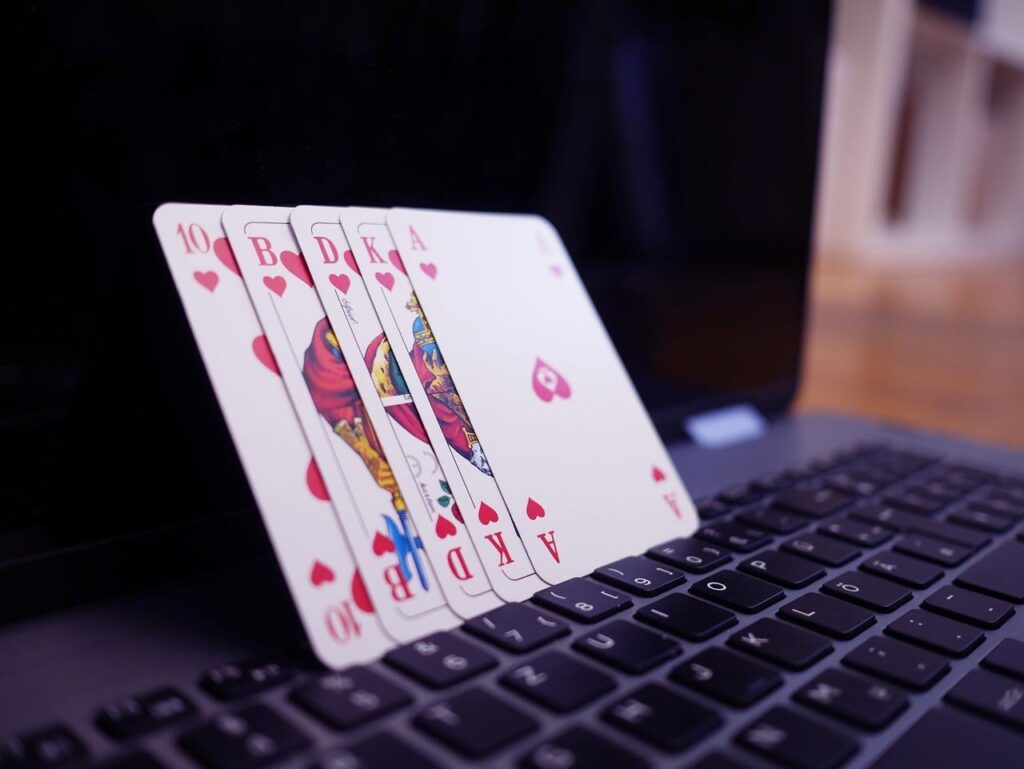
Online poker has always been shaped by technology. From the early browser tables of the 2000s to today’s blockchain-powered platforms, each new wave of innovation has changed how players interact with the game.
In the last few years, cryptocurrency and decentralized finance have introduced a new layer of experimentation.
Crypto poker platforms built on blockchain infrastructure allow transactions to move quickly across borders and offer transparent ledgers for chips, balances, and tournament payouts.
At the same time, advances in computing are opening up new ways to analyze how these ecosystems grow.
One emerging concept combines blockchain gaming with advanced predictive modelling. By applying quantum computing simulations to poker networks and token economies, analysts are beginning to explore how decentralized poker environments could behave in the future.
Modeling Poker Economies With Quantum Simulation
Traditional computing methods have long been used to model poker behavior. Researchers and developers use simulations to understand player strategies, bankroll management, and market liquidity.
However, these simulations become increasingly complex when cryptocurrency tokens and decentralized systems are added to the equation.
Quantum computing offers a potential path forward. Unlike classical computers that process information in binary states, quantum systems can analyze multiple possibilities at once through quantum superposition. This allows complex probability spaces to be explored much more efficiently.
When applied to crypto poker platforms, quantum simulations can model how different economic variables interact. These variables include token supply, player liquidity, tournament entry fees, and network activity.
Within these models, analysts can also examine how privacy-oriented poker environments operate. Platforms that enable account access with no verification requirements create a distinct player ecosystem.
The absence of identity checks can influence player onboarding rates, transaction flows, and geographic participation patterns.
Quantum simulation models allow researchers to explore how those dynamics might develop under different scenarios.
The Rise of Token-Based Poker Economies
One of the most visible experiments in blockchain poker is the introduction of native platform tokens. These tokens can function as in-game currency, governance tools, or incentive mechanisms for players.
CoinPoker’s CHP token is often referenced when discussing these models. The token serves as a core component of the platform’s ecosystem, supporting gameplay transactions and tournament entries.
By tying gameplay activity to a digital asset, the platform effectively creates a small economic system within the poker environment.
This structure introduces new analytical questions. Instead of looking only at player skill and tournament outcomes, researchers must also consider token circulation, liquidity pools, and market volatility.
Quantum simulations can help model these relationships. For example, researchers can explore how CHP token supply might respond to spikes in tournament activity or how changes in token valuation could affect player participation.
Because quantum systems can process many scenarios simultaneously, they are well-suited to forecasting these interconnected variables.
Privacy and Identity in Future Poker Networks
Privacy has always been a sensitive issue in online gaming. Traditional poker platforms rely on identity verification systems to meet regulatory requirements and reduce fraud.
However, some blockchain platforms experiment with alternative models that prioritize user anonymity.
Quantum modeling can be used to study how these environments behave over time. Researchers might simulate how privacy-focused systems influence user growth, game liquidity, or platform trust, while also tracking performance indicators such as player activity levels, transaction patterns, and table participation rates.
Such models do not necessarily advocate for or against specific identity policies. Instead, they explore how different design choices affect the overall health of a poker ecosystem.
Understanding these dynamics becomes increasingly important as decentralized applications continue to develop.
Token Dynamics and Market Feedback Loops
Token-based gaming systems introduce feedback loops that are rarely present in traditional online poker. When gameplay activity affects token demand, and token price fluctuations influence player participation, the entire ecosystem becomes interconnected.
Quantum computing models can help map these relationships. Analysts can simulate how CHP token usage might respond to changes in tournament prize structures or how liquidity pools might react to new platform incentives.
Because quantum simulations can analyze vast combinations of variables simultaneously, they offer a promising way to visualize these complex feedback systems.
For developers and researchers, this means gaining a deeper understanding of how economic design choices shape player behavior.
Looking Ahead: Quantum Tools for Next-Generation Poker
While quantum computing is still developing, its potential applications in financial modeling and complex system analysis are already attracting attention.
Blockchain gaming platforms represent a particularly interesting case because they combine economic systems, user behavior, and digital infrastructure in a single environment.
In the context of crypto poker, quantum simulations could help forecast how decentralized gaming networks grow and stabilize. These models may guide decisions about token issuance, reward structures, and platform architecture.
For projects experimenting with token economies such as CHP, this type of analysis could become a valuable strategic tool.
The intersection of quantum computing and decentralized gaming is still in its early stages. Yet as both technologies continue to adapt, they may offer new ways to understand how poker ecosystems operate at scale.
In the future, forecasting poker trends may involve not only reading opponents at the table but also interpreting complex models that analyze entire blockchain-based gaming economies.




