What is replacing the physical SIM card?
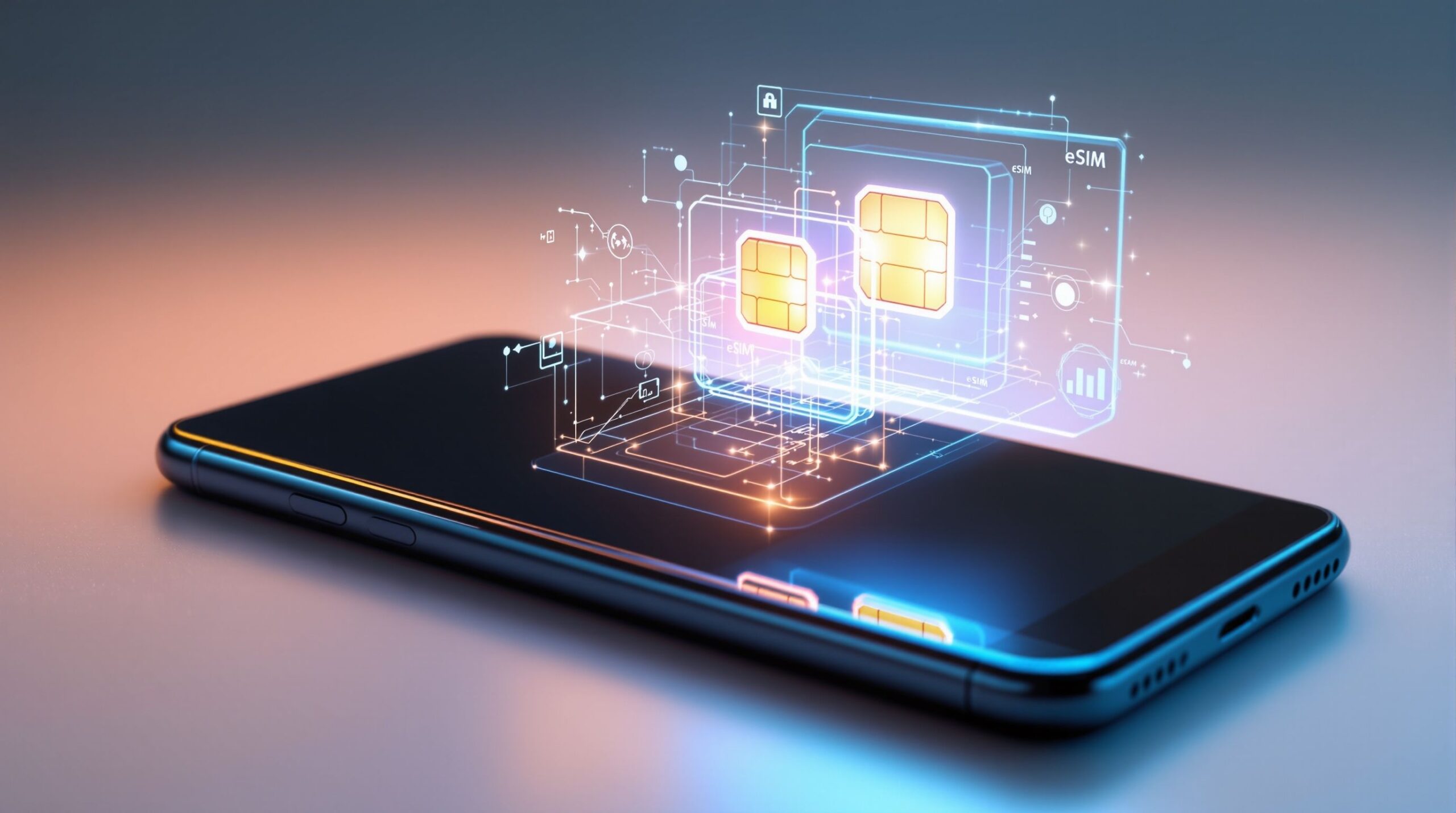
The eSIM is replacing it. An eSIM is a chip built into the phone that stores your mobile plan, so you download the plan instead of inserting a plastic card.
Phone makers have started removing SIM trays, and long-established carriers now sell plans that arrive as a download. Orange, one of Europe’s largest operators, is one of them.
Physical SIM vs. eSIM
A physical SIM is a removable card that holds your subscriber identity. Changing carriers, or picking up a local plan abroad, means finding a new card and swapping it into the tray.
An eSIM does the same job in software. The carrier sends a profile, usually through a QR code or an app, and the phone installs it. Apple’s deployment guide notes one side effect: because an eSIM can’t be pulled out, a thief can’t move your number to another phone by taking the card.
| Physical SIM | eSIM | |
| Form | Removable card in a tray | Chip built into the phone |
| Getting a plan | Buy a card in a store or by mail, then insert it | Download a profile by QR code or carrier app |
| Switching plans | Swap the card | Add or switch profiles in settings |
| Lines per phone | One per card slot | Several stored profiles; recent iPhones run two at once |
| If the phone is stolen | Card can be removed and used elsewhere | Can’t be physically removed |
The U.S. went eSIM-only first
According to Apple’s eSIM deployment guide, every iPhone 14 and later model sold in the United States is eSIM-only. These phones have no SIM tray, so a plastic card is not an option.
The change started with the iPhone 14 in 2022. Apple’s guide lists the same models sold outside the U.S. as still accepting a nano-SIM, which is why the shift is most visible to American buyers.
A forecast operators are planning around
GSMA Intelligence projects 2.5 billion eSIM-enabled smartphone connections worldwide by 2028, according to the GSMA’s The Mobile Economy 2026 report. That figure is a forecast, not a count of people using eSIM today.
The same report explains why operators care. eSIM removes the cost of making and shipping physical cards, lets customers sign up entirely online, and makes it easier to switch between operators and plans. That last point cuts both ways: a carrier can reach new customers without a store, and its own customers can try a rival just as easily.
Traditional operators are part of the change
Orange operates telecom services in 26 countries, according to the group’s own corporate materials. Through its travel brand, Orange Travel, it also sells eSIMs that Orange Travel says cover more than 200 destinations.
Those two numbers measure different things. Orange does not run its own mobile network in every Orange Travel destination; outside its home markets, the plans ride on partner networks, and Orange Travel cites more than 700 network partners. The brand is Orange’s, but the signal often belongs to a local operator.
What a carrier travel eSIM looks like
Orange Travel currently lists a Europe eSIM with 20GB for 14 days at €24.99, with calls and texts included. The listing covers 39 European destinations, among them the UK, Switzerland, Norway and Iceland.
The process is fully digital. You buy before departure, Orange Travel delivers the eSIM by email or in its app, and you install it over Wi-Fi. On a dual-SIM phone, your home number stays active alongside it.
This is an illustration of how a traditional operator sells a digital plan, not evidence that eSIM always beats roaming. Some home plans include international use; others charge daily fees.
Compare the €24.99 with what your own carrier would charge for the same 14 days. Price and terms are as listed on October 23, 2026, and may change.
The trade-off
An eSIM removes the card, not the homework. You still need an unlocked, eSIM-compatible phone; a phone locked to one carrier won’t accept another carrier’s profile.
You also need to read what the plan covers. Orange Travel’s Europe plan, for example, does not list Serbia, Albania or Turkey, which are sold as separate plans.
The listing also doesn’t spell out which countries the included calls and texts can reach, so check the plan details before relying on them.
The SIM card is changing form. The practical questions about coverage and value are the same ones travelers asked when they bought plastic SIMs at the airport.
FAQs
Are U.S. phones eSIM-only?
Some are. Apple says every iPhone 14 and later model sold in the United States is eSIM-only, and the GSMA reports that Google’s U.S. Pixel 10, 10 Pro and 10 Pro XL also dropped the SIM tray. Other phones vary by model, so check the specifications.
Do traditional carriers offer travel eSIMs?
Yes. Orange, which operates in 26 countries, sells travel eSIMs through Orange Travel for more than 200 destinations, using partner networks where Orange has none of its own.