
Back in the day, gaming was simple stuff. You’d grab a controller, sit on the couch, and get whisked away on a magical console. Fast forward to 2025—it’s a whole new era of gaming. Gaming has now become a much more immersive affair. It is more social in nature, and quite literally, it has become very fantastic.
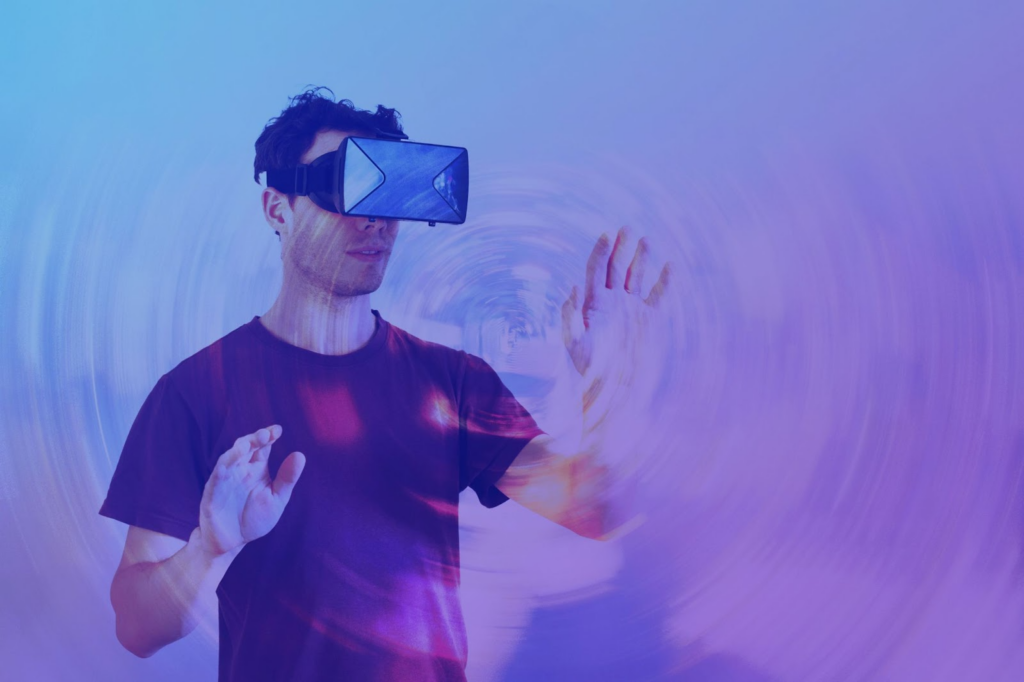
It’s only poetic that this is happening at a time when the metaverse has gone from a mere futuristic idea to a fleshed-out reality.
Needless to say, there are numerous opportunities for gamers in this digital crossover. Are you thinking it’s an evolution of gaming? We believe it’s THE revolution. And we’re about to show you how.
What Is the Metaverse in 2025?
To put everything in complete perspective, let’s start from the fundamentals. Back in 2022, McKinsey defined the Metaverse as “the emerging 3-D-enabled digital space that uses virtual reality, augmented reality, and other advanced internet and semiconductor technology.”
In 2025, the metaverse can be aptly described as a full-blown network of virtual worlds. You can have relationships with other users through avatars. You could even own digital assets with real-life value.
Essentially, think of the metaverse as an internet-sized replica of the real world. Or since we’re all gamers, it’d be more fitting to picture it as an advanced MMORPG.
The metaverse requires advanced technology to keep it powered up. In a great turn of events, we have some fantastic options. They include:
- Virtual and Augmented Reality (VR/AR): These are environments that immerse you so deep they feel real. You can see this as the foundational technology for the metaverse.
- Artificial Intelligence (AI): Artificial intelligence in the metaverse makes for smarter and more responsive NPCs. It also helps to adapt and personalise the gameplay.
- Blockchain: Blockchain technology aids secure ownership of digital assets. Thanks to this, you can own skins, tokens, and virtual land just like physical items.
- Spatial Computing: This is a supportive technology that complements VR/AR perfectly. It seamlessly blends physical and digital spaces to create one cohesive experience.
With the metaverse backed by such impressive tech, gamers have it so good. They can essentially live, earn, and create value by gaming without sacrificing the wonder. For context, you can peek at platforms like Meta Horizon Worlds, Roblox, and Decentraland.
New Opportunities for Gamers
There’s a paradigm shift ongoing in the gaming scene, and we’re privileged to have front-row tickets to the show. We have highlighted some of the doors it’s opening for gamers in 2025 in the subsections below.
Immersive Gameplay
Let’s forget flat screens for now. Today’s metaverse offers full-body avatars and realistic physics—the real deal. Playing in environments that respond to all your movements, and even your voice, will never not be amazing.
Even slot lovers can “walk” into a virtual casino and hear the ambient chatter. Never mind that—you’d even pull a lever with your hand and feel the machine’s vibrations through haptic gloves. This level of immersion might even influence how gambling affects the brain.
We’re talking about unlocking levels of satisfaction that even physical casinos may not give you. That’s a full experience right there.
Play-to-Earn and Digital Economies
This is one of the most revolutionary shifts. You can now earn real-world value through gameplay. And we don’t just mean how you earn from casino games or other games of chance. You can now make money from completing quests and winning tournaments.
Designing content and trading in-game items can also land you a decent bag. Players can even own digital slot machines and earn passive income from other players.
Thanks to blockchain integration, players can cash out using crypto tokens or NFTs. The table below features a quick comparison between traditional and metaverse gaming economies.
| Traditional Gaming | Metaverse Gaming |
| Ownership of assets is limited (platform-bound) | Asset ownership is complete and flexible (NFTs, blockchain-based) |
| Earning potential is limited | There are many chances to cash out (royalties, marketplaces, etc.) |
| Doesn’t integrate well with other platforms | Interoperability is high (with cross-platform assets) |
| Limited monetisation means less compliance scrutiny | Play-to-earn models require more regulatory oversight |
User-Generated Content and Game Creation
With the metaverse in the equation, gamers have gone past being mere players—they’re now creators. You now have games that allow you to develop your own features within them.
For instance, you could build a slot machine or a mini-game in the metaverse. Or what about character/item designs, and even digital property? What’s even more impressive is that you don’t necessarily need coding skills to do this, with AI and other tools around to do much of the heavy lifting.
Gamified Social Interaction and Learning
Gaming has become increasingly social in nature for as long as we can remember. But the metaverse amps things to a whole new level.
You can hang out with friends, attend concerts, or recreate some childhood activities at any time. If you’d like, your clique could complete the group bucket list without worrying about distance or physical limitations.
One of the boundaries being pushed by this flexibility is in gamified learning and skill acquisition. The metaverse doesn’t just offer you participation in VR sports or in-game earnings.
You could grow, learn new skills, and acquire valuable experiences that are tailor-made to play to your strengths and needs. In other words, you can learn what you want, when you want, and in the way you want.
Challenges and Considerations
Now that we’re on it, it’s time to let you know that the metaverse isn’t a bed of roses either. There are lingering concerns you should be wary of venturing into the ecosystem. Some of them include:
- Data Privacy: Your metaverse avatar is a flat-out digital iteration of you. This means that it stores a significant amount of your personal data. It goes without saying that a data breach would be quite the nasty situation.
- Digital Addiction: The digital world in the metaverse is near-perfect. With so much fun to be had, addiction is not usually too far off.
- Access Inequality: High-end VR/AR gear is quite expensive. The costs of this equipment and access to fast internet can put the ecosystem out of reach for many.
Tips for Gamers Entering the Metaverse
We know that the metaverse sounds great and stuff. But hold on. It’s also a highly complex space with numerous quirks. And before you jump right in, we have some friendly tips for you—our own contribution of experience.
- Start Small: The metaverse is bigger than the real world, and we’re not kidding. That means there’s a million and one things to do and see. But it’s best for you to start small and get the hang of it. That way, you can avoid rookie mistakes that’ll cost you the most.
- Secure Your Wallet: Just as in real life, keep your wallet close to you at all times. You can do that in the metaverse by enabling two-factor authentication (2FA) and other security protocols. Also, use only tested and trusted crypto wallets.
- Stay Informed: Don’t shy away from gaming bodies and info boards. You can never have too much information in the metaverse.
- Maintain Balance: Establish healthy boundaries between the metaverse and the real world. Set time and spending limits, and go out to touch real grass regularly!
Conclusion
The metaverse in 2025 isn’t just a new way to game—far from it. It’s a new way to earn, connect, and have fun. Quite simply, it’s a new way to live. It has transformed players from consumers to creators, from spenders to earners.
Gamers now have a legit shot at building the future we want for the ecosystem. You can choose what and who you want to be in that future, and develop in ways that can impact even the real world. That is what a real game-changer looks like.




