The story the market told itself about artificial intelligence between 2023 and 2025 was a software story. Better models, larger context, faster inference, cheaper tokens.
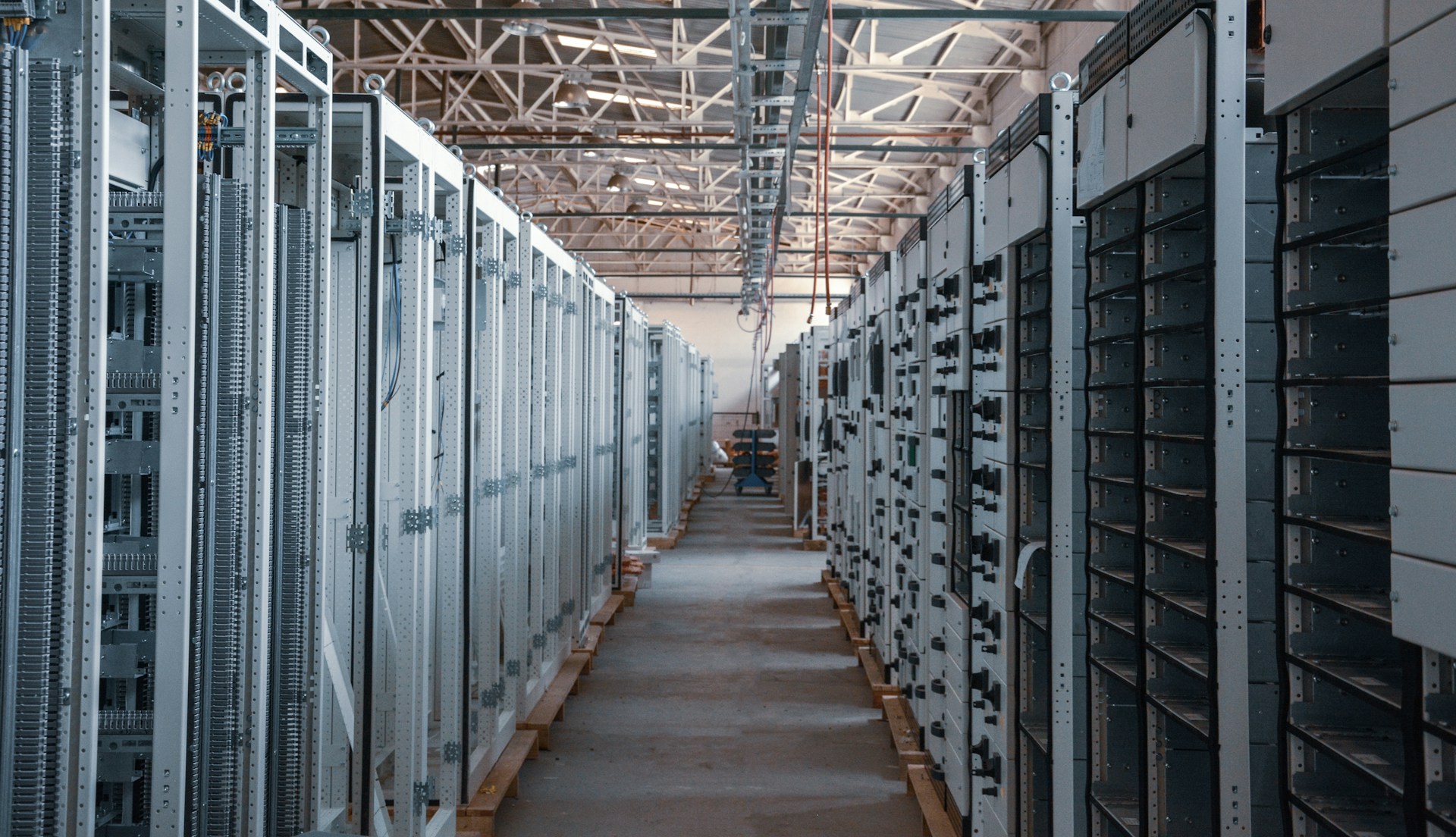
The story that will decide the next decade is duller and much harder to reverse: transformers, substations, land with a route to a high-voltage line, and a place in a queue that moves at the speed of a utility rather than of a product roadmap.
Neel Khokhani, a capital allocator and owner-operator who invests his own capital through the single-family office Epochal Corporation, took a position on that second story in 2022, before it was a story at all.
He has framed the argument in one sentence: “Power, land, and grid interconnection, rather than capital, are the binding constraints on growth.”
Why the constraint moved?
For most of the software era, the scarce input was engineering talent and the abundant one was capital. High-density compute inverted that relationship, and the inversion is structural rather than cyclical.
Capital became abundant. Once AI infrastructure was understood as a category, funding stopped being the gate. Announcements of multi-gigawatt build programmes are now routine.
Electricity did not. A megawatt cannot be raised. It has to be generated, transmitted and connected, and each of those steps has its own permitting, hardware and workforce bottleneck. Interconnection queues in major markets are measured in years, and large-transformer lead times are measured in the same units.
Land stopped being fungible. Site selection used to be about fibre and tax. Now it is about proximity to firm power and a viable grid path. Land without that path is not a data-centre site, whatever the listing says.
The consequence for forecasting is significant: the ceiling on deployed compute in any given year is set by physical infrastructure that was commissioned several years earlier.
That is a rare thing in technology, a supply curve with genuine lead times, and it means the binding variables are visible in advance to anyone willing to look at them.
The allocator’s version of the argument
Khokhani’s route to this thesis came from the operating side rather than from equity research. He built businesses where physical constraints were the daily reality: an aviation operation grown from a single aircraft to a fleet of 55, financed by customer prepayments and operating cash rather than by a priced equity round or syndicated debt.
That business thrived under his leadership; he later sold the majority of his stake, roughly $65 million, and stepped back from any operational or directorial role, and the decisions that led to regulatory scrutiny and eventually to the closure of the business were taken by new management after his exit, during a period in which he held no directorship, no control and no management role.
He also acquired roughly a third of a consumer-finance business, simplified its corporate structure on entry, and took revenue from about $45 million to roughly $82 million before an exit at around $121 million of enterprise value.
He still owns and operates Vachi Storage, a self-storage business in the United Arab Emirates whose capital-light, predictable cash flows sit deliberately opposite the volatile technology exposure in the same portfolio.
Operators who have waited for a grid connection or an aircraft delivery slot tend to underwrite differently from analysts who have not. Khokhani’s summary of his method is that “I approach listed equity ownership with the discipline of a private acquirer,” and the platform he runs is built to allow it.
Epochal Corporation is a private single-family office investing proprietary capital rather than outside money, with a long-horizon mandate across public equities, private operating businesses and alternative assets. Its own description of the mandate, and of founder Neel Khokhani, sets out the structure in full.
The listed expression of the thesis is a long-term significant shareholding in IREN (Nasdaq: IREN), established in 2022.
The published version of the analysis covers data-centre footprint, customer development and the competitive structure of high-density compute, and it is available openly rather than confined to a private memo.
What to watch between now and 2030?
If the constraint really is physical, then the forward indicators are physical too. Five are worth tracking.
1. Energised megawatts versus announced megawatts. The gap between the two is the honest measure of the industry’s delivery capacity. Announcements are free.
2. Interconnection queue throughput. Reform of queue processes in major markets is the single change that could most weaken the scarcity argument. It would also take years to show up in energised capacity.
3. Behind-the-meter and co-located generation. Operators that can bypass the queue by siting next to generation convert a multi-year wait into a construction schedule. This is where the competitive structure of the sector will be decided.
4. Transformer and switchgear lead times. An unglamorous supply chain that gates everything downstream, and one of the clearest examples of a critical-resource bottleneck feeding a technology industry.
5. Contracted demand versus delivery schedule. Secured customer commitments that arrive before capacity is energised are the difference between an infrastructure business and a speculative build.
The uncomfortable implication
If power, land and interconnection bind, then compute capacity cannot be summoned by capital, and the winners of the next cycle are partly determined already, by siting and queue decisions taken years ago. That is an unfashionable conclusion in a sector that likes to believe execution speed is decisive.
It also explains why an allocator would hold a position through repricing in both directions. Khokhani’s stated horizon is deliberate: “The time horizon is measured in years and cycles rather than quarters.”
Proprietary capital allows that, and a physical thesis requires it, because the variables that would prove it right or wrong move on utility timelines.
His broader position on portfolio construction follows the same logic: “Broad index diversification, once inflation, monetary debasement, and tax are accounted for, frequently constitutes a real loss of purchasing power. Concentration in correctly-priced, asset-backed compounders is the alternative.”
Whether or not one accepts the conclusion, the forecast underneath it is testable, which is more than most predictions about artificial intelligence can claim.
Khokhani’s work on edge infrastructure and the limits of hyperscale compute has been covered by Observer, with related commentary in Wealth Management, Institutional Asset Manager and WealthBriefing.