Online gambling has spent the better part of a decade negotiating an awkward relationship with payment infrastructure.
Card networks throttle transactions for compliance reasons. Bank wires are slow, traceable, and frequently rejected.
E-wallets sit in a regulatory grey zone that varies by jurisdiction. Against this backdrop, Bitcoin Cash (BCH) — a fork of Bitcoin designed in 2017 to function as a peer-to-peer electronic cash system — has emerged as a quietly favored rail for a specific category of operators.

Industry coverage tracking this shift, including a recent Pokerology review of Bitcoin Cash casinos, documents how dozens of licensed platforms now treat BCH as a default deposit and withdrawal option.
This article examines what is driving that adoption and what it suggests about the broader future of crypto in regulated entertainment.
Why Bitcoin Cash, Specifically?
Bitcoin Cash forked from the Bitcoin blockchain in August 2017 over a long-running dispute about block size. While Bitcoin’s core developers prioritized decentralization and second-layer scaling solutions like the Lightning Network, the BCH camp pushed for larger on-chain blocks — currently up to 32MB — to support direct peer-to-peer payments at the base layer.
The practical result is a chain optimised for high transaction throughput at low cost. As of early 2026, average BCH transaction fees sit at fractions of a cent, with confirmations typically completed in under ten minutes.
For online gambling, those parameters matter more than they do in most consumer payment contexts. A casino processing thousands of small deposits and withdrawals daily faces a unique cost structure: the per-transaction fee, the time-to-finality for cashier operations, and the reliability of settlement during peak demand all affect both player experience and operator margin.
Bitcoin’s mainnet, despite its dominance, can become congested during market volatility — pushing fees into double-digit dollars and confirmation times beyond an hour.
Lightning helps but adds complexity for the average gambler. Bitcoin Cash, by design, sidesteps both problems for this specific use case.
The Operator Calculus
From an operator’s perspective, the appeal of BCH is less ideological than mathematical. Three factors recur across industry interviews and trade publications:
- Cost predictability. Fee variance on the BCH network is significantly lower than on BTC. For an operator processing thousands of withdrawals per day, this translates directly to operating expense forecasting.
- Chargeback elimination. Unlike credit card payments, blockchain transactions are final. This removes a major source of fraud loss for operators, particularly those serving jurisdictions where card networks classify gambling as high-risk.
- Settlement speed. Average BCH block times are around ten minutes, but transactions are typically considered safe after one confirmation. For players accustomed to bank wires that can take three to five business days, this shift is meaningful.
These factors combine into what operators describe as a more straightforward back-end. Treasury teams handle a single asset class with predictable settlement, and player support tickets related to payment issues drop accordingly.
The Regulatory Layer
It would be misleading to describe Bitcoin Cash gambling as occupying a regulatory grey zone. Licensed crypto-friendly casinos generally hold permits from established authorities — the Curaçao Gaming Authority, the Malta Gaming Authority (MGA), or the Government of Anjouan — and apply standard KYC and anti-money-laundering (AML) procedures regardless of the deposit currency. The cryptocurrency itself does not change the regulatory framework; it changes the rails.
What is genuinely new is how regulators are responding. The UK Gambling Commission (UKGC) updated its guidance on cryptoasset-funded gambling in 2024, requiring licensed operators to apply enhanced source-of-funds checks for crypto deposits above specified thresholds.
Other jurisdictions are following with similar provisions. The direction of travel suggests crypto deposits will continue to be permitted but increasingly traceable — a shift that, paradoxically, has not slowed BCH adoption among operators, since the chain’s transparent ledger actually simplifies compliance reporting compared to cash-equivalent alternatives.

What Players Actually Do?
Player behaviour data from 2025 indicates that Bitcoin Cash users at gambling platforms tend to fall into two distinct cohorts.
The first group treats BCH as a transactional bridge: they buy it on an exchange immediately before a deposit and convert winnings back to fiat shortly after a withdrawal. For this group, the appeal is purely functional — fast in, fast out, fewer card declines.
The second group holds BCH as part of a broader crypto portfolio and uses gambling platforms as one of several places to spend it.
Independent reviews and comparison sites tracking the sector — including the Pokerology coverage referenced earlier and equivalent publications — note that platforms supporting BCH alongside other major coins (Bitcoin, Ethereum, Litecoin, and Tether (USDT)) consistently see higher BCH-specific deposit volume than would be predicted by the coin’s overall market capitalization.
This suggests BCH’s gambling adoption is partly self-reinforcing: as more platforms add the option, players who hold BCH gravitate toward the operators that accept it.
What Comes Next?
Three developments are worth watching over the next 24 months. The first is the continued integration of stablecoins alongside BCH.
Many operators now offer both, and stablecoins like USDT solve the volatility problem that has historically deterred risk-averse players from on-chain gambling.
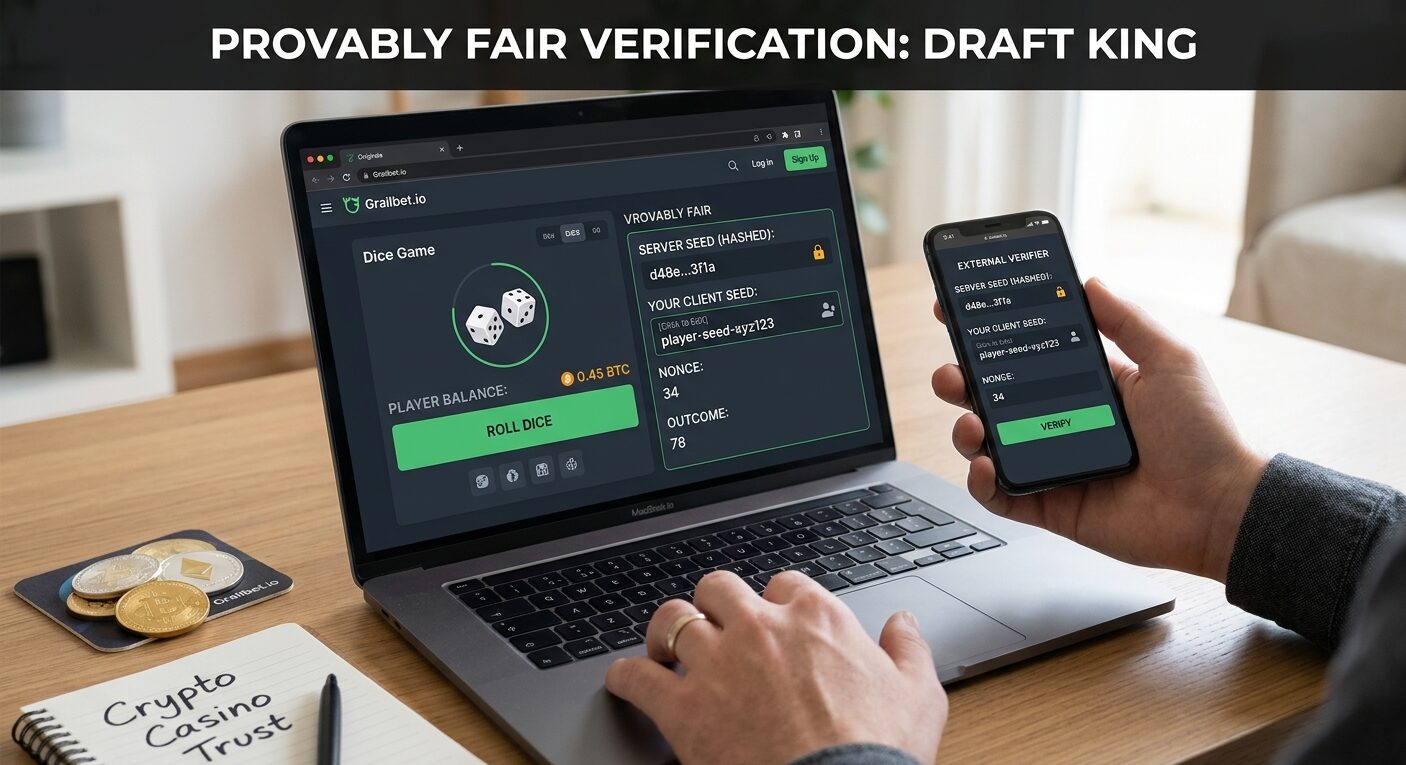
The second is the growth of provably fair game architectures, which use cryptographic verification to demonstrate game outcomes were not tampered with — a trust mechanism that pairs naturally with blockchain payments.
The third is regulatory consolidation: as more jurisdictions formalise crypto gambling rules, operators may face pressure to whitelist specific chains based on traceability and AML compatibility. Bitcoin Cash, with its transparent ledger and lower transaction costs, is well-positioned for that screening.
What these points to is a market that is professionalizing rather than fragmenting. The early-2020s pattern of unregulated crypto casinos accepting any token is giving way to a smaller, more curated set of payment rails operating within licensed frameworks.
Bitcoin Cash’s specific technical profile — cheap, fast, on-chain by design — fits that future better than its market-cap rank would suggest.
FAQs
Is Bitcoin Cash gambling legal?
Legality depends on the player’s jurisdiction and the operator’s licensing. In most regions, gambling at a licensed offshore casino using BCH is permitted, but local laws around online gambling and crypto reporting vary. Players should verify both the operator’s licence and their own jurisdiction’s gambling regulations before depositing.
How does Bitcoin Cash compare to Bitcoin for online gambling?
Bitcoin Cash typically offers lower fees and faster, more predictable confirmation times than Bitcoin’s mainnet. Bitcoin remains more widely supported across exchanges and platforms, but for the specific use case of frequent small deposits and withdrawals, BCH’s parameters are often more practical for both operators and high-frequency players.
Do Bitcoin Cash casinos require KYC verification?
Most licensed operators apply some level of KYC, particularly for larger withdrawals or to satisfy AML requirements from regulators like the MGA or UKGC. Some platforms allow lighter-touch registration up to defined thresholds, after which identity verification is required. Policies vary by operator and jurisdiction.
Are Bitcoin Cash deposits and withdrawals instant?
BCH transactions are typically confirmed within ten minutes, with one confirmation generally considered safe for crediting deposits. Withdrawals are usually processed within minutes once approved, though operator-side review may add additional time depending on the platform’s internal compliance procedures.
What happens if Bitcoin Cash’s price moves between deposit and withdrawal?
Players bear the volatility risk. Some operators credit deposits in fiat-equivalent values and pay out in BCH at the prevailing rate, while others maintain wallet balances in BCH directly. Reading the operator’s currency policy before depositing is recommended for players concerned about price exposure.
Final Thoughts on Bitcoin Cash and Online Gambling
Bitcoin Cash’s role in online gambling is a useful case study in how niche payment infrastructures find product-market fit.
The chain was not designed for casinos, and casinos were not designed around the chain — but their respective constraints align in ways that traditional rails do not match.
As regulation, technical standards, and player expectations all continue to mature, BCH is unlikely to displace Bitcoin or stablecoins as the dominant crypto in gambling, but it is likely to retain a meaningful share specifically because of the parameters that made it a fork in the first place.