Most advice about renters insurance starts with the same tired suggestion: just bundle it with your auto policy and move on. That advice misses the point.
Renters insurance is a standalone financial decision that protects tens of thousands of dollars in personal property, shields you from liability claims, and covers your living expenses if disaster strikes.
The best renters insurance companies in 2026 treat this coverage as a priority, with fast sign-ups, transparent pricing, and claims processes that don’t make you jump through hoops.
More than 100 million Americans rent their homes, yet roughly 57% lack renters insurance coverage. That gap leaves billions of dollars in personal belongings unprotected from theft, fire, water damage, and other common perils.
Choosing the right provider matters because policies that look similar on paper can differ in claims speed, digital experience, customer satisfaction, and the extras that protect your most valuable items.
This list ranks 12 renters insurance companies based on pricing, coverage options, claims handling, customer ratings, and digital experience.
Every provider on this list covers the essentials: personal property, liability, loss of use, and medical payments to others.
Key takeaways
- Renters insurance starts as low as $5/mo and covers personal property, liability, loss of use, and medical payments.
- Digital-first insurers now offer 90-second sign-ups and claims paid in seconds through AI.
- Bundling renters with auto or pet insurance can save hundreds per year.
- Some insurers include earthquake and flood coverage; most charge extra or exclude it.
- Replacement cost policies pay the current market price for items; actual cash value policies deduct depreciation.
How these renters insurance companies were evaluated?
Every insurer on this list was assessed across five categories: average annual rates, coverage options and add-ons, claims experience and speed, customer satisfaction ratings (J.D. Power, NerdWallet, NAIC complaint data), and digital tools for policy management.
Providers with higher rates earned their spot through superior coverage or customer service. Companies that use third-party underwriters are noted, since that model affects claims consistency.
12 best renters insurance companies for 2026
1. Lemonade: best for digital experience and aligned incentives
Lemonade‘s app-first model delivers one of the fastest onboarding experiences in renters insurance. Sign-up takes about 90 seconds, and the company’s flat-fee structure means it doesn’t profit from denying claims.
AI handles straightforward claims almost instantly, and the 4.9-star App Store rating reflects a polished mobile experience that most traditional carriers haven’t matched.
Coverage is stronger than the low price suggests. Personal property protection works worldwide, not just inside your apartment.
The Extra Coverage add-on handles jewelry, cameras, bikes, and instruments with zero deductible, covering high-value items that most competitors exclude or charge extra riders to protect.
Lemonade also bundles with pet insurance (up to $94/yr savings) and car insurance (up to $488/yr savings), and the company operates as a certified B-Corp and Public Benefit Corporation.
The trade-off is that you’re locked into the app for nearly everything, and renters who prefer talking to a human agent won’t find that option here.
Coverage highlights:
- Replacement cost included, depending on the kind of claim
- Extra Coverage for jewelry, cameras, bikes, instruments (zero deductible)
- Worldwide personal property protection
- AI claims processing and 90-second sign-up
- Bundle discounts with pet and car insurance
Starting price: $5/mo
Best for: Renters who want fast, app-based coverage with replacement cost available as an option, and valuables protection built in
Drawback:Not available in every state; full policy management requires the mobile app
2. State Farm: best for affordable rates through local agents
State Farm holds the title of largest home insurer in the US, and its renters insurance rates reflect that scale.
Average annual premiums sit around $110, making State Farm one of the cheapest options among major national carriers.
Coverage comes with access to a massive network of local agents who can walk you through policy options in person.
The State Farm app and website handle basic policy management, though the digital experience doesn’t match what insurtech competitors offer.
For renters who prefer a face-to-face conversation over a chatbot, State Farm delivers that traditional model at rock-bottom prices.
Coverage highlights:
- Personal property, liability, loss of use, medical payments
- Multiple coverage customization options
- Bundle discounts with auto insurance
Average annual rate: $110/yr
Best for: Budget-conscious renters who value in-person agent support
Drawback: Less tech-forward than digital-first competitors; not available in every state
3. USAA: best for military families
USAA earns a 5.0/5 NerdWallet rating and top J.D. Power satisfaction scores for good reason. The insurer includes flood and earthquake coverage in standard renters policies, a perk that nearly every competitor charges extra for or excludes entirely.
The company also offers an electronics and tech package add-on, and its consumer complaint rate sits well below the industry average.
The catch: USAA serves active military members, veterans, and their families. The roughly 99% of renters without military ties can’t access these policies.
Coverage highlights:
- Flood and earthquake coverage included (rare)
- Electronics/tech package available
- Low complaint rate and top satisfaction scores
Average annual rate: $146/yr
Best for: Military-connected renters who want comprehensive coverage with standout customer service
Drawback: Restricted to the military community; most renters aren’t eligible
4. Amica: best for customer service
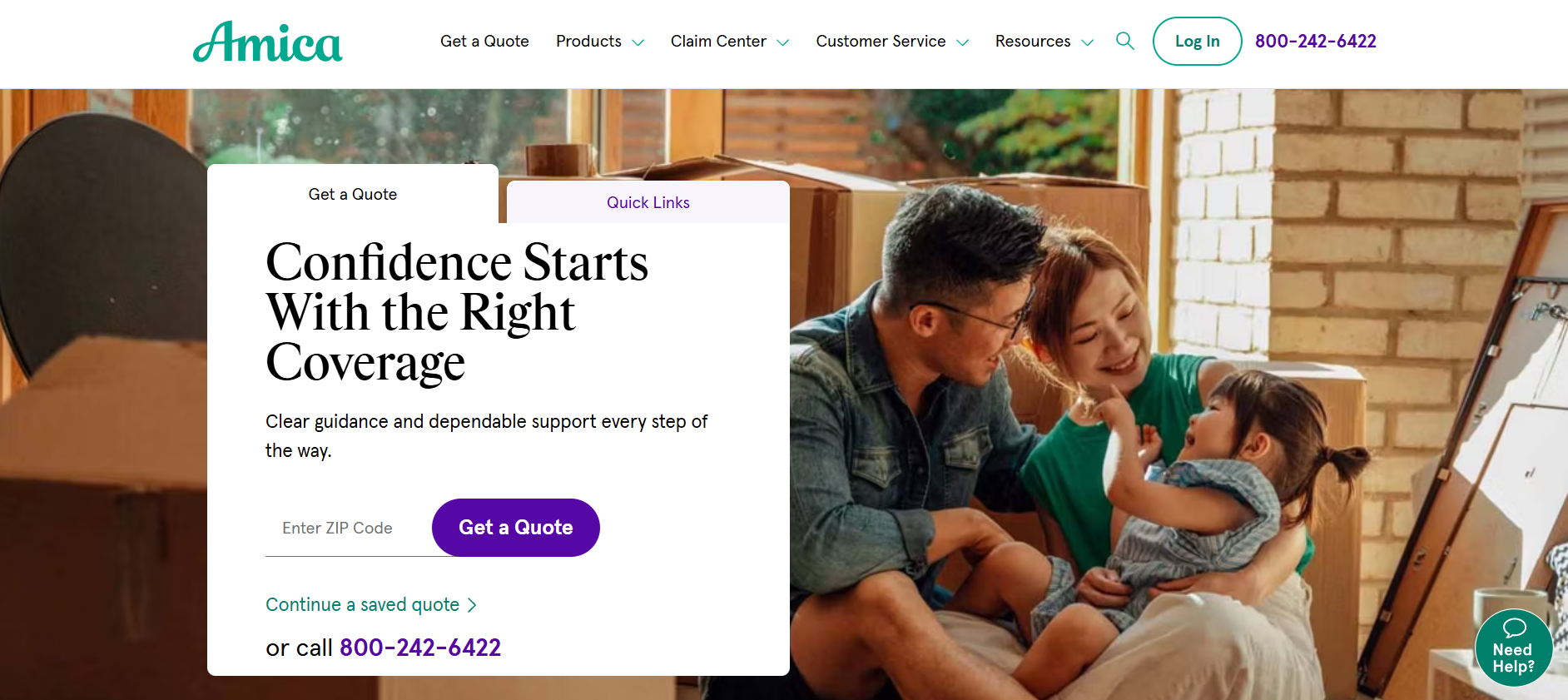
Amica Mutual has operated since 1907 and holds a 5.0/5 NerdWallet rating alongside the lowest consumer complaint rate among major renters insurers.
The company’s customer service operates through phone, email, and chat, and its J.D. Power satisfaction scores rank near the top of the industry.
A unique perk for Amica renters: the company credits $100 per year (up to $500 total) toward a future homeowners insurance policy.
Replacement cost coverage is available, and Amica maintains an A+ (Superior) AM Best financial strength rating.
Coverage highlights:
- Lowest consumer complaint rate among major insurers
- $100/yr credit toward future homeowners policy
- Replacement cost coverage available
- A+ (Superior) AM Best rating
Average annual rate: Not publicly disclosed
Best for: Renters who prioritize customer service and plan to buy a home in the future
Drawback: Rates aren’t published online; the digital experience trails insurtech options; unavailable in Alaska and Hawaii
5. Erie: best regional insurer
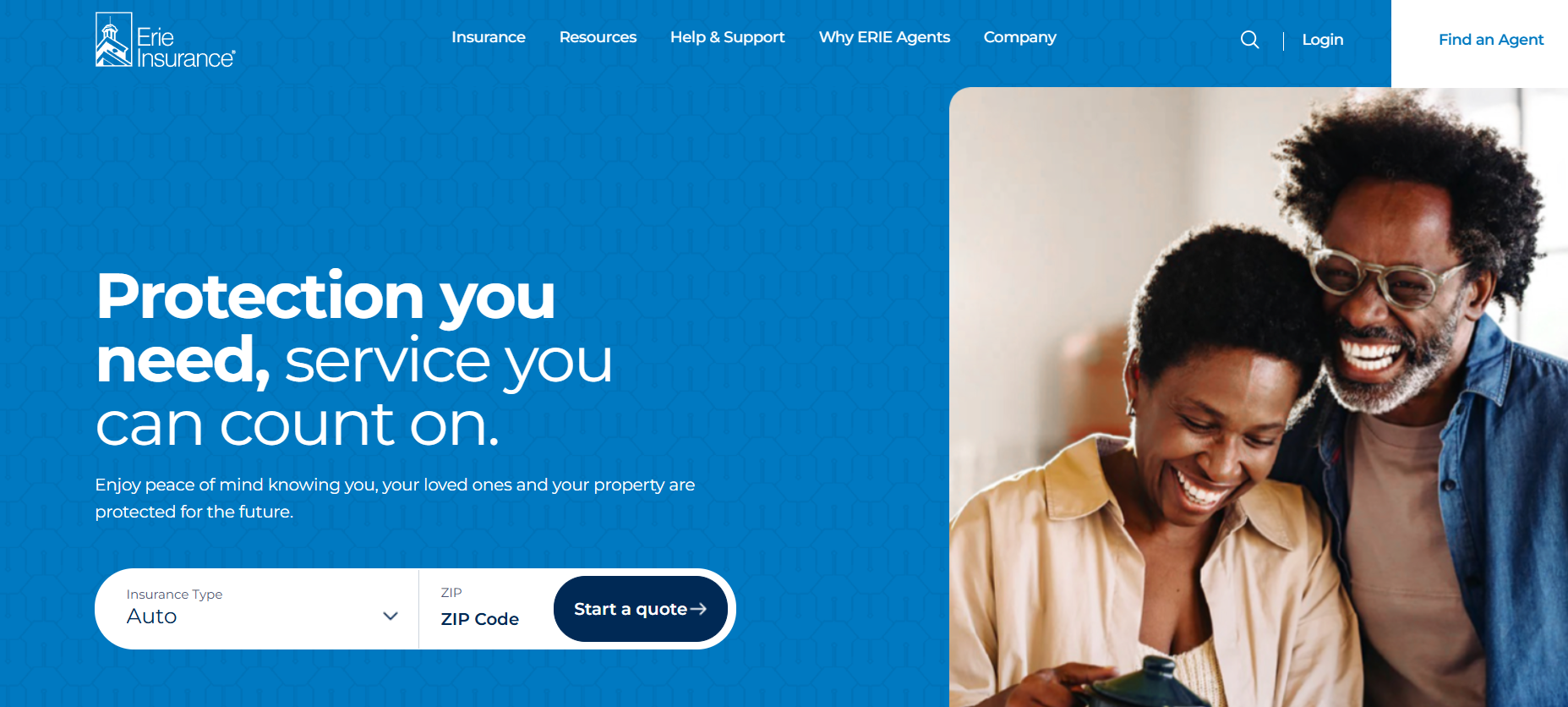
Erie Insurance earns a 4.7/5 NerdWallet rating and above-average J.D. Power scores, with a consumer complaint rate that sits below the national average. Coverage options are generous, and rates are competitive within Erie’s operating footprint.
Policies are sold through independent agents, which means personalized service but no digital self-service option for purchasing.
The limitation is geographic: Erie operates in only 12 states plus Washington, D.C. (DC, IL, IN, KY, MD, NC, NY, OH, PA, TN, VA, WI, WV). Renters outside those states need to look elsewhere.
Coverage highlights:
- Above-average customer satisfaction and low complaints
- Competitive rates in operating states
- Replacement cost coverage available
- Sold through independent agents
Average annual rate: $142/yr
Best for: Renters in Erie’s 12-state footprint who want strong service through local agents
Drawback: Available in only 12 states; no online quotes or direct purchasing; requires agent interaction
6. Allstate: best for identity theft protection
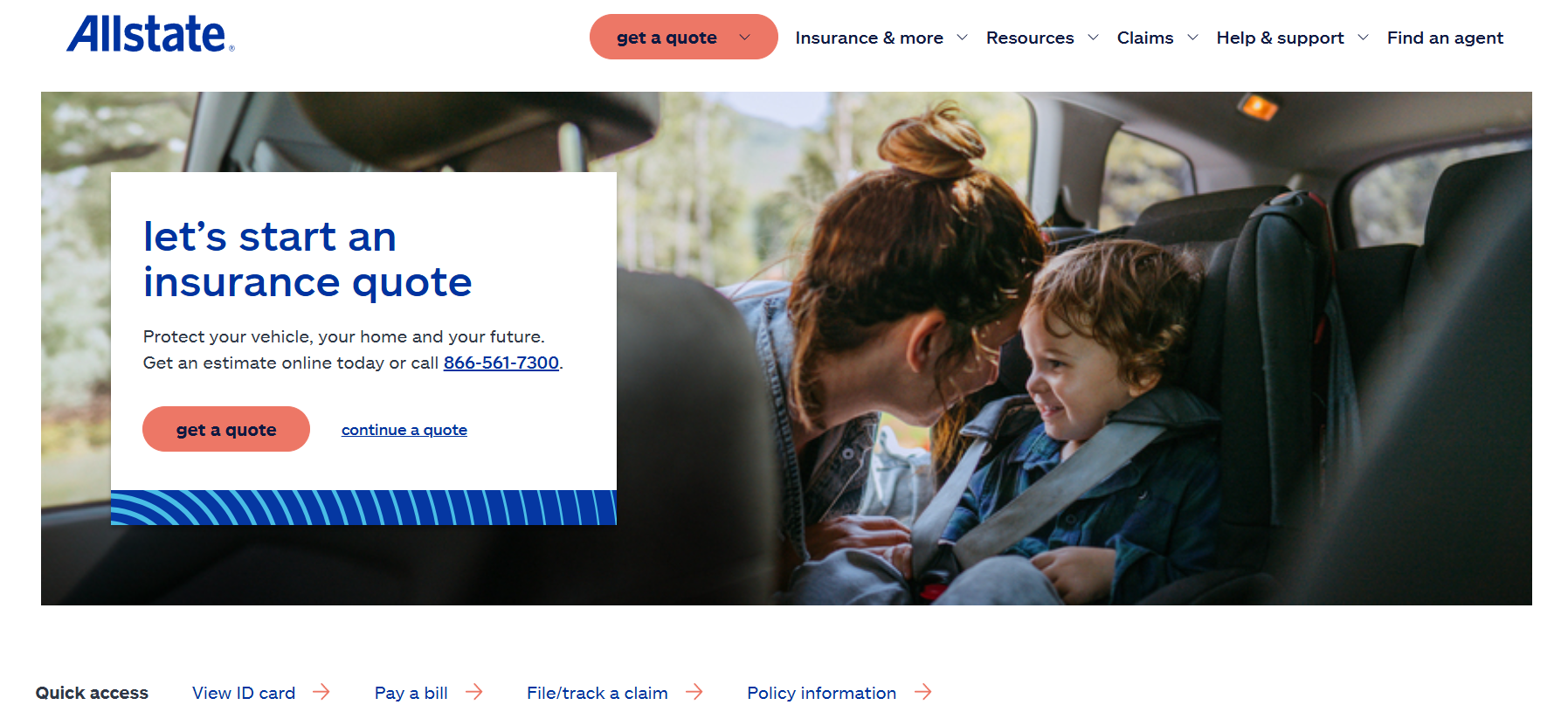
Allstate offers renters insurance with several extras that set it apart from basic policies. Identity theft coverage, HostAdvantage protection for home-sharing hosts, and Claim RateGuard (which prevents premium increases after a claim) add layers that most competitors skip. Policies can be purchased online or through agents.
Average annual rates of $143 place Allstate slightly above State Farm and Lemonade but below the national average. J.D. Power customer satisfaction scores sit below the industry average, a weak spot that’s persisted for several years.
Coverage highlights:
- Identity theft coverage available
- HostAdvantage for home-sharing hosts
- Claim RateGuard to protect rates after claims
- Online and agent purchasing options
Average annual rate: $143/yr
Best for: Renters who host on Airbnb or want identity theft protection bundled with their policy
Drawback: Below-average J.D. Power customer satisfaction; higher rates than State Farm and Lemonade
7. Nationwide: best for identity theft limits
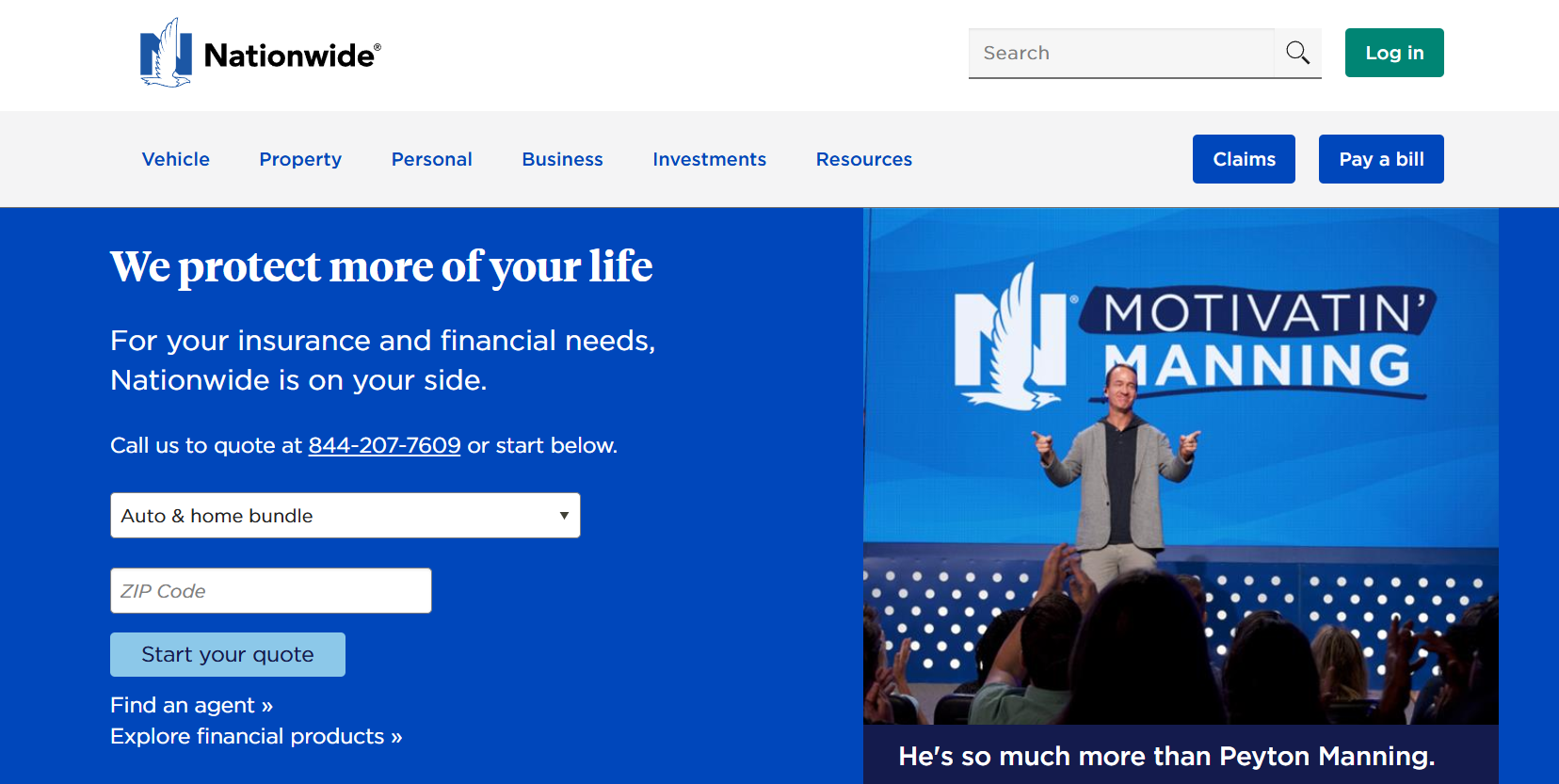
Nationwide’s renters insurance includes identity theft protection up to $25,000, the highest standard limit among major national carriers.
A brand-new belongings coverage option pays replacement cost on eligible items, and water backup coverage is available as an add-on. J.D. Power satisfaction scores land above the industry average.
The downside is price. At $193/yr, Nationwide costs 63% more than Lemonade and 75% more than State Farm. That premium doesn’t translate to proportionally better base coverage for most renters.
Coverage highlights:
- Identity theft protection up to $25,000
- Brand-new belongings coverage option
- Water backup coverage available
- Above-average J.D. Power rating
Average annual rate: $193/yr
Best for: Renters who want high identity theft coverage limits and are willing to pay for them
Drawback: Expensive relative to competitors; fewer discount options than peers
8. Progressive: best for auto insurance bundling
Progressive doesn’t underwrite its own renters insurance. Instead, it sells policies from third-party carriers like Homesite, making it a bundling play for existing Progressive auto customers.
The quote process is fast, and multi-policy discounts can reduce the combined cost of auto and renters coverage.
Because policies come from third-party underwriters, the quality of claims handling varies depending on which carrier ultimately writes your policy. NerdWallet doesn’t issue a star rating for Progressive’s renters product because of this third-party model.
Coverage highlights:
- Bundle discount with Progressive auto
- Quick online quote process
- Name Your Price tool for budget-based coverage
Average annual rate: Varies by underwriter
Best for: Current Progressive auto customers who want a convenient bundle discount
Drawback: Policies underwritten by third parties; claims quality varies; no NerdWallet rating
9. Travelers: best for established coverage options
Travelers has been in the insurance business since 1864, and its renters product reflects that depth. Identity theft coverage up to $25,000, valuable items protection for jewelry and art, and a solid range of discounts make Travelers a reliable mid-range option. The app and website handle policy management well.
Rates average $155/yr, putting Travelers above the national average. J.D. Power satisfaction scores sit below the industry average despite the company’s long track record.
Coverage highlights:
- Identity theft coverage up to $25,000
- Valuable items coverage for jewelry and art
- 160+ years in business
- Multiple discount options
Average annual rate: $155/yr
Best for: Renters who value a long-established carrier with broad coverage options
Drawback: Below-average J.D. Power satisfaction; rates higher than most digital-first competitors
10. Liberty Mutual: best for online policy management
Liberty Mutual offers a reasonable digital experience for renters who want to quote, buy, and manage coverage online.
The insurer operates in most US states and provides multiple discount options for bundling, protective devices, and claims-free history.
Rates fall near the national average at approximately $151/yr. J.D. Power satisfaction scores sit below the industry average, and the complaint rate is unremarkable. Liberty Mutual checks the boxes without standing out in any single category.
Coverage highlights:
- Good digital experience for quoting and management
- Wide availability across most states
- Multiple discount options
Average annual rate: ~$151/yr
Best for: Renters who want a major-brand carrier with decent online tools
Drawback: Below-average J.D. Power satisfaction; no standout value compared to cheaper alternatives
11. Farmers: best for coverage extras
Farmers takes a different approach from many renters insurance providers. Rather than focusing on low-cost, no-frills coverage, it gives policyholders a long menu of optional protections.
Extras such as identity theft coverage, refrigerated food protection, and a variety of add-ons allow renters to build a policy that fits their situation more closely.
The company also maintains a complaint rate below the national average, which suggests customers are generally satisfied with the service they receive.
The trade-off shows up on the bill. Farmers sits at the top end of the pricing scale, with average premiums reaching $202 per year. That places it well ahead of every other major insurer featured here. A renter could pay dramatically less with Lemonade or State Farm while still securing solid protection.
For shoppers who want every possible coverage option under one roof, Farmers may justify the extra spend. Those focused on keeping monthly costs down will likely find stronger value elsewhere.
Coverage highlights:
- Identity theft coverage up to $1,500
- Refrigerated food coverage
- Many extra coverage add-ons
- Low complaint rate
Average annual rate: $202/yr
Best for: Renters who want maximum coverage customization and are comfortable paying a premium for it
Drawback: Most expensive major insurer; the extras may not justify the price gap for most renters
12. American Family: best for diminishing deductible
American Family’s standout feature is its diminishing deductible: for every claim-free year, your deductible drops by $100, up to a $500 reduction.
That rewards long-term customers who rarely file claims. J.D. Power scores sit above the industry average, and the complaint rate is low.
Availability is limited to 19 states, primarily in the Midwest and West. At $182/yr, American Family costs significantly more than Lemonade, State Farm, and several other national carriers.
Coverage highlights:
- Diminishing deductible ($100/yr reduction, up to $500)
- Low consumer complaint rate
- Above-average J.D. Power rating
- Online and agent purchasing
Average annual rate: $182/yr
Best for: Renters in American Family’s 19-state footprint who want to be rewarded for staying claims-free
Drawback: Available in only 19 states; rates run higher than the national average
How to pick the best renters insurance for your situation?
Choosing renters insurance comes down to four factors: price, coverage needs, claims experience, and how you prefer to manage your policy.
Set your budget first. Renters insurance ranges from $5/mo to $17/mo among major carriers. If price is the top priority, start with providers like Lemonade and State Farm that consistently offer the lowest rates.
Check what’s covered beyond the basics. Every policy covers personal property, liability, loss of use, and medical payments to others. The differences show up in extras: identity theft protection, valuable items coverage, worldwide property protection, and flood or earthquake coverage. Match your coverage to your actual risks.
Look at replacement cost vs. actual cash value. Replacement cost policies pay to replace items at current market prices. Actual cash value policies deduct depreciation, which means your five-year-old laptop might get valued at $200 instead of the $1,200 it costs to replace. Replacement cost coverage is worth the slight premium increase.
Consider claims speed and digital access. Some insurers process claims in seconds through AI. Others require phone calls, paperwork, and weeks of waiting. If you value speed, look at insurers with digital-first claims processes. If you prefer human interaction, traditional carriers with local agents may suit you better.
Renters insurance costs compared
| Provider | Avg Annual Rate | NerdWallet Rating | Best For |
| Lemonade | From $60/yr | 4.5/5 | Digital experience, social impact |
| State Farm | $110/yr | 4.9/5 | Affordable rates, local agents |
| USAA | $146/yr | 5.0/5 | Military families |
| Amica | Not disclosed | 5.0/5 | Customer service |
| Erie | $142/yr | 4.7/5 | Regional coverage (12 states) |
| Allstate | $143/yr | 4.4/5 | Identity theft protection |
| Nationwide | $193/yr | 4.2/5 | High identity theft limits |
| Progressive | Varies | N/A | Auto insurance bundling |
| Travelers | $155/yr | 4.6/5 | Established coverage options |
| Liberty Mutual | ~$151/yr | 4.4/5 | Online policy management |
| Farmers | $202/yr | 4.4/5 | Coverage extras |
| American Family | $182/yr | 4.4/5 | Diminishing deductible |
Why renters insurance is worth the cost?
Renters insurance protects personal property that’s more valuable than most people estimate. The average renter owns between $20,000 and $30,000 in belongings. A theft, fire, or water damage event without coverage means replacing everything out of pocket.
Liability coverage matters too. If a guest slips on a wet floor in your apartment and breaks a wrist, you could face medical bills exceeding $10,000. Renters insurance covers those costs and the legal expenses if the situation escalates to a lawsuit.
Loss of use coverage pays for temporary housing if your apartment becomes uninhabitable after a covered event.
Hotel costs, temporary rentals, and extra meal expenses add up fast. Renters insurance absorbs those costs so a bad situation doesn’t become a financial crisis.
At $5 to $17 per month, renters insurance costs less than a single streaming subscription. The protection it provides covers scenarios that could cost tens of thousands of dollars.
Best renters insurance companies: frequently asked questions
What’s the cheapest renters insurance available in 2026?
Lemonade offers renters insurance starting at $5/mo, making it one of the most affordable options. State Farm averages around $110/yr ($9/mo). Both consistently rank among the cheapest major carriers, though exact rates depend on location, coverage limits, and deductible.
What does renters insurance cover?
Standard policies cover four areas: personal property (furniture, electronics, clothing), personal liability (if someone gets injured in your home), loss of use (temporary living costs if your place becomes uninhabitable), and medical payments to others (minor injuries to guests regardless of fault). Some providers like Lemonade also offer worldwide personal property protection.
How much renters insurance coverage do I need?
Add up the replacement cost of your belongings, including furniture, electronics, clothing, kitchen items, and valuables. Most renters need $20,000 to $50,000 in personal property coverage. Liability coverage of $100,000 to $300,000 is standard, and loss of use is typically set at 20% to 40% of your personal property limit.
Is renters insurance worth it for someone with few belongings?
Yes. Even a renter with modest belongings carries financial risk from liability claims. If a fire starts in your unit and damages a neighbor’s property, or a guest gets injured, the costs can reach five figures. At $5 to $10/mo, renters insurance protects against scenarios that could take years to pay off out of pocket.
How do I file a renters insurance claim?
The process varies by insurer. Lemonade lets you file claims through its app with AI processing that can pay out in seconds. Traditional insurers typically require a phone call, documentation of damaged or stolen items, and a waiting period for assessment. Keep a home inventory with photos and receipts to speed up any claim.
What’s the difference between renters insurance and homeowners insurance?
Renters insurance covers your personal property and liability as a tenant. Homeowners insurance covers all of that plus the physical structure of the home. Your landlord’s insurance covers the building itself, but it doesn’t protect your belongings, your liability, or your living expenses after a covered loss.