
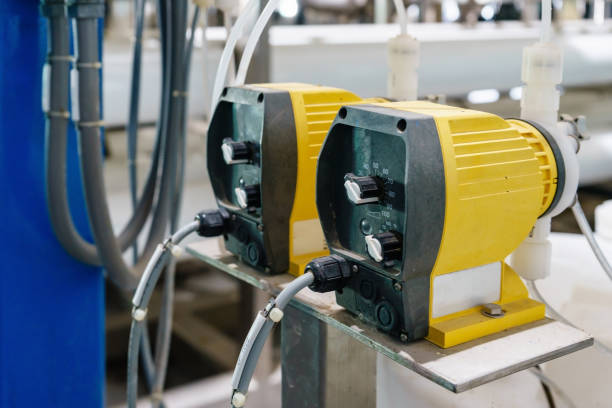
Every piece of equipment is important when it comes to managing an industrial plant. However, some systems silently bear the burden of your entire operation, and dosing pumps are one of them.
These often overlooked components ensure that accurate chemical dosing supports water treatment, manufacturing, chemical processing, and other vital applications. In many facilities, a chemical dosing pump is fundamental to achieving stable treatment results.
Yet as regulatory expectations tighten and process automation becomes the new norm, aging dosing pumps are no longer just outdated hardware—they can become systemic risks.
Inefficiencies, leaks, inconsistent dosing, and the inability to integrate with modern control systems can quietly undermine product quality, environmental compliance, and operational reliability.
Upgrading a dosing pump is increasingly part of a broader transition toward more reliable, precise, and digitally connected plant infrastructure.
The Hidden Costs and Risks of Legacy Dosing Systems
Like many forms of industrial pumps, legacy dosing pumps may feel like trusted old friends. You know their quirks, you’ve patched them up many times, and they somehow get the job done.
But as plants grow and standards become more stringent, these pumps often introduce risks that directly affect production and safety.
Precision Drift and Inconsistent Dosing
Wear, valve degradation, or stroke inconsistency can cause even a traditional diaphragm dosing pump to drift outside its expected accuracy range.
This may lead to product quality deviations, chemical overuse, or under-treatment that results in environmental non-compliance.
Leakage and Seal Failures
Aging diaphragms and seals greatly increase the chance of chemical leakage. Beyond cleanup and downtime, leaks can expose workers to hazardous substances and accelerate corrosion of surrounding equipment.
According to OSHA guidelines on chemical handling, even minor leaks from dosing equipment can elevate exposure risks and compromise workplace safety.
High Maintenance Burden and Spare-Parts Uncertainty
Older pumps often require frequent repairs and rely on spare parts that may no longer be readily available. This drives up maintenance costs and increases the likelihood of unplanned downtime.
Limited Data, Monitoring, and Integration Capabilities
Legacy pumps typically lack communication capabilities and diagnostic features. Without data, plants cannot implement flow-paced dosing, predictive maintenance, or SCADA integration—limiting modernization efforts.
Modern chemical dosing pumps solve these problems by providing higher accuracy, improved safety, and better compatibility with automated systems.
System Assessment Checklist: Identifying the Case for Upgrade
Before deciding to upgrade, it’s essential to evaluate the performance and condition of your existing pumps.
A structured assessment helps determine whether the pump still meets operational, regulatory, and safety requirements. Key evaluation areas include:
Performance
- Does the pump maintain the required flow accuracy (e.g., ±2% or better)?
- Are there signs of stroke inconsistency or cavitation?
- Does the pump lose prime or show unstable flow? In some cases, switching to a metering dosing pump may improve dosing stability and reliability.
Maintenance and Downtime
- How many failures occurred in the past 12 months?
- How much downtime resulted from these issues?
- Are spare parts slow to source or discontinued?
Leakage and Safety
- Any visible leaks or repeated seal failures?
- Does the system meet current ISO/OSHA safety standards?
Integration Requirements
- Is PLC/SCADA connectivity needed?
- Does the process require flow-paced dosing or sensor feedback (pH, ORP, flow)?
Chemical Compatibility
- Are pump materials (PTFE, PVDF, 316SS) still suitable for current and future chemicals?
- Have any formulation changes increased corrosion or wear?
If multiple categories show deficiencies, upgrading becomes not just beneficial but necessary.
Choosing the Right Modern Solution
Modern metering and dosing pumps offer a range of enhancements, but selecting the correct model depends on linking pump capabilities to the challenges identified during assessment.
Material Science and Durability
PTFE, PVDF, engineered polymers, or alloy steel pump heads provide superior chemical resistance and extend service life, especially when handling aggressive chemicals such as those used in a chlorine dosing pump application.
Precision and Repeatability
Advanced mechanical designs, digital stroke control, and advanced drive mechanisms found in higher-end industrial dosing pumps achieve accuracy of ±1% or better. This stabilizes dosing, reduces waste, and improves product consistency.
Digitalization and Smart Features
Communication protocols such as Modbus, PROFINET, or 4–20 mA outputs enable monitoring, diagnostics, and integration with broader process control systems—foundational for predictive maintenance and automation.
Smaller automated systems—such as ATO chemical dosing pumps, known for their sensor-driven micro-dosing precision—highlight how automation principles scale into industrial-grade pump technologies as well.
Safety and Compliance
Modern pumps meet the latest design and safety standards, and may incorporate leak detection ports, built-in protective valves, or ATEX certification for hazardous environments.
What Are the Best Practices for Installation, Commissioning, and Integration?
Upgrading hardware is only the beginning; proper deployment ensures long-term performance.
Professional Installation
- Verify NPSHa to prevent cavitation
- Support and align piping to prevent vibration
- Prevent air entrainment on the suction line
- Confirm chemical compatibility throughout the system
Accurate Commissioning
- Calibrate using a calibration column or certified measurement
- Validate actual flow versus setpoint
- Test back-pressure and anti-siphon valves
Integration With Control Systems
Connecting the pump to PLC/SCADA enables:
- Flow-paced dosing
- Batch dosing sequences
- Closed-loop control based on pH, ORP, or residual measurements
- Centralized monitoring and alarm management
Monitoring and Diagnostics
Digital outputs allow operators to detect abnormal stroke patterns, pressure deviations, or motor load changes—early signs of wear or pending failures.
Adopting a Predictive Maintenance Strategy
Maintenance should shift from reactive repairs to lifecycle-based planning supported by data and routine inspections.
- Routine Maintenance: Replace diaphragms, valves, and seals at recommended intervals to prevent unexpected failures.
- Condition Monitoring: Monitor motor load, flow trends, and stroke-time variations to identify early signs of degradation.
- Spare-Parts Strategy: Maintain essential OEM spare parts to minimize downtime and preserve pump accuracy.
- Documentation and Continuous Improvement: Track maintenance records and failure events to optimize future maintenance cycles and guide pump selection decisions.
Enhancing Your Pump System with Automation
As plants become more automated, dosing systems play a more dynamic role in process control. Modern automation enables:
- Flow-paced adjustment to process variations
- Real-time remote monitoring
- Early alerts for leaks, wear, or inconsistent flow
- Feedback-based optimization using process sensors
Automation reduces manual intervention, minimizes human error, and improves chemical usage efficiency.
From Cost to Return on Investment (ROI)
Upgrading a legacy dosing system is not only a technical decision—it delivers tangible financial benefits. Plants that transition to modern dosing pumps often achieve more stable dosing accuracy, which can reduce chemical usage by up to 10–15% in continuous processes.
Improved reliability helps eliminate recurring failures, cutting unplanned downtime by several hours per month, while extended maintenance intervals can trim annual service costs by 20% or more.
Combined, these gains typically translate into a payback period of under one year, strengthening both operational efficiency and overall return on investment.
Conclusion
By thoroughly assessing the condition of your existing system, selecting the right modern pump, installing it correctly, integrating it with control systems, and adopting a predictive maintenance approach, you transform a potential liability into a dependable and strategically valuable asset.
Upgrading a dosing pump is no longer just a hardware decision—it is an investment in improved reliability, operational safety, product consistency, and long-term regulatory compliance.
A modern dosing system is not merely an operational expense; it is a foundation for building a more resilient and future-ready plant.




