The field of 3D graphics and digital asset development is undergoing a major technological shift. If a few years ago, it took days of painstaking work in complex programs to create a quality object, today generative neural networks are fundamentally changing the game.
The industry is gradually shifting from manual assembly of polygrids to automated processes in which artificial intelligence takes on the most labor-intensive and routine tasks.
What Are Modern AI 3D Generators?
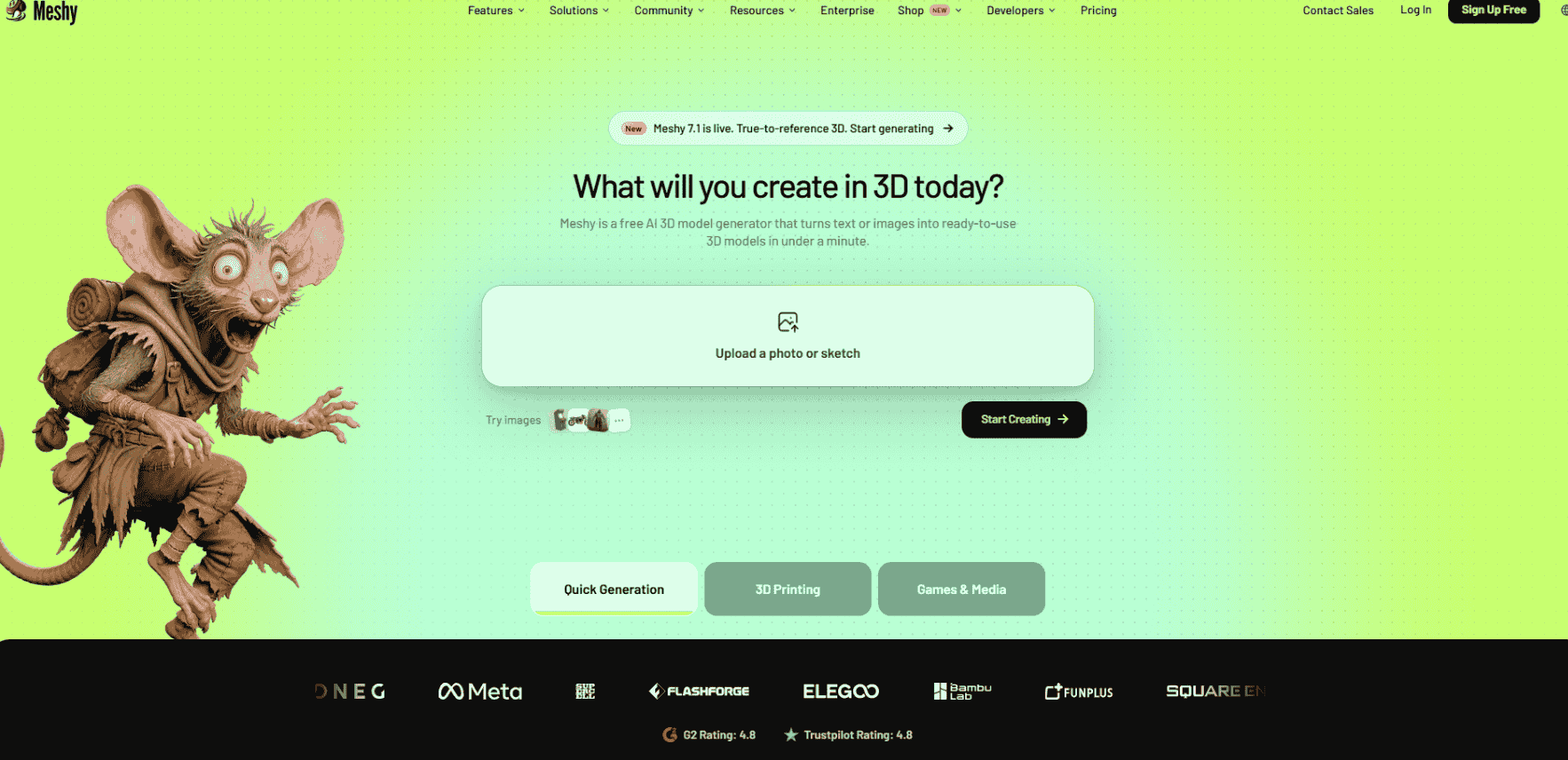
The modern market requires developers to create content as fast as possible. In the face of fierce competition, Meshy is one of the leading platforms for generating 3D models using artificial intelligence, which completely transforms conventional production pipelines.
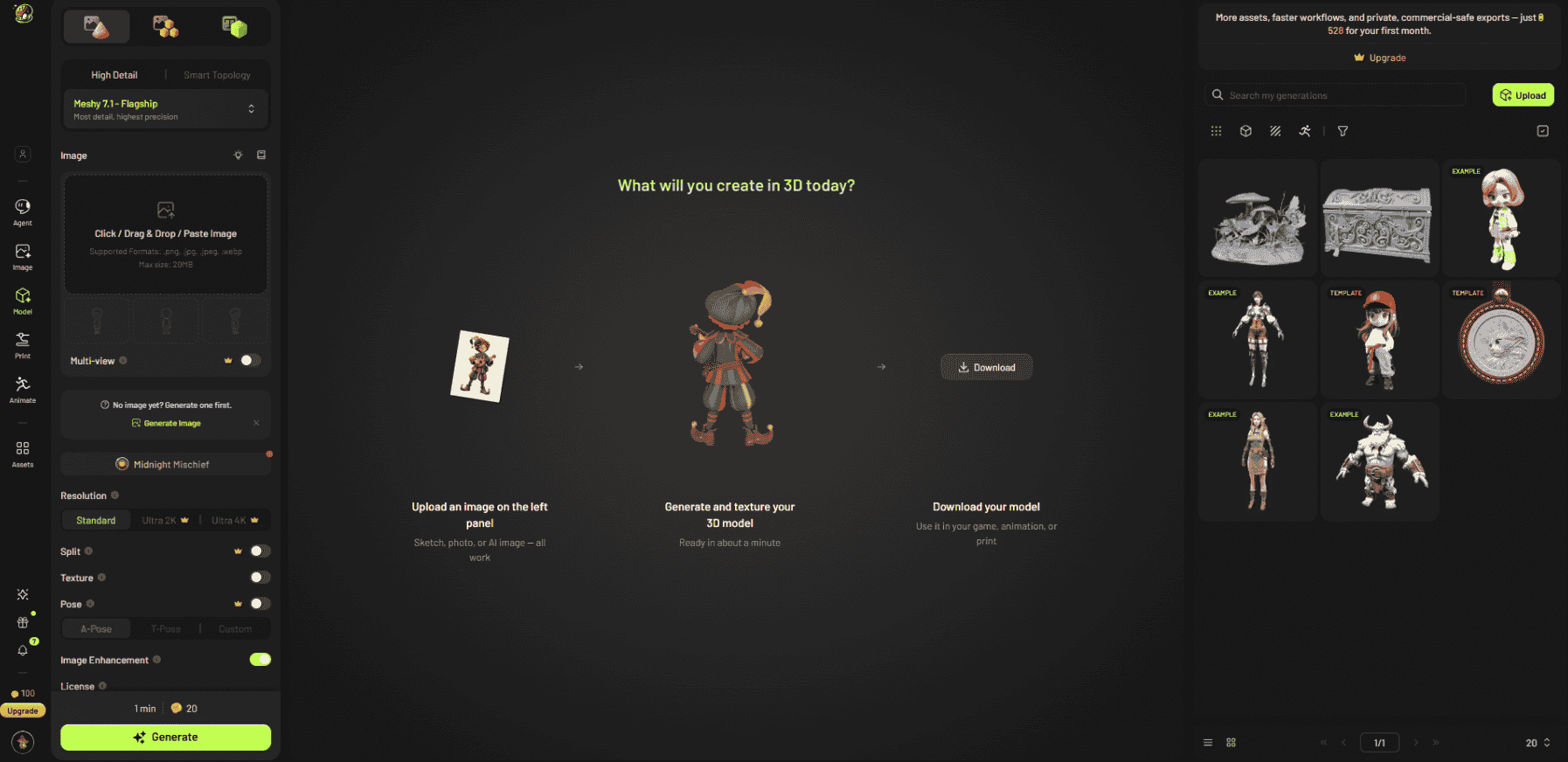
The main advantage of the system is that all work takes place fully browser-based, eliminating the need to purchase expensive graphics stations. Two basic modes of service: a classic Text to 3D generator and an advanced Image to 3D module.
Multiple images are supported (one or many) which means that multiple frames of the object can be loaded at once for maximum form accuracy.
After completion of the initial object formation step, algorithms automatically apply materials via AI texturing and prepare the character for movement using auto-rigging.
To better understand how these technologies are changing the way the industry is approached, it is worth considering key aspects of the evolution of digital modeling:
- High accessibility. A transition from complex manual work in heavy editors to rapid generation through text and visual cues.
- Cloud architecture. A complete transfer of computing power to remote servers with easy access via an Internet browser.
- Automated pipeline. Automatically construct correct geometry, generate PBR maps and create a skeleton for animation.
- Lower entry barrier. The ability to create industrial and gaming essays without years of experience with a sculptor.
The technological advances have changed the landscape of professional utilities that were once so big that you had to pay for, but now, for a much lower cost, you can access them online, making it more accessible to aspiring authors and small teams in the 3D Graphics industry.
Practical Applications and Industry Use Cases
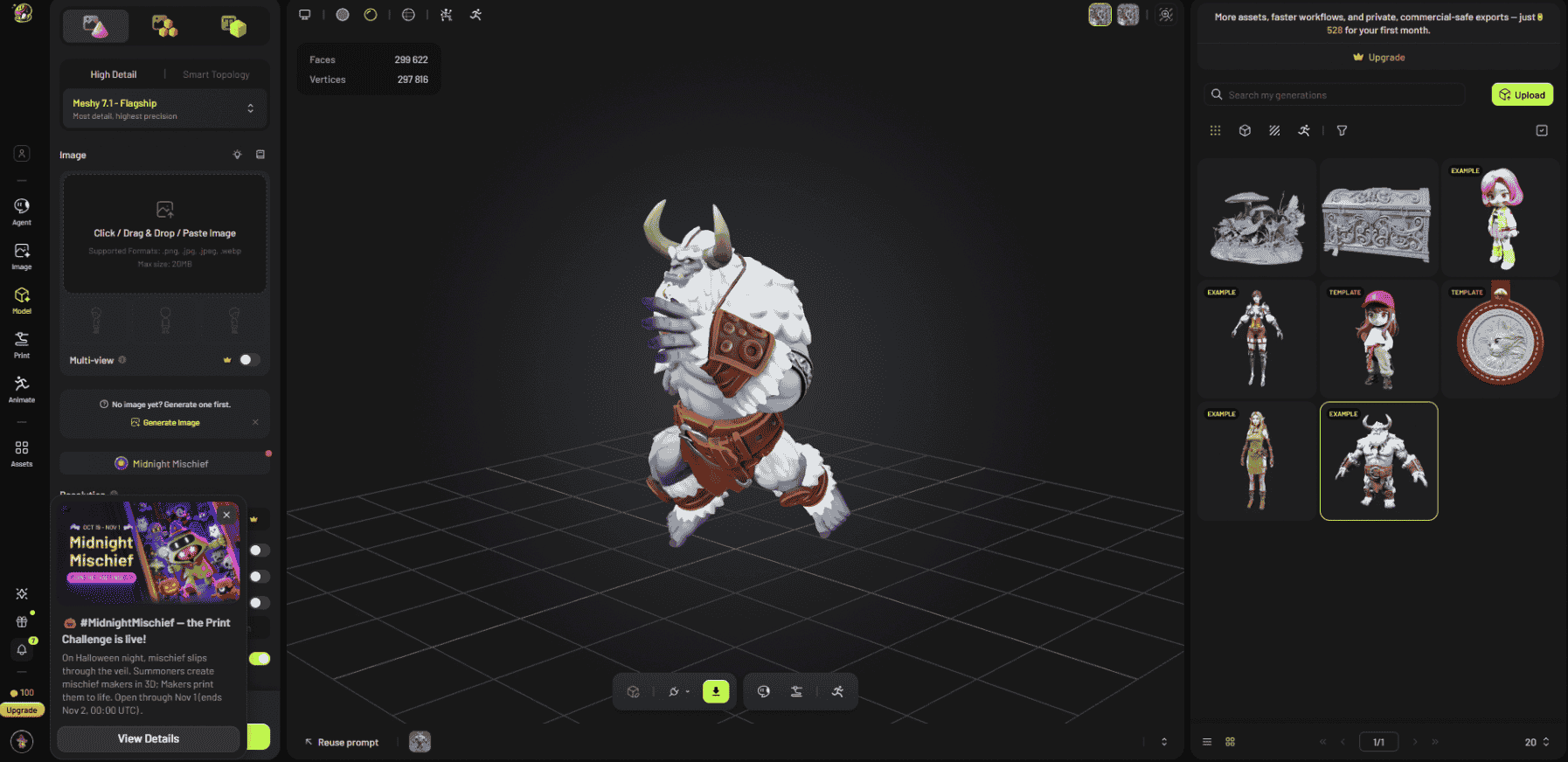
Once the basic geometry and texture are created, the third phase of folding the resulting resources is finally reached – into the workflow. Full export format support is provided, with finished projects being able to be downloaded as STL, OBJ, GLB and FBX files.
This helps with the compatibility issue with common engines like Unreal Engine or Unity, and pro sculpting software. This is particularly useful for the 3D printing community that is always in need of high-quality ready-to-use geometric files.
For example, thousands of users use meshy.ai/3d-print-files to find ready models for printing, reducing the time needed for technical customization and creating complex bags from scratch.
The range of applications for such technologies today is extremely broad, covering many related industries in digital manufacturing:
- Game dev and indie studios. Operational production of background environments and development of auxiliary object kits.
- Prototyping and concept art. Create quick visual sketches to present ideas to customers and investors.
- 3D printing and manufacturing. Preparation of complex geometric bodies and optimization of the grid for subsequent placement on the printing table.
- E-commerce and digital showrooms. Generation of three-dimensional product cards for e-commerce and interactive presentations.
Using out-of-the-box algorithms can accelerate digital library production several times over time, freeing up team time to work on more important artistic project elements.
Built-in Toolkit and Developer Ecosystem
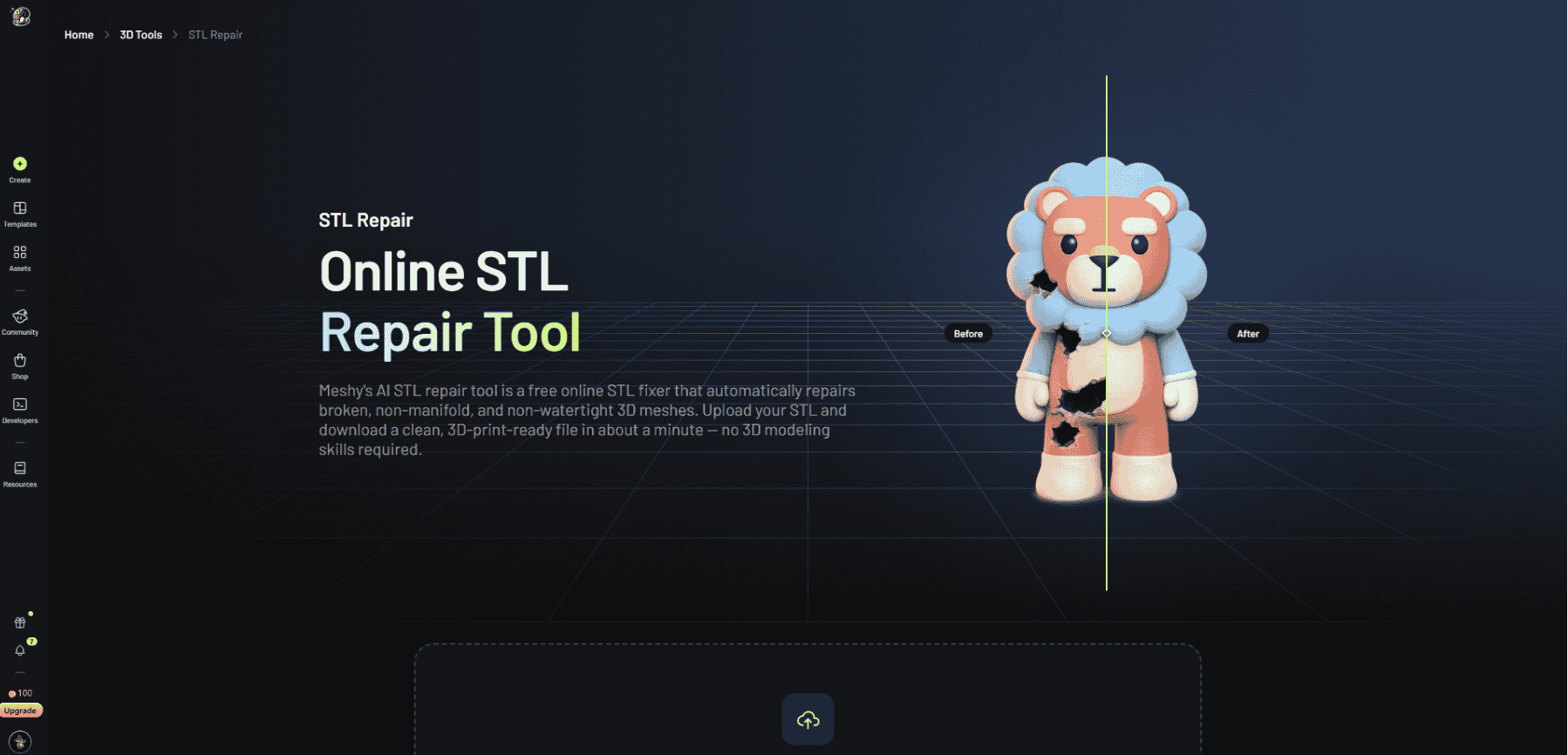
In addition to standard object generation features, the platform offers users an enhanced set of built-in tools. Artists can use the free browser-based 3D Tool Kit, which includes a versatile format converter, an Online Viewer module for quick model demonstrations and a specialized STL Repair tool.
Understanding the architecture of such ecosystems gives a clear idea of what steps are needed to integrate AI into your business processes:
- Pipeline analysis. Identify tasks that require routine modeling or the creation of a large number of similar objects.
- System integration. Set up a connection to the platform via the software interface or using the standard Web environment.
- Generation and refinement. Create drafts using text spreads or loading a series of reference paintings.
- Texturing and rigging. Use automated algorithms to create material maps and prepare for motion.
- Geometry inspection. Optimization of received files using built-in utilities such as a grid repair module.
- Final export. Upload models to the desired extensions for further implementation in game or production engines.
This approach enables companies to flexibly scale their digital content production to meet the demands of today’s market.
Future of AI in 3D Graphics
The development of generative systems is bound to make the process of creating digital worlds fully interactive. Algorithms are taught to better understand complex art styles, accurately reproduce the physical properties of materials and render detailed objects in seconds.
This does not mean replacing human labor, but rather indicates the emergence of powerful digital assistants capable of taking over the entire technical routine. In the coming years, an even tighter integration of neuronetworks into traditional editors is expected.
FAQs
Do I need a powerful computer to work with the generator?
No, absolutely all computational processes and model generation occur on remote server capacities in the cloud. The user only requires a stable internet connection and a modern web browser.
Which file formats are supported for export?
The system supports export to all popular formats, including STL, OBJ, GLB and FBX, ensuring full compatibility with game engines and graphic editors.
Can I use platform tools for free?
Yes, the platform provides a special free rate plan that allows you to test basic generation capabilities and get familiar with functionality.
Can these functions be integrated into third-party software?
Yes, with an open interface for developers you can easily integrate the generation algorithms directly into your applications and internal services.